

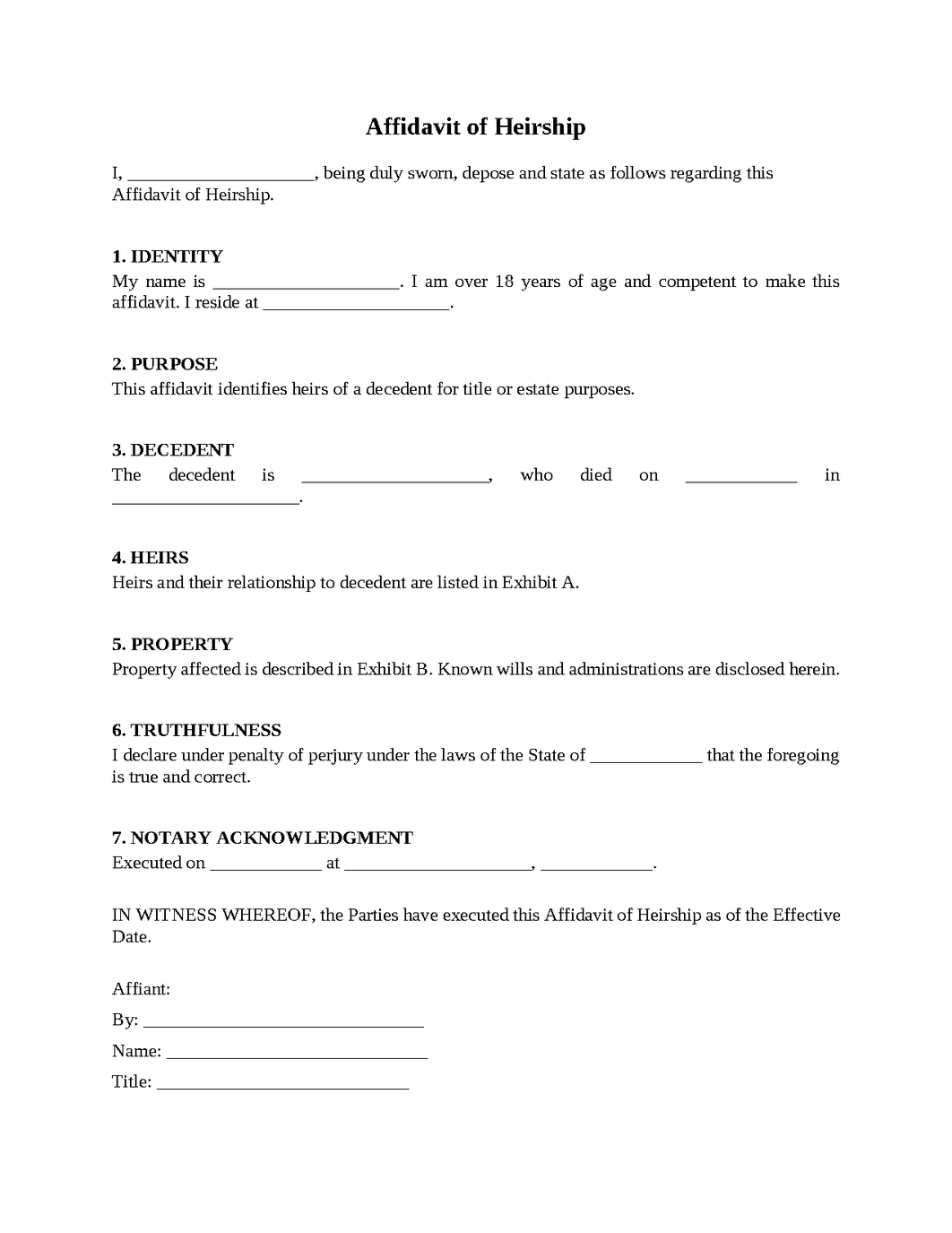
Affidavit of Heirship
An Affidavit of Heirship is a legal document used to identify the heirs of a deceased person when property ownership needs to be transferred after death. The affidavit is most commonly used when an individual dies without a will, when probate proceedings are not required, or when heirs need to establish ownership rights to real estate or other assets. Rather than relying solely on court proceedings, the affidavit provides a sworn statement regarding the deceased person's family history, surviving relatives, and rightful heirs. Title companies, financial institutions, government agencies, attorneys, and family members frequently rely on Affidavits of Heirship to help clarify ownership rights and facilitate property transfers. When prepared properly, the document can simplify the transfer process and reduce uncertainty regarding who is entitled to inherit property.
Family Members Disagree About Who Should Inherit Property
A widowed father owns a small parcel of land that has been in the family for decades. When he dies without leaving a will, several family members immediately begin discussing what should happen to the property. One child believes the land should be divided equally among all siblings. Another believes the property was promised to them years earlier. A third family member argues that they contributed the most toward maintaining the property and should receive a larger share.
Without a written estate plan, disagreements like this can emerge quickly. Family members may have different memories of conversations with the deceased. Some may believe verbal promises were made. Others may assume inheritance rules work differently than they actually do.
The uncertainty often creates tension at a time when emotions are already running high. Relatives may stop communicating with one another, disagreements can escalate, and decisions regarding the property may be delayed for months or even years.
The practical consequences can be significant. Property taxes still need to be paid. Insurance may need to remain in place. Maintenance costs continue. Meanwhile, nobody wants to make major decisions until ownership questions have been resolved.
An Affidavit of Heirship helps address this situation by documenting the deceased person's family relationships and identifying the heirs under applicable inheritance laws. While it may not eliminate every disagreement, it creates a formal record that can help establish who is legally entitled to inherit the property.
A Property Sale Is Delayed Because Ownership Cannot Be Verified
A woman inherits a house after her mother passes away. The mother never created a will, and no probate proceeding was opened because the family believed ownership would transfer automatically. Several years later, the daughter decides to sell the property.
During the title review process, the title company discovers a problem. The property's ownership records still show the deceased mother as the owner. Although everyone in the family agrees that the daughter should inherit the property, there is no official documentation establishing the chain of ownership.
The buyer becomes concerned. The title company cannot issue clear title insurance until ownership questions have been resolved. The lender financing the purchase also requires documentation proving that the seller has authority to transfer ownership.
What began as a routine sale suddenly becomes more complicated. Additional records must be gathered, family relationships must be documented, and title requirements must be satisfied before closing can occur.
Situations like this occur frequently when property owners die without wills and heirs wait years before transferring ownership formally. The issue may remain hidden until someone attempts to refinance, sell, or otherwise transfer the property.
An Affidavit of Heirship often helps title companies establish ownership history and determine who inherited the property. When supported by appropriate evidence, the affidavit can help clear title issues and reduce delays in future transactions.
Unknown Heirs Surface Years After a Death
A property owner dies without a will and is believed to have only two children. The family completes an Affidavit of Heirship identifying those children as the sole heirs. Ownership is transferred, and everyone assumes the matter has been resolved.
Several years later, an individual comes forward claiming to be another child of the deceased. According to the individual, they were born during a prior relationship and were never informed about the estate.
The claim creates immediate uncertainty. If the individual is in fact a legal heir, they may be entitled to a share of the inherited property. Existing owners may face legal challenges regarding decisions they have already made concerning the property.
This situation demonstrates why heirship determinations can be complicated. Family histories are not always straightforward. Marriages, divorces, adoptions, stepchildren, and previously unknown relatives can all affect inheritance rights.
The consequences can be significant. Property transfers may be challenged. Sales may be delayed. Legal expenses can increase substantially as attorneys investigate family histories and inheritance claims.
An Affidavit of Heirship helps reduce these risks by carefully documenting known family relationships and creating a formal record regarding the deceased person's heirs. Although it cannot guarantee that no future claims will emerge, it helps establish the factual basis for ownership determinations.
Financial Institutions Require Proof Before Releasing Assets
An elderly woman maintains several investment accounts throughout her lifetime. When she passes away without a will, her children assume they can simply provide a death certificate and gain access to the accounts.
Instead, the financial institutions request additional documentation. The institutions need evidence showing who the deceased person's legal heirs are before releasing assets or changing ownership records.
From the institutions' perspective, caution is necessary. Releasing funds to the wrong individual could expose the institution to legal liability. They need confidence that assets are being transferred to the proper heirs.
Family members often become frustrated by these requirements. They may view the process as unnecessary because everyone in the family agrees regarding who should inherit the assets. However, financial institutions generally need documentation that supports those conclusions.
Without appropriate records, account transfers may be delayed for weeks or months. Access to funds needed for household expenses, taxes, or other obligations may become more difficult.
An Affidavit of Heirship can help provide financial institutions with the information needed to evaluate inheritance claims. By documenting family relationships and identifying heirs, the affidavit often serves as an important part of the asset transfer process.
Government Agencies Require Documentation Before Updating Records
A deceased property owner leaves behind several parcels of real estate, mineral interests, and government registrations. The surviving family members begin contacting various agencies to update records and transfer ownership.
To their surprise, many agencies request more than a death certificate. They want documentation showing who inherited the property and why those individuals are entitled to act on behalf of the estate.
Government agencies often require this information to prevent fraud and ensure that records are updated accurately. Before changing ownership records, issuing permits, or processing transfers, they need confidence regarding the identity of the rightful heirs.
The process can become time-consuming when multiple agencies are involved. Different organizations may have different requirements, and family members may spend considerable time gathering documentation.
These delays can affect property management, tax filings, permit renewals, and other important matters. In some cases, opportunities may be missed because ownership questions remain unresolved.
An Affidavit of Heirship helps provide a formal record connecting the deceased person's death to the heirs claiming ownership rights. By documenting family relationships and inheritance claims, the affidavit often helps agencies process ownership updates more efficiently.
When someone dies without clear estate planning documents, determining who inherits property can become a complex process. Questions regarding family relationships, ownership rights, financial accounts, real estate, and government records frequently arise. An Affidavit of Heirship provides a practical tool for documenting family history and identifying heirs when ownership must be established after a death. When prepared carefully and supported by accurate information, the document can help reduce uncertainty, simplify property transfers, and provide third parties with greater confidence when evaluating inheritance claims.
:::

Get started with Upsign today!
Easily send, sign and track your documents