

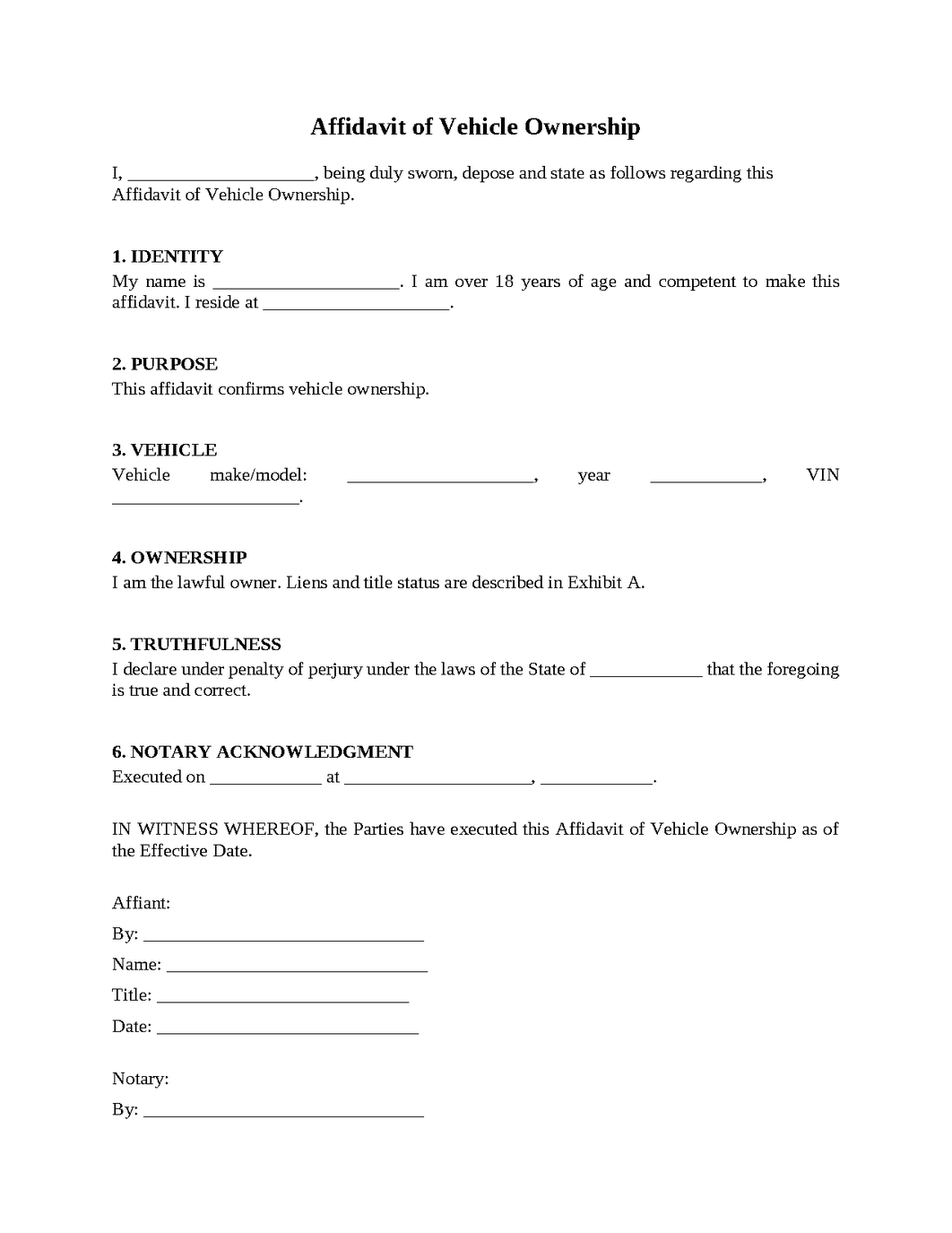
Affidavit of Vehicle Ownership
An Affidavit of Vehicle Ownership is a sworn statement used to establish ownership of a vehicle when standard ownership documentation is unavailable, incomplete, inaccurate, or disputed. State motor vehicle departments, insurance companies, lenders, courts, buyers, sellers, and law enforcement agencies may require this document when title records are missing, vehicle ownership is unclear, or additional verification is needed before a vehicle can be registered, sold, insured, or transferred. The affidavit provides a formal statement regarding how ownership was acquired, who currently owns the vehicle, and why traditional documentation may not be available. When prepared accurately, the document can help resolve ownership questions and facilitate vehicle transactions. When ownership remains uncertain, however, registration delays, title disputes, financial losses, and legal complications can result.
The Vehicle Title Has Been Lost
A homeowner purchases a used utility trailer from a neighbor and receives what appears to be all necessary paperwork. Several years later, the owner decides to sell the trailer and discovers that the original title cannot be located.
The owner searches through filing cabinets, storage boxes, and vehicle records but cannot find the document. The buyer is ready to purchase the trailer, but without proof of ownership, the transaction cannot proceed easily.
Situations like this occur frequently. Vehicle titles are often misplaced during moves, accidentally destroyed, damaged by water or fire, or simply lost over time. Owners may not realize the title is missing until they attempt to sell, refinance, register, or transfer the vehicle.
Without ownership documentation, buyers become hesitant. State agencies may refuse registration requests. Lenders may decline financing. Insurance companies may request additional verification.
The issue becomes even more complicated when many years have passed since the vehicle was acquired. Prior owners may be difficult to locate, and supporting records may be limited.
An Affidavit of Vehicle Ownership helps establish a sworn record explaining how the vehicle was acquired and why the title is unavailable. While the affidavit may not replace every title requirement, it often becomes an important part of the process for resolving ownership questions.
Multiple People Claim Ownership of the Same Vehicle
A classic car has been stored in a garage for decades. After the original owner's death, several family members begin discussing what should happen to the vehicle.
One child claims the vehicle was given to them years earlier. Another insists that the car remained part of the parent's estate. A third family member argues that they paid for restoration work and therefore have an ownership interest.
The disagreement quickly escalates because the vehicle has significant value. Each person believes they have a legitimate claim.
Ownership disputes involving vehicles are more common than many people realize. Informal transfers, family arrangements, verbal agreements, and incomplete paperwork frequently create confusion regarding ownership rights.
Without clear documentation, buyers may refuse to proceed with purchases, insurers may hesitate to issue coverage, and state agencies may decline registration requests.
Resolving the dispute may require reviewing historical records, maintenance receipts, registration histories, insurance documents, and witness testimony.
An Affidavit of Vehicle Ownership helps create a formal record regarding the ownership claim being asserted. While it may not eliminate competing claims, it provides important evidence regarding how ownership was acquired and why the claimant believes they own the vehicle.
Registration Records Contain Incorrect Information
A business owner purchases a commercial truck and properly completes the transfer process. Years later, the owner discovers that state registration records contain an error regarding the owner's name.
The mistake initially appears minor. However, when the owner attempts to sell the truck, the discrepancy creates concerns regarding whether the vehicle actually belongs to the person listed as the seller.
Errors in registration records can arise for many reasons. Clerical mistakes, typographical errors, name changes, incomplete applications, and data-entry problems all contribute to ownership questions.
Even small discrepancies can create significant complications. Buyers want confidence that they are purchasing from the rightful owner. Financial institutions and insurance companies often require accurate records before completing transactions.
Correcting government records may require substantial documentation. Agencies often need evidence showing how the error occurred and why the correction is appropriate.
An Affidavit of Vehicle Ownership helps explain the ownership history and clarify discrepancies between official records and the owner's claim. The document can support requests to correct inaccurate records and facilitate future transactions.
A Vehicle Is Purchased Without Proper Documentation
A farmer purchases an older pickup truck from a neighboring rancher. The transaction occurs informally, and both parties believe the arrangement is straightforward. Payment is exchanged, and possession of the vehicle changes hands.
Several months later, the buyer attempts to register the truck and discovers that important ownership documents were never transferred. The seller cannot locate the title, and records regarding prior ownership are incomplete.
This situation is common with older vehicles, trailers, farm equipment, motorcycles, and recreational vehicles. Informal transactions frequently occur between friends, neighbors, and family members without strict attention to paperwork requirements.
The lack of documentation creates uncertainty. State agencies need evidence supporting the ownership transfer. Buyers need a way to establish that they acquired the vehicle legitimately.
Without sufficient proof, registration may be denied. Future sales may become difficult. Insurance coverage may be affected.
An Affidavit of Vehicle Ownership helps document the circumstances surrounding the purchase and creates a sworn statement regarding the transfer. By recording important facts while they remain available, the affidavit can support efforts to establish ownership.
A Vehicle Ownership Challenge Delays a Sale
A collector decides to sell a rare antique vehicle. The buyer agrees to pay a substantial purchase price and begins arranging transportation and financing.
During due diligence, however, questions arise regarding the vehicle's ownership history. Historical records contain gaps, and some prior transfers appear incomplete.
The buyer becomes concerned about the possibility of future ownership claims. If someone later challenges ownership, the vehicle's value could be affected significantly.
Ownership issues frequently become more important as vehicle values increase. Collectible automobiles, specialty vehicles, antique motorcycles, and restored classics often involve long ownership histories that may contain missing records.
Buyers, lenders, insurers, and auction companies frequently require additional documentation before proceeding with high-value transactions.
An Affidavit of Vehicle Ownership helps document the seller's ownership claim and explain the history of the vehicle. While additional evidence may still be required, the affidavit provides a formal record supporting the transaction and addressing ownership concerns.
Ownership is one of the most important issues affecting any vehicle transaction. Questions regarding lost titles, disputed ownership claims, inaccurate records, incomplete transfers, and historical ownership gaps frequently arise when vehicles are bought, sold, registered, or insured. An Affidavit of Vehicle Ownership provides a practical tool for documenting ownership claims and explaining circumstances that may not be reflected fully in official records. When completed accurately and supported by reliable information, the affidavit can help reduce uncertainty, facilitate transactions, and provide agencies and third parties with greater confidence when evaluating vehicle ownership.
:::

Get started with Upsign today!
Easily send, sign and track your documents