

Executive Employment Agreement
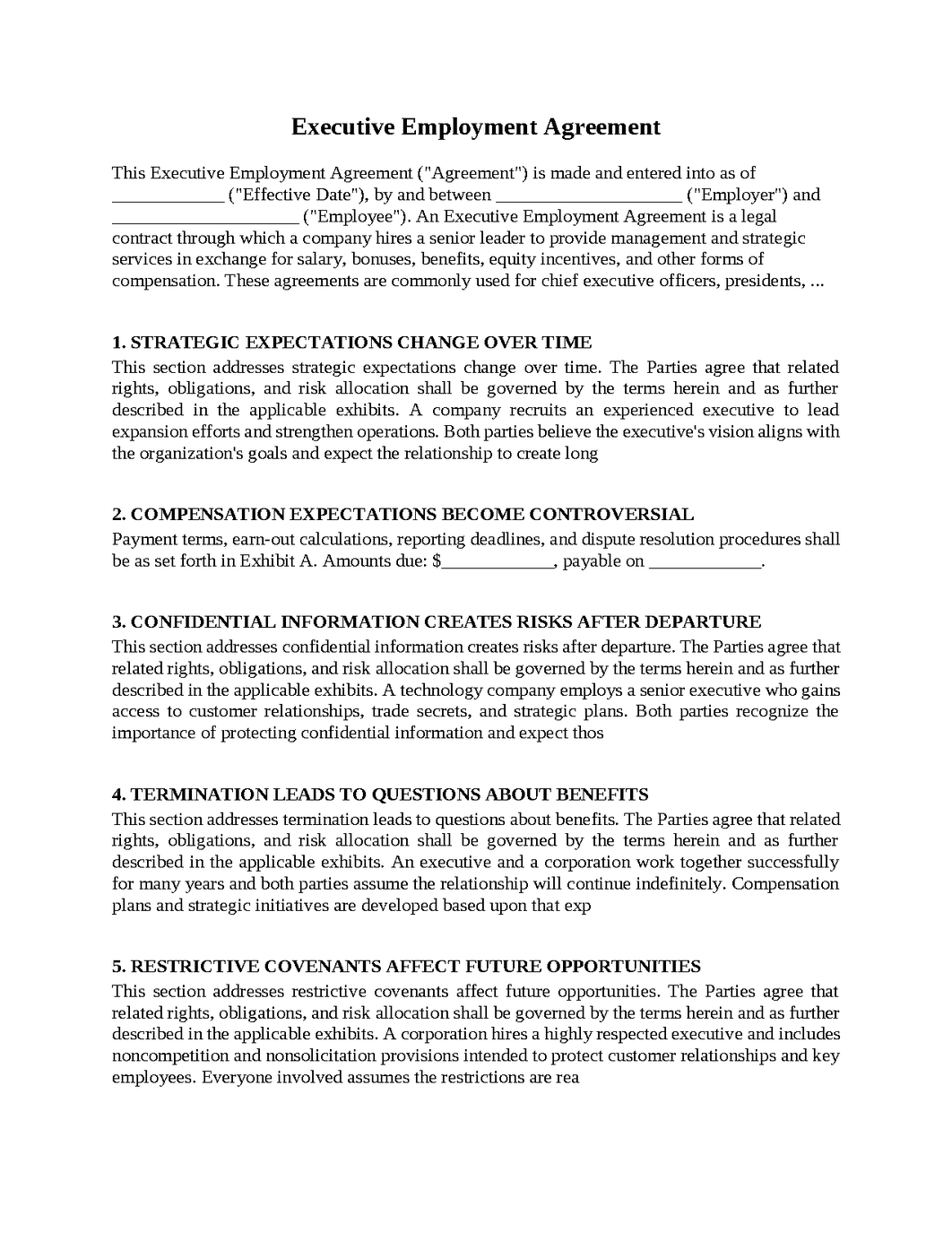
An Executive Employment Agreement is a legal contract through which a company hires a senior leader to provide management and strategic services in exchange for salary, bonuses, benefits, equity incentives, and other forms of compensation. These agreements are commonly used for chief executive officers, presidents, chief financial officers, chief operating officers, and other key executives whose decisions significantly influence the success of an organization. An Executive Employment Agreement typically addresses duties and responsibilities, compensation, performance expectations, confidentiality obligations, restrictive covenants, termination rights, and succession planning. Because executive relationships involve substantial responsibilities and long-term commitments, disputes can arise when expectations regarding authority and compensation are not documented clearly. A carefully drafted Executive Employment Agreement helps establish certainty and protect the interests of both the executive and the company.
Strategic Expectations Change Over Time
A company recruits an experienced executive to lead expansion efforts and strengthen operations. Both parties believe the executive's vision aligns with the organization's goals and expect the relationship to create long-term value.
During the first several years, the company grows and important initiatives are successfully implemented. Eventually, however, market conditions change and the board of directors begins pursuing strategies that differ from those discussed when the executive was hired.
The executive believes the original understanding emphasized growth and long-term investment and expects the company to support that vision. The board believes changing circumstances require different priorities and argues that leadership must adapt to new realities. As disagreements regarding direction become more frequent, tensions develop regarding the executive's role and responsibilities.
To help avoid this problem, an Executive Employment Agreement should clearly establish duties and expectations and define procedures for addressing significant changes in strategy and authority.
Compensation Expectations Become Controversial
A healthcare company hires a senior executive and offers compensation consisting of salary, bonuses, and long-term incentives. Both parties believe the arrangement provides appropriate rewards and encourages sustained performance.
As the company evolves, financial results fluctuate and questions arise regarding bonus calculations and incentive opportunities. New management philosophies and changing priorities create different interpretations regarding the standards that determine compensation.
The executive believes years of leadership and significant accomplishments justify the anticipated rewards. The company believes compensation should reflect current performance and argues that changing conditions require flexibility. As annual reviews become increasingly difficult, disagreements emerge regarding how compensation should be determined.
To help prevent these issues, an Executive Employment Agreement should clearly establish compensation terms and define the standards governing incentive payments.
Confidential Information Creates Risks After Departure
A technology company employs a senior executive who gains access to customer relationships, trade secrets, and strategic plans. Both parties recognize the importance of protecting confidential information and expect those protections to remain effective.
After several successful years, the executive resigns and pursues opportunities elsewhere. Concerns arise regarding whether confidential information could be used in ways that benefit competitors and harm the company's position.
The company believes years of investment and proprietary information justify continuing obligations designed to protect valuable assets. The executive believes professional experience and general knowledge should remain available for future opportunities. As competition intensifies, disagreements emerge regarding the limits of confidentiality obligations.
To help avoid these problems, an Executive Employment Agreement should clearly establish confidentiality requirements and define the obligations that survive after employment ends.
Termination Leads to Questions About Benefits
An executive and a corporation work together successfully for many years and both parties assume the relationship will continue indefinitely. Compensation plans and strategic initiatives are developed based upon that expectation.
Unexpected changes in leadership and priorities eventually result in the executive's separation from the company. Questions immediately arise regarding severance, deferred compensation, bonuses, and stock awards.
The executive believes years of service justify generous treatment and expects previously earned benefits to be honored. The company believes certain payments depend upon the circumstances surrounding the departure and argues that contractual limitations remain enforceable. As negotiations become increasingly emotional, both sides begin interpreting the agreement differently.
To help prevent these issues, an Executive Employment Agreement should clearly establish termination provisions and define the rights and obligations that apply when employment ends.
Restrictive Covenants Affect Future Opportunities
A corporation hires a highly respected executive and includes noncompetition and nonsolicitation provisions intended to protect customer relationships and key employees. Everyone involved assumes the restrictions are reasonable and unlikely to become problematic.
Following the executive's departure, opportunities arise with businesses operating in similar industries. Questions emerge regarding whether accepting those positions would violate the agreement.
The company believes the restrictions are necessary to protect investments and competitive advantages developed over many years. The executive believes the limitations are too broad and interfere with the ability to pursue a livelihood. As new opportunities become available, tensions increase regarding the enforceability and scope of the restrictions.
To help avoid this problem, an Executive Employment Agreement should clearly establish restrictive covenants and define the obligations that continue after the employment relationship concludes.
Executive Employment Agreements are valuable tools that provide clarity regarding leadership responsibilities and compensation while protecting important business interests. However, issues involving strategic expectations, compensation disputes, confidentiality concerns, termination rights, and restrictive covenants can become significant sources of conflict when expectations are not documented clearly. A carefully drafted Executive Employment Agreement provides a structured framework for allocating responsibilities and protecting the interests of both companies and executives. When prepared thoughtfully, it can reduce uncertainty, strengthen leadership relationships, encourage long-term growth, and provide the foundation necessary for successful executive management.

Get started with Upsign today!
Easily send, sign and track your documents