

Recruiting Agreement
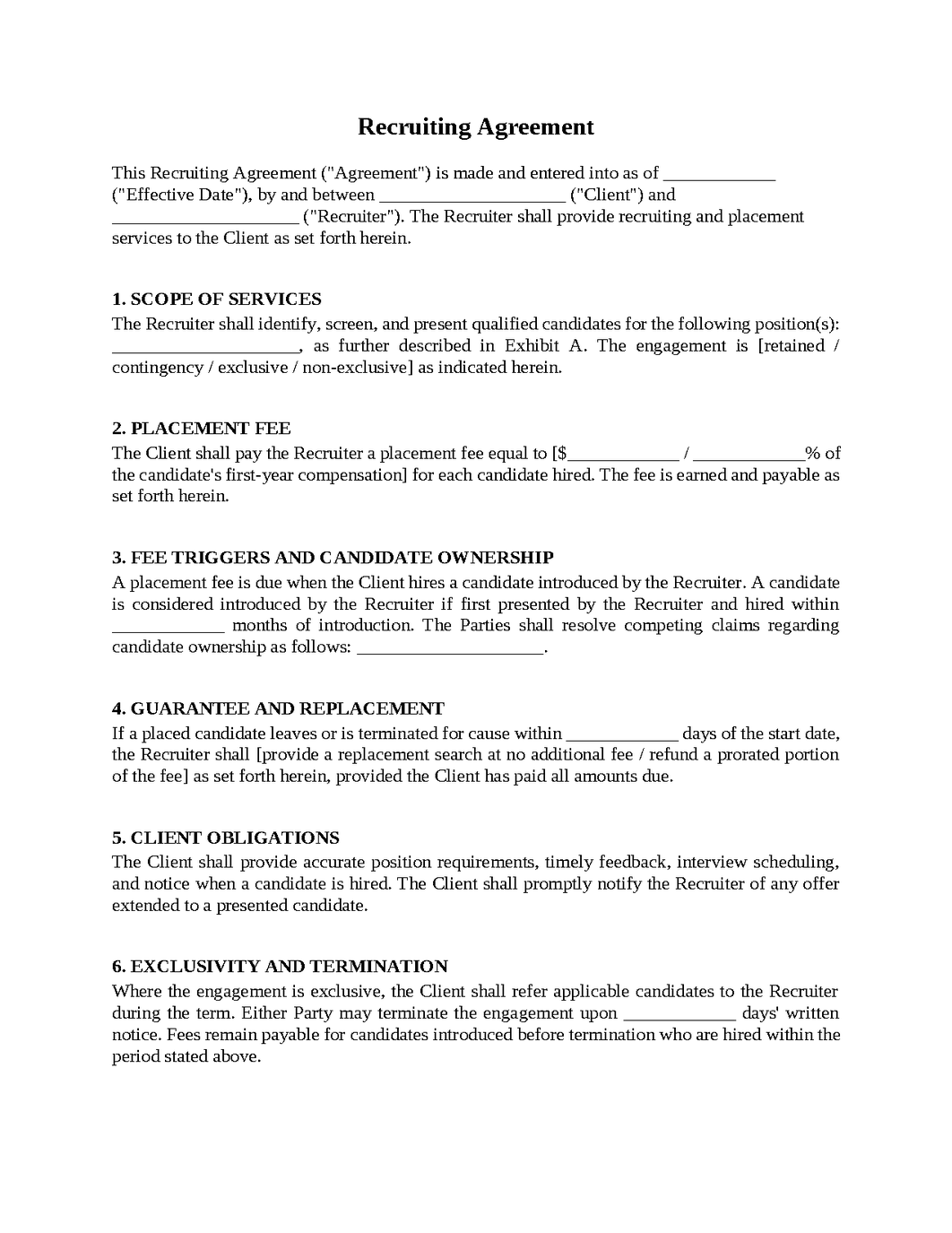
A Recruiting Agreement is a legal contract that establishes the terms under which a recruiter, staffing agency, executive search firm, or talent acquisition consultant assists a client in identifying, evaluating, and hiring candidates for employment or contract positions. Recruiting Agreements are commonly used by businesses, healthcare organizations, professional service firms, technology companies, manufacturers, and nonprofit organizations seeking specialized talent. These agreements typically address recruiting services, candidate sourcing, placement fees, exclusivity provisions, replacement guarantees, confidentiality obligations, and termination rights. Because recruiting efforts often involve significant time, expense, and competition among multiple recruiters, disputes can arise when expectations regarding compensation and candidate ownership are not clearly documented. A well-drafted Recruiting Agreement helps protect both the recruiter and the client while promoting successful hiring outcomes.
The Client Hires a Candidate but Refuses to Pay the Fee
A recruiting firm is engaged to help a growing company fill a difficult leadership position. The recruiter spends months sourcing candidates, conducting interviews, and coordinating discussions between the parties.
Eventually, the recruiter introduces a highly qualified candidate who progresses through the hiring process. After several rounds of interviews, the company hires the candidate and the position is filled successfully.
When the recruiter submits an invoice, however, the company argues that internal referrals, management interviews, and company recruiting efforts were the primary reasons the candidate accepted the position. The recruiter disagrees and points out that the candidate was introduced through the recruiting engagement.
The dispute quickly centers on whether the recruiter's efforts were the procuring cause of the hire.
What should have been a successful placement becomes a disagreement regarding compensation.
To help avoid this problem, a Recruiting Agreement should clearly define when placement fees are earned, establish candidate ownership procedures, and identify the circumstances under which compensation becomes payable.
Multiple Recruiters Claim the Same Candidate
A company hires several recruiting firms simultaneously to accelerate hiring efforts.
Each recruiter begins sourcing candidates and presenting qualified individuals for consideration. During the search process, two recruiters submit the same candidate within a short period of time.
Months later, the company hires the candidate. Both recruiters claim entitlement to the placement fee and provide records showing prior communications with the individual.
The company becomes caught between competing claims and is uncertain which recruiter should be paid. Each recruiter believes its efforts were responsible for the eventual hire.
The disagreement delays payment and damages professional relationships.
To reduce these risks, a Recruiting Agreement should establish candidate submission procedures, define ownership periods, require written candidate presentations, and explain how competing claims will be resolved.
The Employee Leaves Shortly After Being Hired
A recruiter successfully places a candidate with a client company after an extensive search process.
The company pays the recruiting fee and expects the new employee to become a long-term contributor. Within a few months, however, the employee resigns unexpectedly due to cultural differences, relocation plans, or dissatisfaction with the position.
The company becomes frustrated because it invested substantial resources in onboarding and training. Management argues that the placement was unsuccessful and requests a refund.
The recruiter responds that a qualified candidate was provided and that many factors influencing retention fall outside the recruiter's control.
The disagreement becomes a dispute regarding replacement guarantees and fee obligations.
To help prevent these issues, a Recruiting Agreement should clearly address replacement guarantees, refund policies, eligibility requirements, and the circumstances under which additional recruiting services will be provided at reduced or no cost.
Confidential Hiring Plans Are Disclosed
A company engages a recruiter to conduct a confidential search for a senior executive.
The search is sensitive because the current executive remains employed and no public announcement has been made regarding future leadership changes. The recruiter receives access to confidential business information, compensation details, and strategic plans.
During the search process, rumors begin circulating within the industry regarding the planned leadership transition. The company becomes concerned that confidential information has been disclosed.
The recruiter believes reasonable precautions were taken and that any information sharing was necessary to attract qualified candidates.
Trust deteriorates because confidentiality was one of the most important aspects of the engagement.
To help avoid these problems, a Recruiting Agreement should clearly define confidential information, establish disclosure restrictions, identify permissible communications, and specify remedies for confidentiality breaches.
The Client Terminates the Search Midway Through the Process
A company hires a recruiter to fill several important positions as part of a major growth initiative.
The recruiter spends substantial time sourcing candidates, conducting interviews, advertising opportunities, and coordinating meetings. Several candidates are actively progressing through the hiring process when the company experiences budget cuts and decides to suspend hiring.
The recruiter believes compensation should be paid for work already performed. The company argues that no placement occurred and therefore no fee should be owed.
Questions arise regarding expense reimbursement, partial compensation, and the status of active candidates.
Neither party anticipated ending the engagement before the search concluded.
To reduce these risks, a Recruiting Agreement should establish termination rights, define compensation obligations for partially completed work, address expense reimbursement, and identify responsibilities regarding active candidates if the engagement ends prematurely.
Recruiting Agreements play an important role in helping organizations identify and hire qualified talent in competitive markets. However, issues involving placement fees, candidate ownership, replacement guarantees, confidentiality obligations, and early termination can become significant sources of conflict when expectations are not documented clearly. A carefully drafted Recruiting Agreement provides a structured framework for managing these relationships and protecting all parties involved. When prepared thoughtfully, it can help reduce misunderstandings, improve hiring outcomes, safeguard confidential information, and support successful long-term recruiting partnerships.

Get started with Upsign today!
Easily send, sign and track your documents