

Assignment of Aircraft Lease Agreement
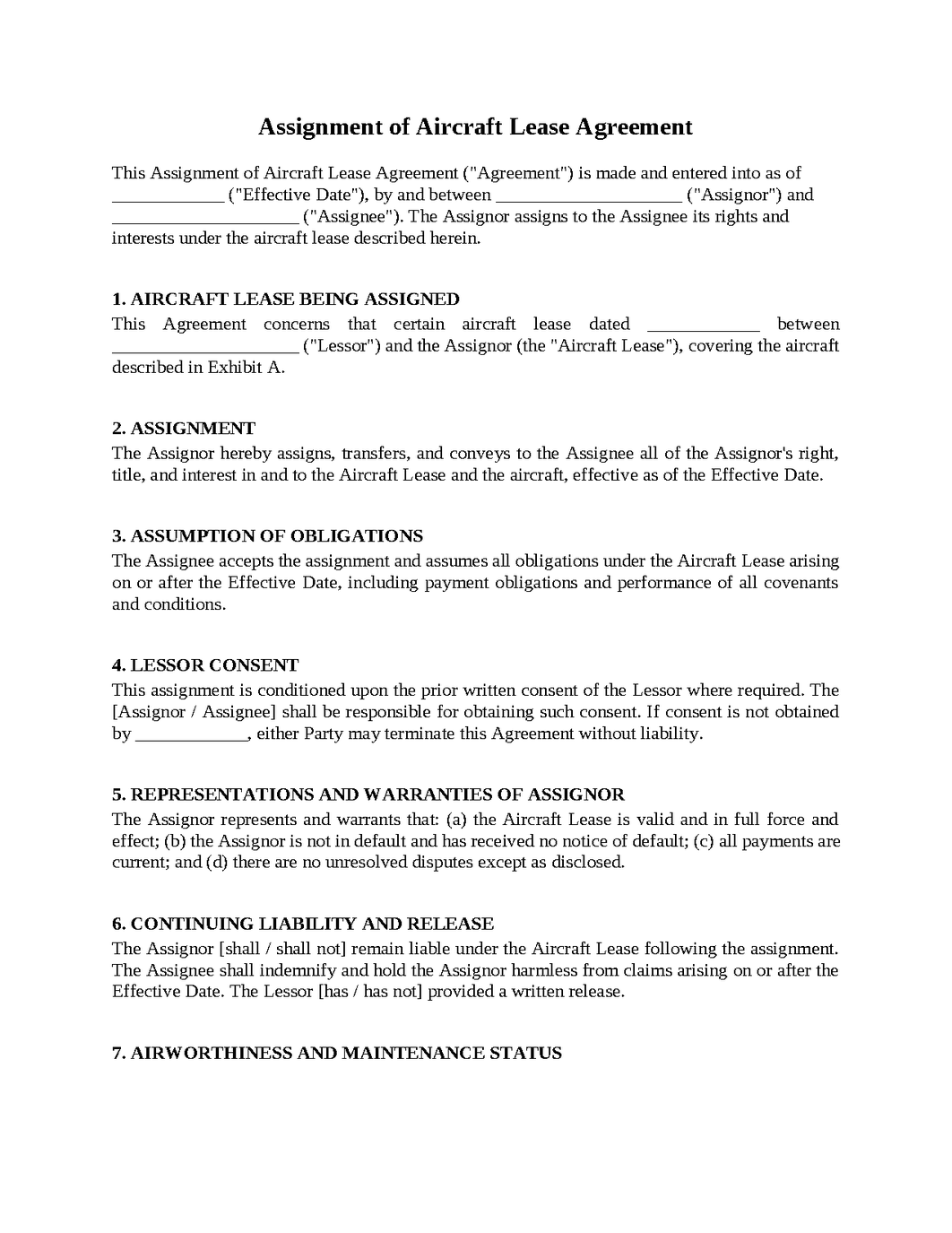
An Assignment of Aircraft Lease Agreement is a legal contract used when a lessee transfers its rights and obligations under an aircraft lease to another person or entity. The party transferring the lease is known as the assignor, while the party assuming the lease is known as the assignee. Aircraft lease assignments commonly occur in commercial aviation, charter operations, corporate flight departments, flight training organizations, cargo carriers, and private aviation transactions. Because aircraft are high-value assets subject to extensive regulatory, maintenance, insurance, and operational requirements, assigning an aircraft lease presents risks far greater than those associated with most other leased assets. An Assignment of Aircraft Lease Agreement helps establish who assumes responsibility for the aircraft and how future obligations will be allocated among the parties.
The Lessee Transfers the Aircraft Without Lessor Approval
A regional charter operator leases a midsize business jet to support client travel throughout the western United States. After experiencing a decline in demand, the company determines that it can no longer justify the monthly lease expense.
Another charter company expresses interest in taking over the aircraft. The proposed assignee already operates a similar fleet, employs qualified pilots, and appears financially capable of assuming the lease obligations.
Because both companies are eager to complete the transaction, they focus primarily on operational logistics. The aircraft is transferred, crews are trained, and charter flights begin under the new operator's control.
Several months later, the leasing company discovers the change through maintenance records and insurance documentation. Upon reviewing the lease, the lessor identifies a provision requiring written consent before any assignment may occur.
No consent was requested.
The lessor immediately objects and raises concerns regarding the assignee's financial condition, insurance coverage, operational procedures, and regulatory compliance. What initially appeared to be a straightforward business arrangement now threatens the continued use of a multimillion-dollar aircraft.
The assignee faces uncertainty regarding its ability to continue operating the aircraft, while the assignor risks default claims and substantial contractual penalties.
To help avoid this problem, an Assignment of Aircraft Lease Agreement should clearly identify all required approvals and make lessor consent a condition of the assignment. The agreement should also allocate responsibility for obtaining approvals and establish procedures if the lessor refuses to authorize the transfer.
The Assignee Discovers Major Maintenance Obligations Are Approaching
A corporate flight department assumes an aircraft lease covering a ten-year-old business jet. The lease terms appear attractive, and the aircraft's operating history seems satisfactory during preliminary review.
Management focuses heavily on monthly lease costs and operational capabilities. The aircraft appears airworthy, maintenance logs are available, and the transaction moves forward.
Several months after taking possession, the assignee learns that a major scheduled maintenance event is approaching. The required inspection is extensive, will take the aircraft out of service for weeks, and is expected to cost hundreds of thousands of dollars.
Further review reveals that the maintenance requirement was known long before the assignment occurred.
The assignee becomes frustrated. The economics of the transaction change dramatically once the upcoming maintenance costs are considered. Flight schedules must be adjusted, budgets must be revised, and replacement aircraft may need to be secured.
The assignor argues that maintenance records were available for review and that no information was concealed. The assignee believes the approaching maintenance event should have been disclosed more prominently.
Aircraft transactions frequently encounter this issue because maintenance status can dramatically affect the value and cost of operating an aircraft.
To reduce these risks, an Assignment of Aircraft Lease Agreement should require disclosure of maintenance status, upcoming inspections, airworthiness directives, deferred maintenance items, engine reserves, component life limits, and other material factors affecting future operating costs.
The Original Lessee Remains Liable Years After the Assignment
A cargo carrier assigns an aircraft lease to another aviation company after restructuring its fleet. Management believes the assignment will eliminate future obligations associated with the aircraft.
The assignee operates the aircraft successfully for several years and makes lease payments on time.
Eventually, however, economic conditions deteriorate. The assignee experiences financial difficulties and defaults under the lease.
The lessor immediately contacts the original lessee.
Management is shocked. The company has not operated the aircraft for years and assumed all obligations ended when the assignment was completed.
The lessor points to provisions in the lease stating that the original lessee remains liable unless expressly released. No release was ever granted.
The assignor now faces significant exposure involving unpaid lease payments, repossession costs, maintenance deficiencies, and potential damage claims.
The financial consequences are substantial because aircraft leases often involve obligations measured in millions of dollars rather than thousands.
To avoid these problems, an Assignment of Aircraft Lease Agreement should address continuing liability directly. The agreement should specify whether the assignor remains responsible after the transfer and require the assignee to indemnify the assignor against future claims. Whenever possible, the assignor should seek a formal written release from the lessor.
Regulatory Compliance Problems Surface After the Transfer
A flight training organization assumes an aircraft lease covering several training aircraft used for pilot instruction.
The organization focuses primarily on operational needs and lease economics. The aircraft appear suitable for training purposes and the lease terms are favorable.
Several months after the assignment, a regulatory audit reveals compliance concerns.
Maintenance documentation contains gaps. Certain operational records are incomplete. Questions arise regarding airworthiness compliance and documentation required under aviation regulations.
The aviation authority begins reviewing the aircraft's operational history.
The assignee becomes concerned because regulatory issues can affect not only the leased aircraft but also broader operational certifications and business activities.
Flight schedules are disrupted while documentation is reviewed and corrective measures are implemented.
The assignor argues that the aircraft were operating normally when transferred. The assignee believes regulatory deficiencies should have been disclosed before the assignment occurred.
To reduce these risks, an Assignment of Aircraft Lease Agreement should require disclosure of regulatory issues, audits, enforcement actions, documentation deficiencies, and known compliance concerns. The agreement should also allocate responsibility for pre-assignment regulatory matters that emerge after closing.
An Accident Creates Massive Liability Questions
A private aviation company assumes a lease covering a light business jet used for charter operations.
The assignment appears successful. Insurance is obtained, pilots are approved, and operations proceed without incident for many months.
Then a serious accident occurs.
Investigations begin immediately. Insurers, regulators, attorneys, and the lessor all become involved. Questions emerge regarding maintenance history, pilot qualifications, operational procedures, and insurance coverage.
During the investigation, attention turns to the aircraft's history before the assignment occurred.
The assignee alleges that certain maintenance issues may have originated before the transfer. The assignor denies responsibility and argues that all obligations transferred when the assignment became effective.
The potential financial exposure is enormous. Litigation costs, insurance disputes, regulatory investigations, and reputational harm affect multiple parties.
What began as a routine lease assignment now becomes the focus of a major legal dispute.
To help avoid these situations, an Assignment of Aircraft Lease Agreement should clearly allocate liability for pre-assignment and post-assignment events. The agreement should require proof of insurance, establish indemnification obligations, address maintenance responsibility, and clearly define which party bears responsibility for claims arising from events occurring before and after the transfer date.
Aircraft leases involve some of the most complex and heavily regulated assets used in modern business. Assigning an aircraft lease requires careful attention to lessor approvals, maintenance obligations, regulatory compliance, insurance requirements, and continuing liability risks. An Assignment of Aircraft Lease Agreement provides a structured framework for documenting these transfers and clarifying expectations regarding operational, financial, and legal responsibilities. When drafted carefully, it can help reduce disputes, protect valuable aviation assets, and provide confidence regarding the successful transfer of aircraft lease rights and obligations.

Get started with Upsign today!
Easily send, sign and track your documents