

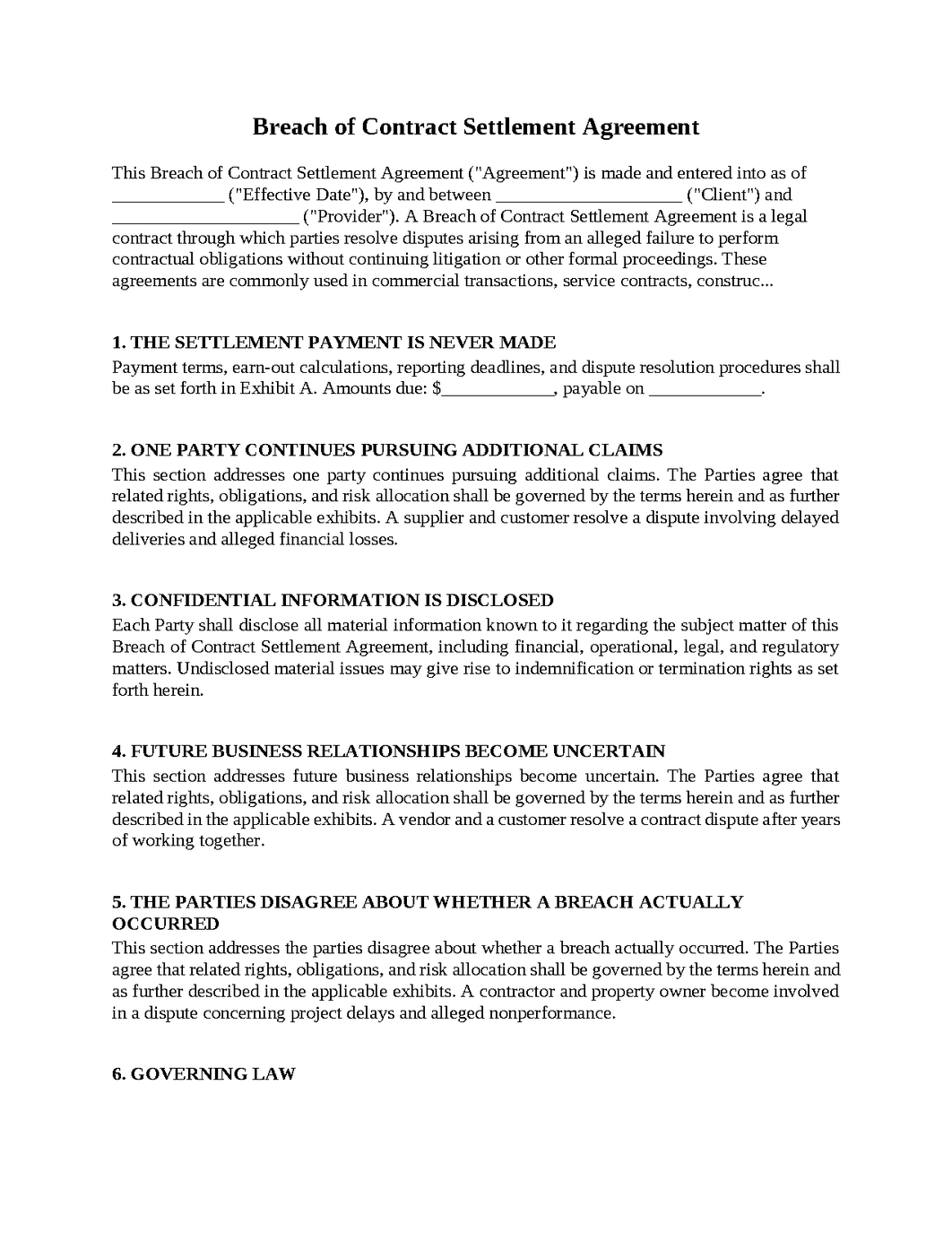
Breach of Contract Settlement Agreement
A Breach of Contract Settlement Agreement is a legal contract through which parties resolve disputes arising from an alleged failure to perform contractual obligations without continuing litigation or other formal proceedings. These agreements are commonly used in commercial transactions, service contracts, construction projects, vendor relationships, employment matters, real estate transactions, licensing arrangements, and business partnerships. A Breach of Contract Settlement Agreement typically addresses disputed claims, settlement payments, release provisions, confidentiality obligations, and the rights and responsibilities that survive the resolution. Because contract disputes often involve competing interpretations and significant financial consequences, disagreements can arise when expectations regarding the settlement are not documented clearly. A carefully drafted Breach of Contract Settlement Agreement helps provide finality and preserve valuable business relationships.
The Settlement Payment Is Never Made
Two companies become involved in a dispute after one party allegedly fails to perform under a service agreement.
After months of negotiations, both parties decide that resolving the matter privately is preferable to continuing litigation. They execute a Breach of Contract Settlement Agreement that requires one party to make a series of payments in exchange for a release of claims.
Initially, everyone believes the dispute has been resolved successfully. However, the settlement payments stop after the first installment, and communication between the parties becomes increasingly difficult.
The party expecting payment believes the original dispute has simply been replaced by a new breach. The paying party argues that unexpected financial difficulties have made compliance impossible.
The disagreement shifts from the original contract to the obligations created by the settlement itself.
To help avoid this problem, a Breach of Contract Settlement Agreement should clearly establish payment terms, default provisions, and the remedies available if settlement obligations are not satisfied.
One Party Continues Pursuing Additional Claims
A supplier and customer resolve a dispute involving delayed deliveries and alleged financial losses.
The parties negotiate a Breach of Contract Settlement Agreement and exchange payments intended to resolve the matter permanently. Both businesses expect to move forward and restore normal operations.
Several months later, one party asserts new claims based upon circumstances that existed before the settlement but were not specifically discussed during negotiations.
The other party believes the settlement was intended to provide complete closure and eliminate all prior disputes. The party asserting the claims argues that certain issues were never included in the resolution.
The disagreement centers on the scope of the release and whether additional claims remain viable.
To help prevent these issues, a Breach of Contract Settlement Agreement should clearly identify the claims being released and specify which rights, if any, survive the settlement.
Confidential Information Is Disclosed
Two businesses resolve a highly contentious dispute involving allegations of nonperformance and financial damages.
As part of the settlement, both parties agree to maintain confidentiality regarding the terms of the agreement and the underlying dispute. They believe confidentiality will help preserve reputations and customer relationships.
Shortly after the agreement is signed, information regarding the settlement begins circulating among employees, customers, and competitors. One party believes confidential information was disclosed improperly.
The accused party argues that the information became public through other sources or that the disclosure was legally required.
The disagreement becomes focused on confidentiality rather than the original breach of contract.
To help avoid these problems, a Breach of Contract Settlement Agreement should clearly define confidential information and establish remedies for unauthorized disclosures.
Future Business Relationships Become Uncertain
A vendor and a customer resolve a contract dispute after years of working together.
Although the parties execute a Breach of Contract Settlement Agreement and resolve the immediate disagreement, neither side is certain whether they should continue doing business together.
One party believes the settlement should restore the relationship and permit future transactions. The other believes the agreement merely resolves past claims and does not require continued cooperation.
Misunderstandings emerge regarding future obligations, open purchase orders, and ongoing projects that were not fully addressed during settlement discussions.
The disagreement develops because each side has different expectations regarding the future relationship.
To help prevent these issues, a Breach of Contract Settlement Agreement should clearly address whether existing business relationships will continue and identify any obligations that survive the settlement.
The Parties Disagree About Whether a Breach Actually Occurred
A contractor and property owner become involved in a dispute concerning project delays and alleged nonperformance.
To avoid costly litigation, they execute a Breach of Contract Settlement Agreement without admitting liability. Both parties agree that resolving the matter privately is preferable to continuing the dispute.
Later, statements made by one party suggest that the settlement constitutes an admission that wrongdoing occurred. The other party objects and argues that the agreement specifically avoided assigning fault.
The disagreement creates additional tension because neither party intended the settlement to be viewed as an admission of liability.
The focus shifts from resolving the dispute to protecting reputations and legal positions.
To help avoid these problems, a Breach of Contract Settlement Agreement should clearly address whether liability is admitted and explain the effect of the settlement on future proceedings or statements.
Breach of Contract Settlement Agreements are valuable tools for resolving disputes efficiently and avoiding the expense and uncertainty of prolonged litigation. However, issues involving missed settlement payments, additional claims, confidentiality breaches, future business relationships, and questions regarding liability can become significant sources of conflict when expectations are not documented clearly. A carefully drafted Breach of Contract Settlement Agreement provides a structured framework for resolving disputes and defining the rights and obligations of the parties. When prepared thoughtfully, it can reduce uncertainty, preserve business relationships, avoid future litigation, and provide the finality necessary for everyone involved to move forward with confidence.

Get started with Upsign today!
Easily send, sign and track your documents