

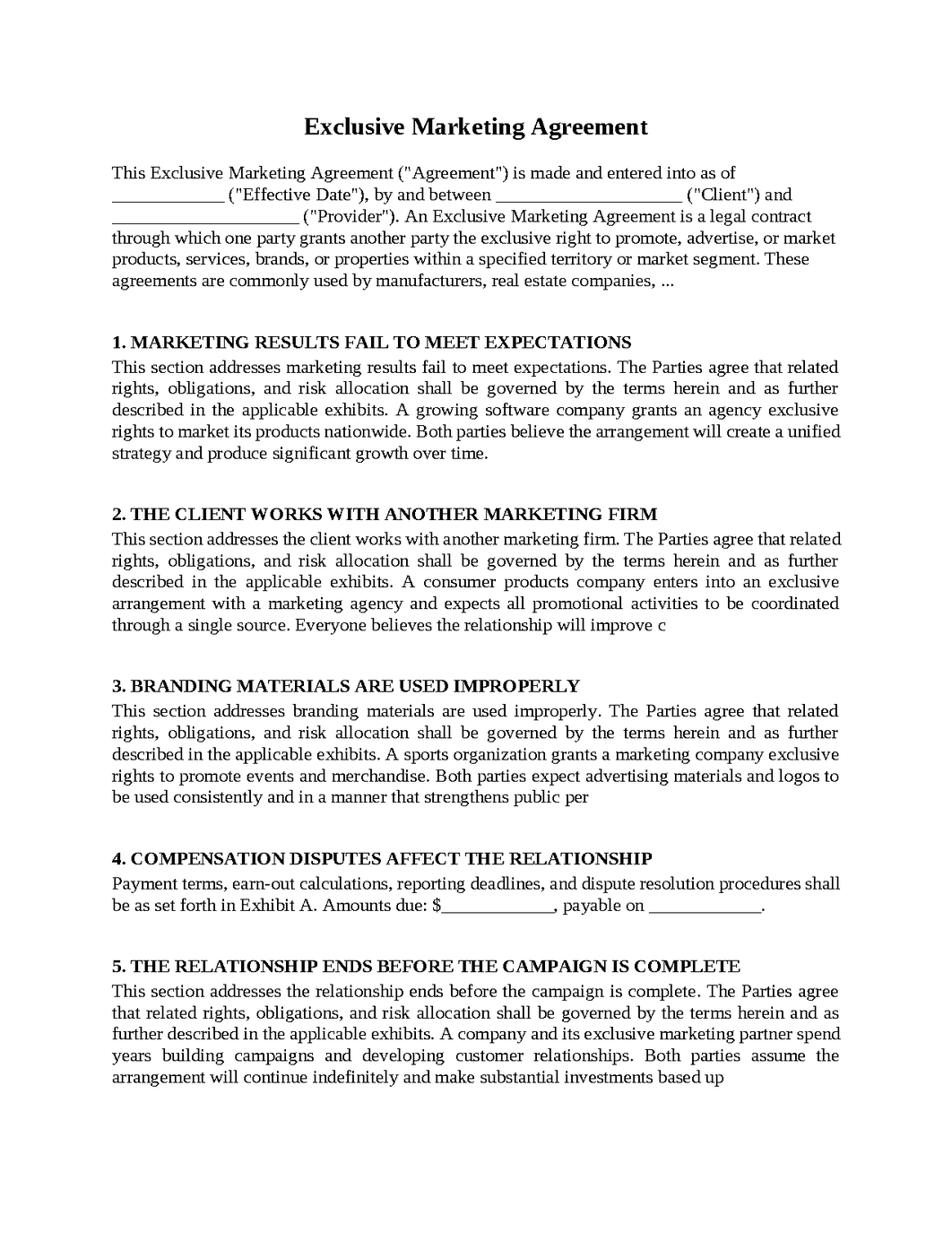
Exclusive Marketing Agreement
An Exclusive Marketing Agreement is a legal contract through which one party grants another party the exclusive right to promote, advertise, or market products, services, brands, or properties within a specified territory or market segment. These agreements are commonly used by manufacturers, real estate companies, software businesses, entertainment companies, professional athletes, and organizations seeking focused promotional efforts from a dedicated marketing partner. An Exclusive Marketing Agreement typically addresses the scope of exclusivity, performance standards, compensation, advertising rights, intellectual property usage, and procedures governing termination and renewal. Because exclusive arrangements often require substantial investments and limit opportunities to work with others, disputes can arise when expectations regarding performance and responsibilities are not documented clearly. A carefully drafted Exclusive Marketing Agreement helps establish certainty and protect the interests of both parties.
Marketing Results Fail to Meet Expectations
A growing software company grants an agency exclusive rights to market its products nationwide. Both parties believe the arrangement will create a unified strategy and produce significant growth over time.
Initially, campaigns generate strong interest and management remains optimistic. As competition increases and customer acquisition becomes more expensive, however, sales growth slows and advertising performance begins falling below expectations.
The software company believes the agency should devote additional resources and develop more effective campaigns because exclusivity was granted based upon promises of strong performance. The agency believes changing market conditions and consumer preferences are affecting results and argues that no marketing strategy guarantees success. As revenues stagnate, tensions emerge regarding whether the exclusive arrangement continues to serve its intended purpose.
To help avoid this problem, an Exclusive Marketing Agreement should clearly establish performance expectations and define the circumstances under which exclusivity may be modified or terminated.
The Client Works With Another Marketing Firm
A consumer products company enters into an exclusive arrangement with a marketing agency and expects all promotional activities to be coordinated through a single source. Everyone believes the relationship will improve consistency and strengthen the brand.
Several years later, the company hires another agency to manage social media campaigns without informing the original marketing firm. Questions quickly arise regarding whether those services violate the exclusivity provisions.
The marketing agency believes exclusivity means it should control all promotional activities and expects compensation for opportunities lost to competitors. The company believes the new services involve specialized expertise that falls outside the original agreement. As communication deteriorates, both parties begin disputing the scope of the exclusive relationship.
To help prevent these issues, an Exclusive Marketing Agreement should clearly define the services covered by exclusivity and establish any exceptions that may apply.
Branding Materials Are Used Improperly
A sports organization grants a marketing company exclusive rights to promote events and merchandise. Both parties expect advertising materials and logos to be used consistently and in a manner that strengthens public perception.
Over time, promotional campaigns begin using modified logos, unapproved slogans, and advertising messages that differ from the organization's branding standards. Management becomes concerned that the company's reputation may suffer.
The sports organization believes its trademarks and brand identity should be carefully controlled and expects prior approval of important campaigns. The marketing company believes flexibility is necessary to respond to changing trends and argues that innovation benefits the brand. As concerns about reputation increase, disagreements emerge regarding the proper use of intellectual property.
To help avoid these problems, an Exclusive Marketing Agreement should clearly establish branding requirements and define how intellectual property may be used.
Compensation Disputes Affect the Relationship
A real estate developer grants exclusive marketing rights to a brokerage firm responsible for attracting buyers to a new project. At the outset, both parties believe the compensation structure provides fair incentives and supports cooperation.
As sales increase, questions arise regarding commissions, advertising reimbursements, and bonuses tied to performance. Different interpretations of the agreement produce conflicting expectations about compensation.
The marketing firm believes its efforts created substantial value and justify additional payments. The developer believes the original compensation arrangement already reflects the value of the services provided. As financial stakes become larger, frustrations increase and trust begins to erode.
To help prevent these issues, an Exclusive Marketing Agreement should clearly establish compensation formulas and define procedures for resolving disputes regarding commissions and reimbursements.
The Relationship Ends Before the Campaign Is Complete
A company and its exclusive marketing partner spend years building campaigns and developing customer relationships. Both parties assume the arrangement will continue indefinitely and make substantial investments based upon that expectation.
Eventually, changing business priorities cause one side to terminate the relationship. Questions arise regarding ownership of advertising materials, ongoing campaigns, customer leads, and obligations associated with unfinished projects.
The marketing company believes it should retain rights to certain materials and receive compensation for work already performed. The client believes control over branding and customer relationships should remain exclusively with the business. As the transition becomes more complicated, both sides begin disagreeing over what obligations survive after termination.
To help avoid this problem, an Exclusive Marketing Agreement should clearly establish termination procedures and identify the rights and responsibilities that continue after the relationship ends.
Exclusive Marketing Agreements are valuable tools that allow businesses to focus promotional efforts while creating incentives for long-term cooperation. However, issues involving performance expectations, competing agencies, branding concerns, compensation disputes, and termination responsibilities can become significant sources of conflict when expectations are not documented clearly. A carefully drafted Exclusive Marketing Agreement provides a structured framework for allocating responsibilities and protecting the interests of both parties. When prepared thoughtfully, it can reduce uncertainty, strengthen relationships, encourage investment, and provide the foundation necessary for successful long-term marketing campaigns.

Get started with Upsign today!
Easily send, sign and track your documents