

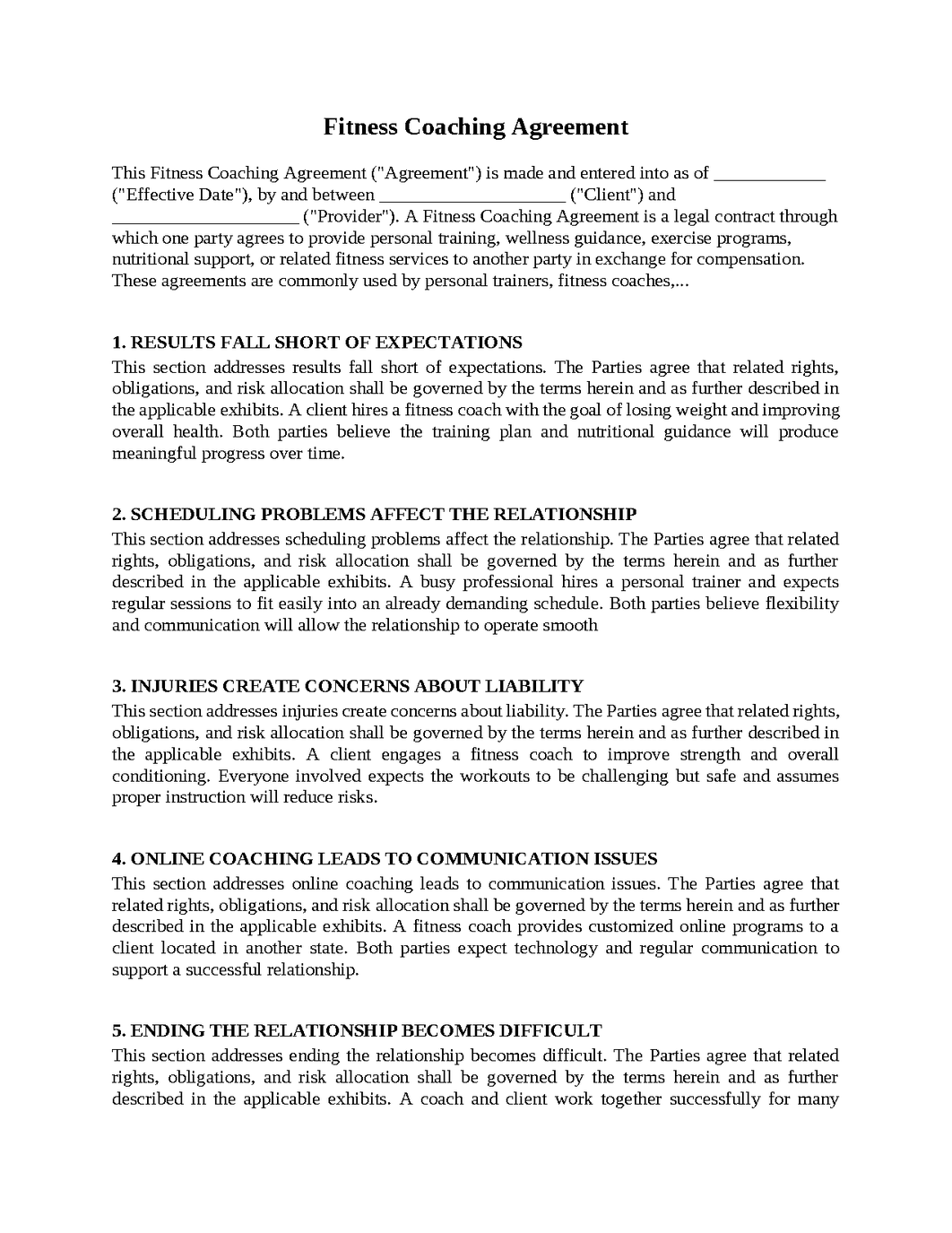
Fitness Coaching Agreement
A Fitness Coaching Agreement is a legal contract through which one party agrees to provide personal training, wellness guidance, exercise programs, nutritional support, or related fitness services to another party in exchange for compensation. These agreements are commonly used by personal trainers, fitness coaches, gyms, online coaching businesses, athletic trainers, and individuals seeking professional assistance with health and fitness goals. A Fitness Coaching Agreement typically addresses the scope of services, scheduling, payment obligations, liability limitations, cancellation policies, and procedures governing termination and renewals. Because fitness programs involve personal expectations, physical performance, and ongoing communication, disputes can arise when expectations regarding responsibilities and results are not documented clearly. A carefully drafted Fitness Coaching Agreement helps establish certainty and protect the interests of both coaches and clients.
Results Fall Short of Expectations
A client hires a fitness coach with the goal of losing weight and improving overall health. Both parties believe the training plan and nutritional guidance will produce meaningful progress over time.
During the first several months, enthusiasm remains high and the client follows most of the recommendations. Eventually, inconsistent attendance and changing personal priorities interfere with progress, and the desired results are not achieved.
The client believes the program should have produced greater improvements and questions whether the coaching methods were effective. The coach believes success depends upon consistent participation and argues that results cannot be guaranteed. As frustrations increase, disagreements emerge regarding responsibility for the lack of progress.
To help avoid this problem, a Fitness Coaching Agreement should clearly establish the scope of services and define that outcomes depend upon individual effort and circumstances.
Scheduling Problems Affect the Relationship
A busy professional hires a personal trainer and expects regular sessions to fit easily into an already demanding schedule. Both parties believe flexibility and communication will allow the relationship to operate smoothly.
Over time, work commitments and family obligations lead to frequent cancellations and rescheduled appointments. Confusion develops regarding missed sessions and whether fees should still apply.
The client believes unexpected conflicts justify flexibility because the cancellations are unavoidable. The coach believes reserved time represents lost opportunities and expects cancellation policies to be honored. As missed appointments increase, tensions develop regarding scheduling expectations.
To help prevent these issues, a Fitness Coaching Agreement should clearly establish scheduling requirements and define the consequences associated with missed or canceled sessions.
Injuries Create Concerns About Liability
A client engages a fitness coach to improve strength and overall conditioning. Everyone involved expects the workouts to be challenging but safe and assumes proper instruction will reduce risks.
During a training session, the client experiences an injury that interrupts progress and requires medical attention. Questions arise regarding whether the exercises were appropriate and whether sufficient warnings and supervision were provided.
The client believes the coach should have recognized physical limitations and modified the exercises accordingly. The coach believes proper instructions were provided and argues that physical activity always involves some degree of risk. As medical expenses and concerns increase, disagreements emerge regarding liability.
To help avoid these problems, a Fitness Coaching Agreement should clearly establish liability limitations and define the responsibilities of both the coach and the client regarding health and safety.
Online Coaching Leads to Communication Issues
A fitness coach provides customized online programs to a client located in another state. Both parties expect technology and regular communication to support a successful relationship.
As the program progresses, delays in responding to questions and confusion regarding workout instructions begin affecting motivation and performance. The client becomes frustrated by the lack of timely feedback.
The client believes ongoing support and communication are essential components of the service being provided. The coach believes reasonable response times have been maintained and argues that the client expected a level of availability that was never promised. As misunderstandings continue, tensions develop regarding service expectations.
To help prevent these issues, a Fitness Coaching Agreement should clearly establish communication standards and define the level of support included in the coaching relationship.
Ending the Relationship Becomes Difficult
A coach and client work together successfully for many months and both assume the relationship will continue indefinitely. Training plans and goals are built around long-term progress and ongoing support.
Eventually, changing priorities and financial considerations lead the client to discontinue the program. Questions arise regarding prepaid sessions, refunds, and access to workout plans and materials.
The client believes unused sessions should be refunded and expects continued access to previously provided resources. The coach believes the agreement governs refunds and argues that proprietary materials remain protected. As the relationship ends, disagreements emerge regarding the obligations that survive termination.
To help avoid this problem, a Fitness Coaching Agreement should clearly establish termination procedures and identify the rights and responsibilities that continue after the coaching relationship concludes.
Fitness Coaching Agreements are valuable tools that allow coaches and clients to work together while creating clear expectations regarding services and responsibilities. However, issues involving performance expectations, scheduling conflicts, injury claims, communication standards, and termination rights can become significant sources of conflict when expectations are not documented clearly. A carefully drafted Fitness Coaching Agreement provides a structured framework for allocating responsibilities and protecting the interests of both parties. When prepared thoughtfully, it can reduce uncertainty, strengthen professional relationships, support long-term success, and provide the foundation necessary for effective fitness coaching.

Get started with Upsign today!
Easily send, sign and track your documents