

Guest Release Agreement
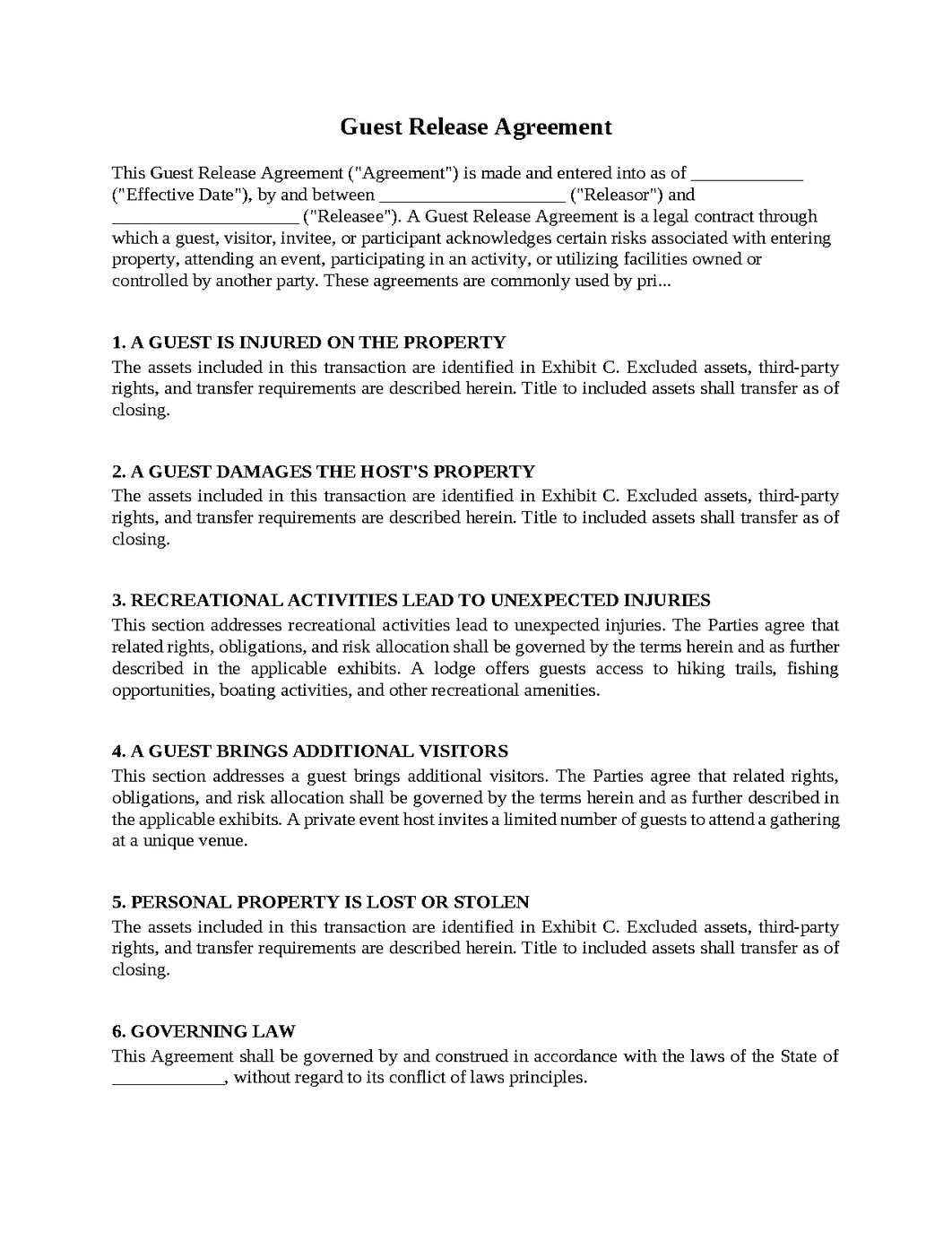
A Guest Release Agreement is a legal contract through which a guest, visitor, invitee, or participant acknowledges certain risks associated with entering property, attending an event, participating in an activity, or utilizing facilities owned or controlled by another party. These agreements are commonly used by private property owners, vacation rental operators, recreational facilities, event hosts, ranches, resorts, hunting lodges, campgrounds, farms, private clubs, and businesses that welcome guests onto their premises. The purpose of a Guest Release Agreement is to inform guests of potential risks and allocate responsibility for injuries, property damage, accidents, or other losses that may occur during the guest's visit. Because guests often enter unfamiliar environments and participate in activities outside their normal routines, disputes can arise when expectations regarding safety and responsibility are not documented clearly. A carefully drafted Guest Release Agreement helps protect both hosts and guests while reducing uncertainty regarding potential claims.
A Guest Is Injured on the Property
A family-owned ranch invites guests to participate in recreational activities on its property.
Before arrival, each guest signs a Guest Release Agreement acknowledging that the property contains natural hazards, uneven terrain, animals, and outdoor recreational activities. Most visitors understand that some level of risk is associated with the experience.
During the visit, a guest suffers an injury while walking through an area of the property. Medical treatment becomes necessary, and the guest later incurs additional expenses related to recovery.
The guest believes certain hazards should have been identified more clearly or addressed before visitors were allowed access. The property owner believes the risks were disclosed and voluntarily accepted as part of the guest experience.
What began as a recreational visit becomes a dispute regarding responsibility for the injury.
To help avoid this problem, a Guest Release Agreement should clearly identify property-related risks and explain the claims guests are agreeing to release.
A Guest Damages the Host's Property
A vacation property owner allows guests to stay at a privately owned residence for a special event.
Before the visit, guests sign a Guest Release Agreement outlining expectations regarding conduct, use of the property, and responsibility for damages. Everyone expects the visit to proceed without incident.
During the stay, significant damage occurs to furnishings, equipment, or other property. The owner believes the damage resulted directly from guest conduct and seeks reimbursement.
The guest argues that some of the damage existed before arrival or resulted from ordinary wear and tear rather than misuse. The owner believes the Guest Release Agreement clearly established responsibility for losses caused during the visit.
The disagreement centers on who bears financial responsibility for the damage.
To help prevent these issues, a Guest Release Agreement should clearly address property damage obligations and establish procedures for documenting the condition of the property before and after the visit.
Recreational Activities Lead to Unexpected Injuries
A lodge offers guests access to hiking trails, fishing opportunities, boating activities, and other recreational amenities.
Guests sign Guest Release Agreements before participating and are encouraged to enjoy the available activities. Most visitors participate without incident and appreciate the recreational opportunities.
One guest is injured while engaging in an activity offered as part of the experience. The guest later claims that insufficient warnings or instructions were provided regarding the risks involved.
The lodge believes the activity involved obvious recreational risks that were disclosed in advance. The guest believes additional guidance or supervision should have been provided.
The disagreement develops because the parties have different expectations regarding responsibility for recreational activities.
To help avoid these problems, a Guest Release Agreement should clearly identify recreational activities, explain associated risks, and define the responsibilities of both hosts and guests.
A Guest Brings Additional Visitors
A private event host invites a limited number of guests to attend a gathering at a unique venue.
Each invited guest signs a Guest Release Agreement before attending. The host expects the agreement to apply to everyone who enters the property.
One guest arrives with additional visitors who were not identified during registration and who never signed the required documents. During the event, an incident occurs involving one of the unregistered attendees.
Questions arise regarding whether the release applies to individuals who were not formally invited or who never executed the agreement. The host believes guests should have complied with attendance requirements before bringing others onto the property.
The disagreement becomes more complicated because some participants completed the required paperwork while others did not.
To help prevent these issues, a Guest Release Agreement should clearly address additional visitors and establish procedures for obtaining consent and releases from all attendees.
Personal Property Is Lost or Stolen
A resort hosts guests for a weekend retreat involving lodging, dining, and recreational activities.
Guests sign Guest Release Agreements and bring personal belongings including electronics, luggage, sporting equipment, and other valuables. Throughout the event, personal property is stored in various locations around the facility.
At the conclusion of the stay, several guests discover that property has been lost, misplaced, or stolen. The guests believe the resort should bear responsibility because the losses occurred on the premises.
The resort argues that guests remained responsible for safeguarding their personal belongings and that the release addressed such risks.
The disagreement focuses on whether losses involving personal property are covered by the agreement.
To help avoid these problems, a Guest Release Agreement should clearly address personal property risks and explain how responsibility for lost, damaged, or stolen belongings will be handled.
Guest Release Agreements are valuable tools for managing risk when individuals are invited onto private property or participate in hosted activities. However, issues involving personal injuries, property damage, recreational activities, unauthorized visitors, and personal belongings can become significant sources of conflict when expectations are not documented clearly. A carefully drafted Guest Release Agreement provides a structured framework for communicating risks and allocating responsibility before a guest's visit begins. When prepared thoughtfully, it can reduce misunderstandings, support safer experiences, protect property owners, and provide greater certainty for hosts and guests alike.

Get started with Upsign today!
Easily send, sign and track your documents