

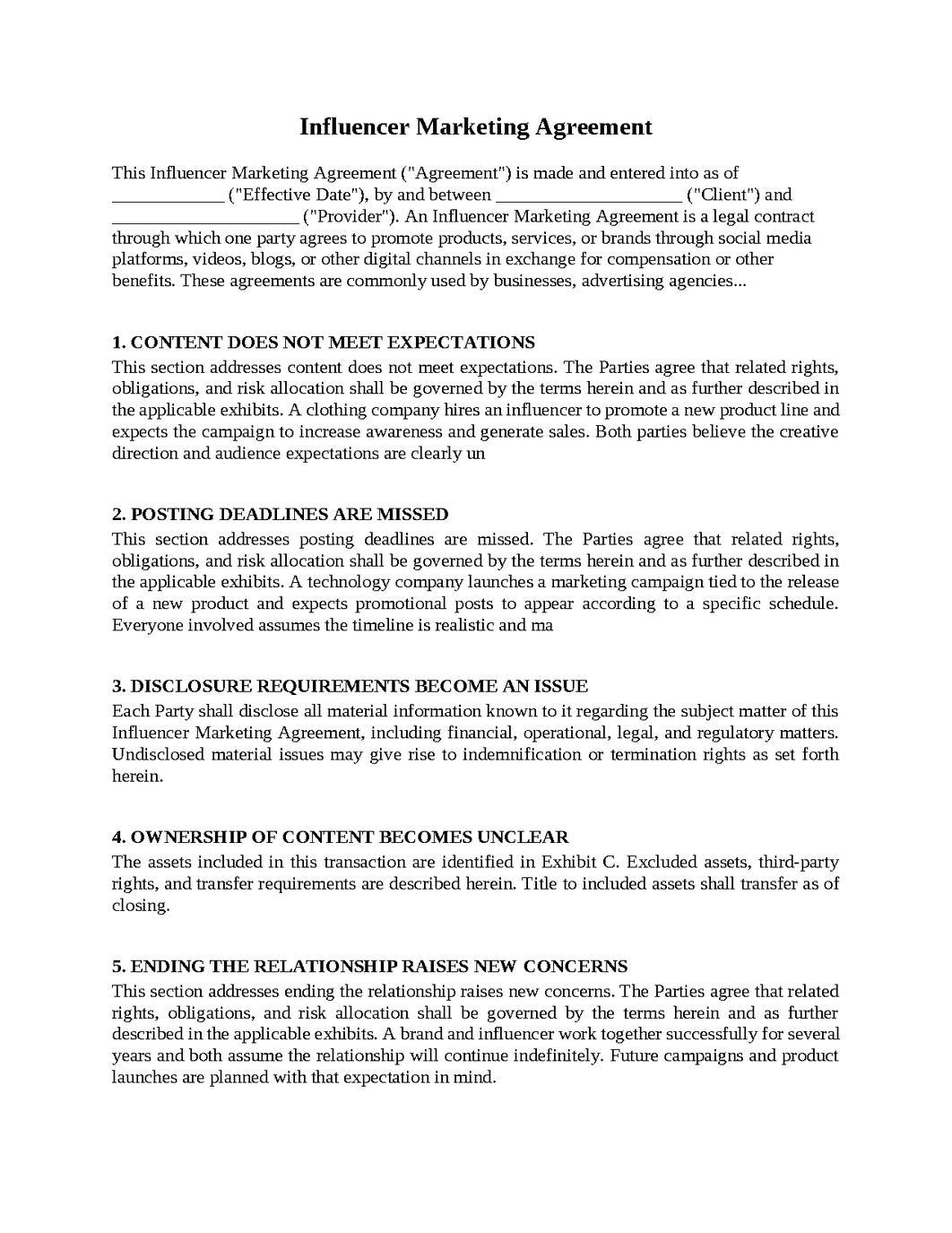
Influencer Marketing Agreement
An Influencer Marketing Agreement is a legal contract through which one party agrees to promote products, services, or brands through social media platforms, videos, blogs, or other digital channels in exchange for compensation or other benefits. These agreements are commonly used by businesses, advertising agencies, content creators, celebrities, and social media personalities seeking to collaborate on marketing campaigns. An Influencer Marketing Agreement typically addresses content requirements, posting schedules, compensation, intellectual property rights, disclosure obligations, and procedures governing termination and disputes. Because marketing campaigns involve brand reputation and public audiences, disputes can arise when expectations regarding performance and responsibilities are not documented clearly. A carefully drafted Influencer Marketing Agreement helps establish certainty and protect the interests of both brands and influencers.
Content Does Not Meet Expectations
A clothing company hires an influencer to promote a new product line and expects the campaign to increase awareness and generate sales. Both parties believe the creative direction and audience expectations are clearly understood.
As content is published, the company becomes dissatisfied with the style, messaging, and quality of the posts. Concerns arise regarding whether the material reflects the brand image and campaign objectives.
The company believes the influencer should revise the content because maintaining brand consistency was a primary purpose of the arrangement. The influencer believes the content reflects personal style and argues that creative freedom is essential to maintaining authenticity with followers. As dissatisfaction increases, tensions emerge regarding the standards applicable to the campaign.
To help avoid this problem, an Influencer Marketing Agreement should clearly establish content requirements and define approval procedures before materials are published.
Posting Deadlines Are Missed
A technology company launches a marketing campaign tied to the release of a new product and expects promotional posts to appear according to a specific schedule. Everyone involved assumes the timeline is realistic and manageable.
Unexpected travel, personal commitments, and competing projects delay the influencer's content. Important launch dates pass without the expected exposure, reducing the effectiveness of the campaign.
The company believes timely publication is essential because product launches depend upon coordinated marketing efforts. The influencer believes unexpected circumstances affected scheduling and argues that reasonable efforts were made to fulfill the obligations. As sales opportunities are lost, disagreements emerge regarding responsibility for the delays.
To help prevent these issues, an Influencer Marketing Agreement should clearly establish posting schedules and define the consequences associated with missed deadlines.
Disclosure Requirements Become an Issue
A health and wellness brand engages an influencer to recommend products to followers and assumes all advertising regulations will be satisfied properly. Both parties expect the campaign to comply with applicable laws and platform requirements.
After several posts are published, regulators and consumers raise concerns regarding whether sponsored content was properly disclosed. Questions arise regarding who was responsible for ensuring compliance.
The company believes the influencer should understand and follow disclosure requirements because the content was created and published through personal channels. The influencer believes the company should have provided clearer guidance and argues that compliance is a shared responsibility. As regulatory concerns increase, tensions develop regarding accountability.
To help avoid these problems, an Influencer Marketing Agreement should clearly establish disclosure obligations and define the responsibilities associated with regulatory compliance.
Ownership of Content Becomes Unclear
A cosmetics company pays an influencer to create videos and photographs promoting new products. Everyone expects the campaign materials to provide long-term marketing value.
After the campaign concludes, questions arise regarding whether the company may continue using the content in advertisements and whether the influencer retains ownership rights.
The company believes compensation should provide broad rights to use the content because the materials were created specifically for the campaign. The influencer believes personal likeness and creative work remain valuable assets and argues that additional permissions may be required. As future marketing opportunities arise, disagreements emerge regarding intellectual property rights.
To help prevent these issues, an Influencer Marketing Agreement should clearly establish ownership and licensing rights relating to campaign content.
Ending the Relationship Raises New Concerns
A brand and influencer work together successfully for several years and both assume the relationship will continue indefinitely. Future campaigns and product launches are planned with that expectation in mind.
Eventually, changing priorities lead one side to discontinue the arrangement. Questions arise regarding unfinished campaigns, outstanding payments, and the continued use of previously created content.
The company believes existing marketing materials should remain available because substantial resources were invested in the campaigns. The influencer believes continued use should be limited and expects all compensation obligations to be satisfied promptly. As the relationship concludes, disagreements emerge regarding the rights and responsibilities that survive termination.
To help avoid this problem, an Influencer Marketing Agreement should clearly establish termination procedures and identify the obligations that continue after the relationship ends.
Influencer Marketing Agreements are valuable tools that allow brands and content creators to collaborate effectively while protecting reputations and commercial interests. However, issues involving content quality, missed deadlines, disclosure requirements, intellectual property rights, and post-termination obligations can become significant sources of conflict when expectations are not documented clearly. A carefully drafted Influencer Marketing Agreement provides a structured framework for allocating responsibilities and protecting the interests of both brands and influencers. When prepared thoughtfully, it can reduce uncertainty, strengthen partnerships, encourage regulatory compliance, and provide the foundation necessary for successful marketing campaigns.

Get started with Upsign today!
Easily send, sign and track your documents