

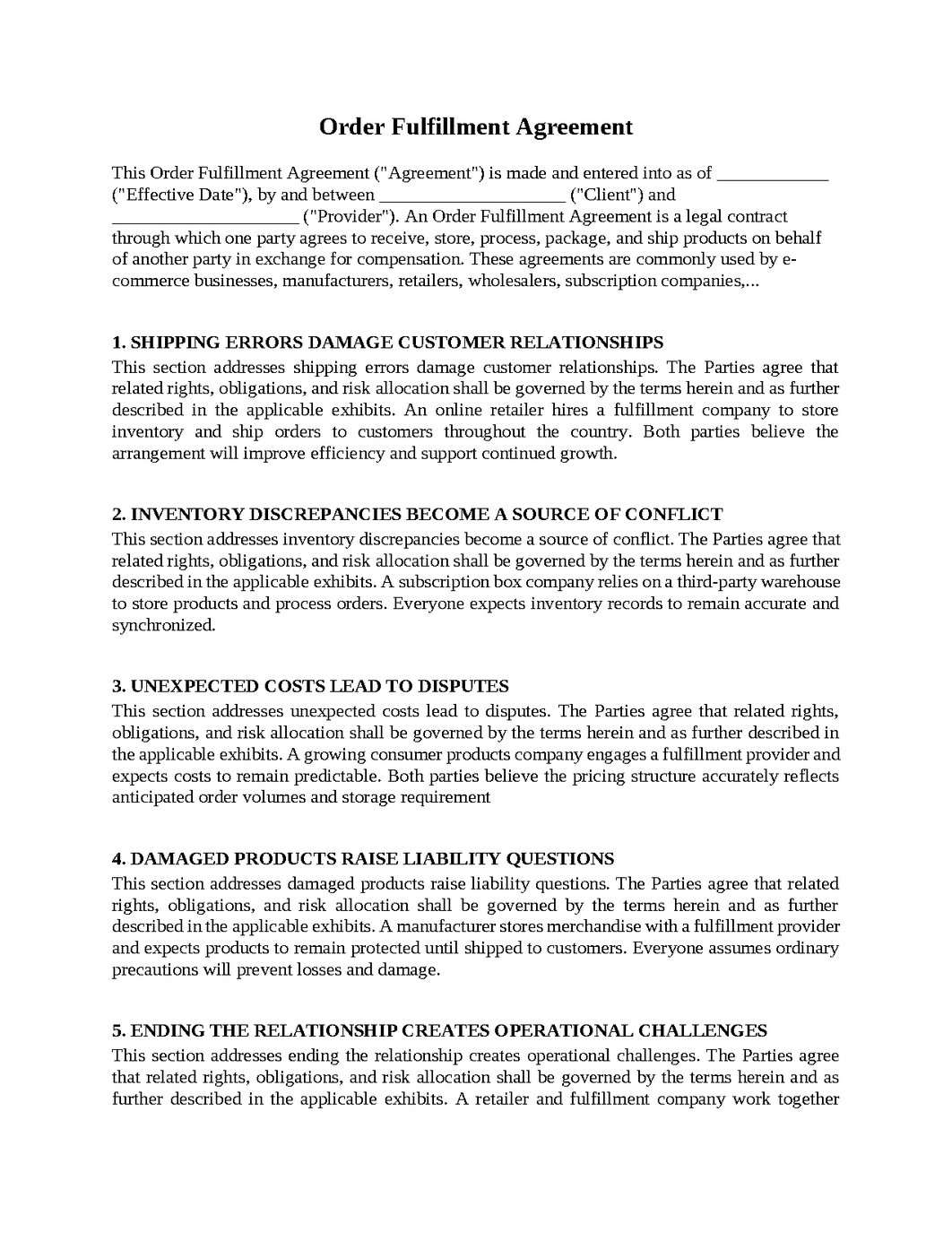
Order Fulfillment Agreement
An Order Fulfillment Agreement is a legal contract through which one party agrees to receive, store, process, package, and ship products on behalf of another party in exchange for compensation. These agreements are commonly used by e-commerce businesses, manufacturers, retailers, wholesalers, subscription companies, and third-party logistics providers seeking efficient inventory management and delivery services. An Order Fulfillment Agreement typically addresses service standards, inventory responsibilities, shipping procedures, fees, liability provisions, and procedures governing disputes and termination. Because customer satisfaction depends heavily upon timely and accurate deliveries, disputes can arise when expectations regarding performance and responsibilities are not documented clearly. A carefully drafted Order Fulfillment Agreement helps establish certainty and protect the interests of both merchants and fulfillment providers.
Shipping Errors Damage Customer Relationships
An online retailer hires a fulfillment company to store inventory and ship orders to customers throughout the country. Both parties believe the arrangement will improve efficiency and support continued growth.
Initially, products are delivered accurately and customers remain satisfied. Over time, however, shipping mistakes become more frequent and customers begin receiving incorrect items and delayed packages.
The retailer believes the fulfillment provider should maintain higher standards because customer satisfaction depends upon reliable deliveries. The provider believes increased order volumes and supply chain challenges contributed to the problems and argues that reasonable efforts were made to maintain accuracy. As complaints increase, tensions emerge regarding responsibility for the errors.
To help avoid this problem, an Order Fulfillment Agreement should clearly establish service standards and define expectations relating to order accuracy and delivery times.
Inventory Discrepancies Become a Source of Conflict
A subscription box company relies on a third-party warehouse to store products and process orders. Everyone expects inventory records to remain accurate and synchronized.
As sales volumes increase, differences begin appearing between physical inventory counts and computerized records. Questions arise regarding missing products and whether losses occurred during storage or shipping.
The retailer believes the fulfillment provider should bear responsibility because the inventory remained under its control. The provider believes receiving errors and inaccurate product information contributed to the discrepancies and argues that inventory management requires cooperation between both parties. As shortages increase, disagreements emerge regarding accountability.
To help prevent these issues, an Order Fulfillment Agreement should clearly establish inventory procedures and define how discrepancies and losses will be handled.
Unexpected Costs Lead to Disputes
A growing consumer products company engages a fulfillment provider and expects costs to remain predictable. Both parties believe the pricing structure accurately reflects anticipated order volumes and storage requirements.
As sales increase, additional fees relating to packaging materials, special handling, and storage begin appearing. Questions arise regarding whether those expenses were contemplated by the original arrangement.
The retailer believes costs should remain transparent because fulfillment expenses directly affect profitability. The provider believes changing requirements and increased volumes justify additional charges and argues that specialized services require extra compensation. As invoices increase, tensions develop regarding pricing and reimbursements.
To help avoid these problems, an Order Fulfillment Agreement should clearly establish fee arrangements and define the procedures governing additional costs and services.
Damaged Products Raise Liability Questions
A manufacturer stores merchandise with a fulfillment provider and expects products to remain protected until shipped to customers. Everyone assumes ordinary precautions will prevent losses and damage.
After several months, products are discovered to be damaged during storage and handling. Questions arise regarding whether improper procedures or external factors caused the losses.
The manufacturer believes the fulfillment provider should bear responsibility because the products were under its supervision. The provider believes packaging deficiencies and transportation conditions contributed to the damage and argues that liability should remain limited. As replacement costs increase, disagreements emerge regarding financial responsibility.
To help prevent these issues, an Order Fulfillment Agreement should clearly establish liability provisions and define the procedures governing damaged or lost products.
Ending the Relationship Creates Operational Challenges
A retailer and fulfillment company work together successfully for many years and gradually integrate inventory systems and shipping procedures. Both parties assume the relationship will continue indefinitely and organize operations around that expectation.
Eventually, changing priorities lead the retailer to select another logistics provider. Questions arise regarding inventory transfers, outstanding fees, customer orders, and access to records.
The retailer believes a smooth transition is necessary to preserve customer relationships and avoid disruptions. The fulfillment provider believes compensation obligations should be resolved before providing additional assistance and expects contractual rights to be respected. As the relationship concludes, disagreements emerge regarding the obligations that survive termination.
To help avoid this problem, an Order Fulfillment Agreement should clearly establish termination procedures and identify the rights and responsibilities that continue after the relationship ends.
Order Fulfillment Agreements are valuable tools that allow businesses to outsource logistics operations while maintaining efficient customer service and inventory management. However, issues involving shipping errors, inventory discrepancies, unexpected costs, damaged products, and post-termination obligations can become significant sources of conflict when expectations are not documented clearly. A carefully drafted Order Fulfillment Agreement provides a structured framework for allocating responsibilities and protecting the interests of both merchants and fulfillment providers. When prepared thoughtfully, it can reduce uncertainty, strengthen business relationships, improve operational efficiency, and provide the foundation necessary for successful order fulfillment operations.

Get started with Upsign today!
Easily send, sign and track your documents