

Power of Attorney
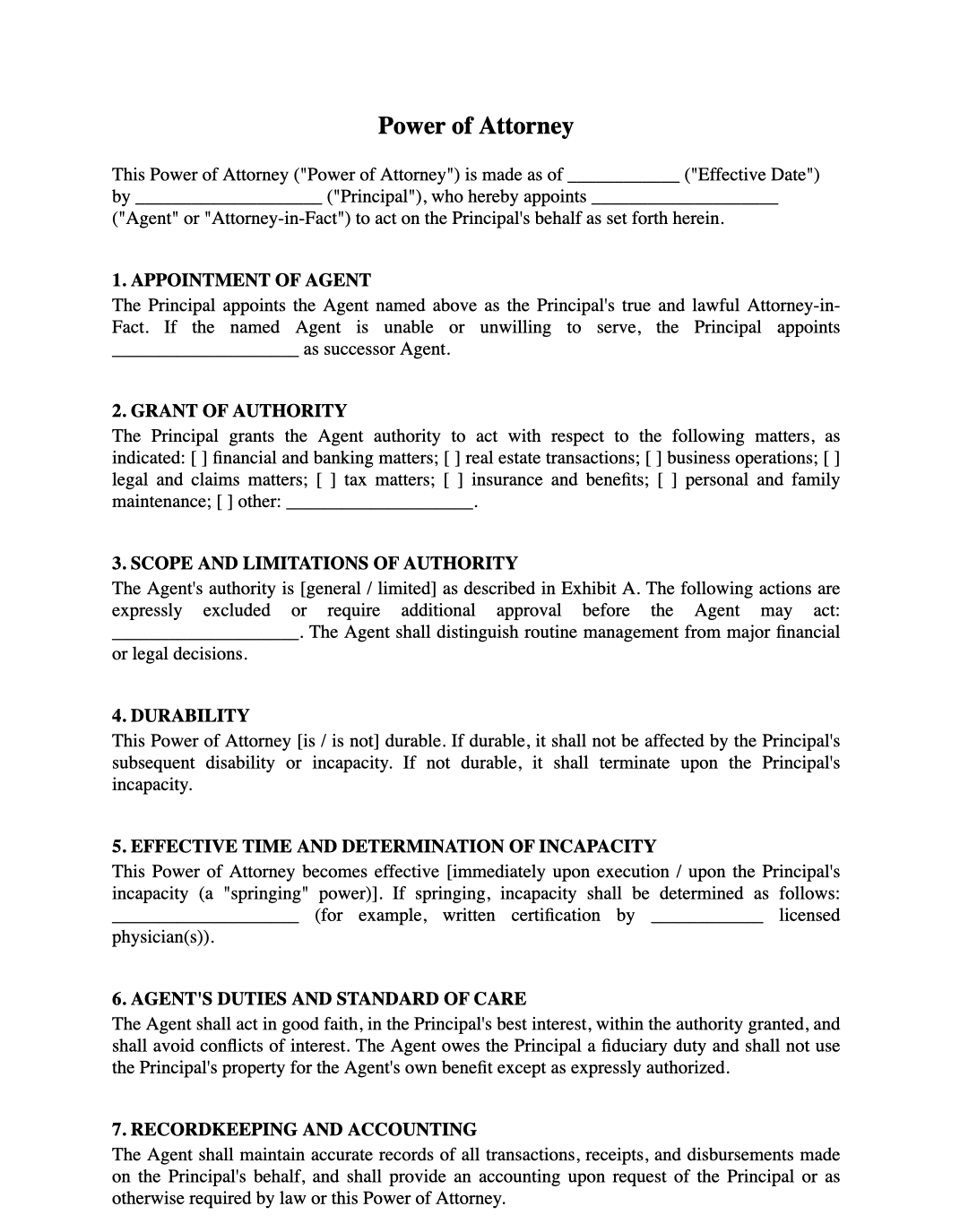
A Power of Attorney (POA) is a legal document that authorizes one person, known as the agent or attorney-in-fact, to act on behalf of another person, known as the principal. Powers of Attorney are commonly used to manage financial affairs, real estate transactions, business operations, legal matters, healthcare decisions, and other important responsibilities when the principal is unavailable or unable to act personally. Depending on the type of Power of Attorney, the agent's authority may be broad or limited, temporary or ongoing. Because a Power of Attorney grants significant legal authority, disputes frequently arise when expectations, limitations, and responsibilities are not clearly documented. A well-drafted Power of Attorney helps protect the principal while providing the agent with clear guidance regarding authorized actions.
Family Members Disagree About the Agent's Authority
An elderly parent signs a Power of Attorney appointing one adult child to assist with financial matters. At the time, the arrangement appears straightforward because the parent trusts the selected child and wants help managing daily responsibilities.
As time passes, other family members begin questioning certain decisions made by the agent. Some believe the agent is acting appropriately and fulfilling responsibilities responsibly. Others believe the agent is making decisions that exceed the authority granted under the document.
The disagreements become more pronounced when significant financial transactions occur. Family members ask for explanations, records, and documentation supporting the decisions that were made.
The agent believes authority was granted properly and is simply carrying out the parent's wishes. Other relatives argue that important decisions should have been discussed more broadly.
What began as a practical planning tool becomes a source of family conflict because expectations regarding authority were never fully understood.
To help avoid these problems, a Power of Attorney should clearly define the agent's authority, identify any limitations, establish recordkeeping expectations, and specify whether certain actions require additional approvals or notifications.
The Agent Uses Authority in Unexpected Ways
A business owner signs a broad Power of Attorney before leaving the country for an extended period. The document authorizes a trusted associate to handle financial and operational matters while the owner is away.
Initially, the arrangement works smoothly. The agent pays bills, manages contracts, and handles routine administrative tasks. Over time, however, the agent begins making larger decisions involving investments, asset transfers, and business obligations.
When the owner returns, questions arise regarding whether those decisions were truly authorized. The agent believes broad authority was granted under the document. The owner argues that certain actions should have required direct approval.
Neither party intended conflict, but the broad language of the Power of Attorney created different interpretations regarding the scope of authority.
To reduce these risks, a Power of Attorney should clearly identify authorized powers, specify limitations, and distinguish routine management authority from major financial or legal decisions.
Financial Institutions Refuse to Honor the Document
A principal signs a valid Power of Attorney and expects the designated agent to manage financial affairs when necessary.
Years later, the agent attempts to use the document to access accounts and complete important transactions. Several financial institutions refuse to accept the Power of Attorney because of internal policies, concerns about the document's age, or questions regarding its validity.
The agent becomes frustrated because the document was prepared specifically to avoid operational disruptions. The institutions argue that they must protect account holders and ensure that authority remains valid.
As deadlines approach, important transactions are delayed and financial obligations become more difficult to manage.
The situation highlights how even a valid document may create practical problems if acceptance issues are not anticipated.
To help prevent these issues, a Power of Attorney should comply with applicable legal requirements, address institution-specific concerns when possible, and be reviewed periodically to ensure continued effectiveness.
Questions Arise About the Principal's Capacity
An individual signs a Power of Attorney while fully capable of managing personal affairs. Years later, health issues begin affecting memory and decision-making abilities.
Family members disagree about when the agent's authority should become active and whether the principal still has the ability to make independent decisions. Some believe the principal remains capable of handling personal affairs. Others argue that the Power of Attorney should now be relied upon more heavily.
The disagreement becomes especially difficult because determining capacity is not always straightforward.
The agent wants to act responsibly while respecting the principal's independence. Family members worry about both excessive intervention and insufficient protection.
To help avoid these problems, a Power of Attorney should clearly define when authority becomes effective, establish procedures for determining incapacity if applicable, and provide guidance regarding the relationship between the principal's rights and the agent's authority.
The Agent Fails to Maintain Proper Records
An agent manages financial affairs for a relative under a Power of Attorney for several years.
The agent pays bills, manages accounts, handles investments, and oversees numerous financial transactions. Because the relationship is based on trust, detailed records are not maintained consistently.
Eventually, questions arise regarding how funds were used and whether certain transactions benefited the principal appropriately. The agent believes all actions were taken in good faith and for legitimate purposes.
Without complete documentation, however, it becomes difficult to verify decisions or explain how various transactions occurred. Family members become suspicious even though there may have been no wrongdoing.
A situation that could have been resolved easily becomes complicated due to poor recordkeeping.
To help prevent these issues, a Power of Attorney should require accurate records, establish accounting responsibilities, and clarify the agent's fiduciary obligations. Good documentation helps protect both the principal and the agent.
A Power of Attorney is one of the most important legal planning tools available for managing personal, financial, and business affairs. However, issues involving authority, financial decisions, institutional acceptance, capacity determinations, and recordkeeping can become significant sources of conflict when expectations are not documented clearly. A carefully drafted Power of Attorney provides a structured framework for protecting the principal while empowering the agent to act effectively. When prepared thoughtfully, it can help reduce disputes, preserve financial stability, and ensure that important decisions can be made when needed.

Get started with Upsign today!
Easily send, sign and track your documents