

Sales Commission Agreement
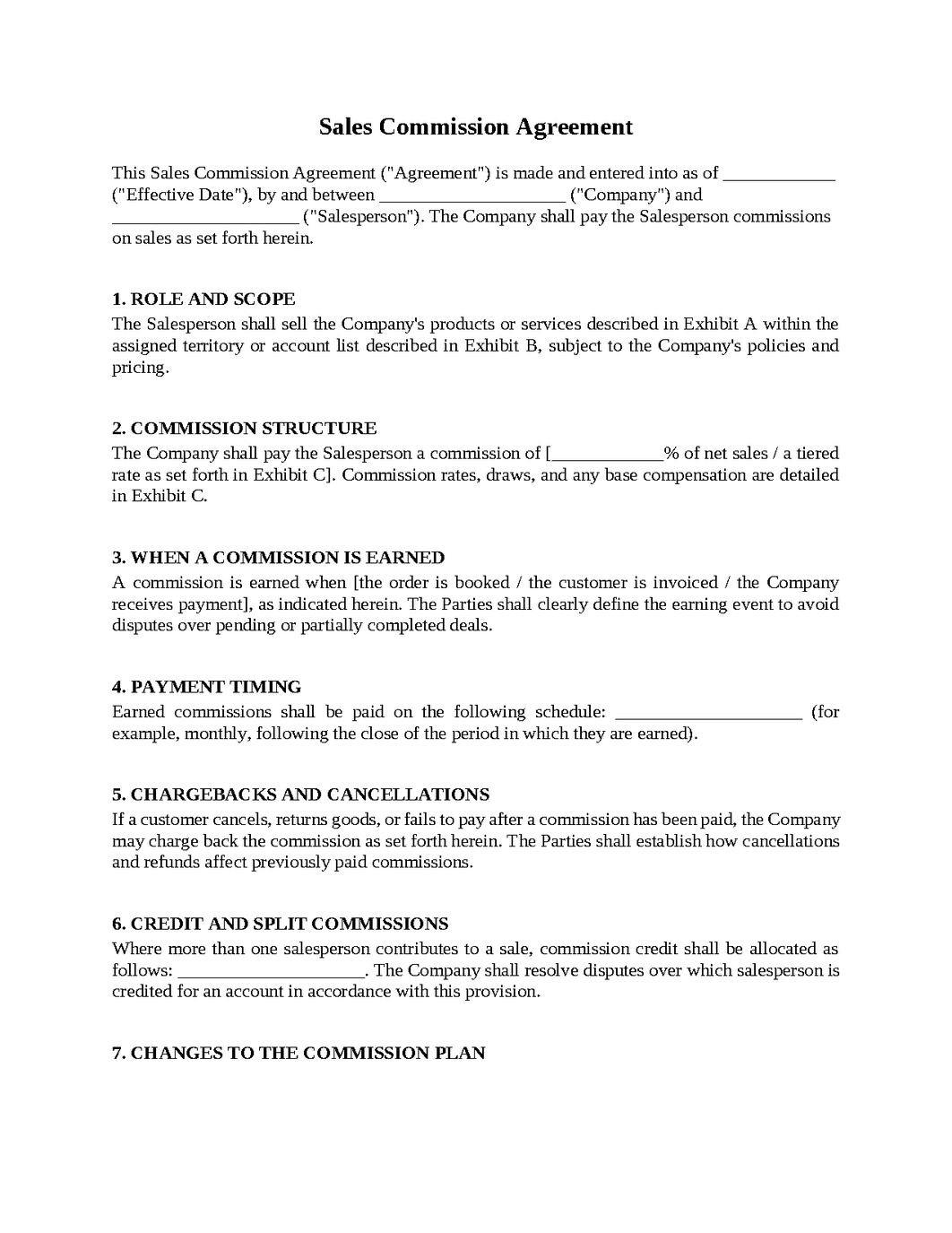
A Sales Commission Agreement is a legal contract that establishes the terms under which a salesperson, sales representative, employee, independent contractor, broker, or sales agency earns commission-based compensation for generating sales or business opportunities. These agreements are common in industries such as real estate, manufacturing, technology, insurance, financial services, healthcare, retail, and professional services. A Sales Commission Agreement typically addresses commission rates, qualifying sales, payment schedules, customer ownership, returns and chargebacks, performance expectations, and termination rights. Because compensation is directly tied to revenue generation, disputes often arise when commission calculations and eligibility requirements are not clearly documented. A well-drafted Sales Commission Agreement helps align incentives while reducing misunderstandings between the parties.
The Parties Disagree About When a Commission Is Earned
A software company hires a salesperson under a commission-based compensation plan to generate new customer contracts.
The salesperson spends months identifying prospects, conducting demonstrations, and guiding customers through the sales process. Eventually, several customers sign contracts, and the salesperson expects commissions to be paid immediately.
The company believes commissions should not be earned until customers actually pay invoices and begin generating revenue. The salesperson argues that the hard work was completed once the contracts were signed.
The disagreement grows as more transactions close and larger commission amounts become involved.
Neither party disputes that sales occurred, but they have very different expectations regarding when commissions become payable.
To help avoid this problem, a Sales Commission Agreement should clearly define when commissions are earned, whether customer payment is required, and the specific events that trigger compensation obligations.
Customer Cancellations Lead to Commission Disputes
A sales representative earns commissions based on subscription agreements signed by new customers.
Initially, the arrangement works well and commissions are paid regularly. Several months later, however, a number of customers cancel their contracts before completing the full term of service.
The company believes previously paid commissions should be reduced or recovered because the expected revenue was never fully realized. The salesperson argues that customer retention is outside of their control and that commissions were earned when the sales were completed.
The dispute becomes increasingly important as cancellation rates increase.
Both sides believe their position is reasonable, yet neither anticipated the issue when the relationship began.
To reduce these risks, a Sales Commission Agreement should address cancellations, refunds, chargebacks, and commission clawback provisions. Clear language helps establish expectations before problems arise.
Multiple Salespeople Claim Credit for the Same Account
A manufacturing company employs several sales representatives who work in overlapping territories and collaborate on large opportunities.
One representative identifies a prospect and begins building the relationship. Another representative later assists with negotiations and helps secure the final purchase order.
When the transaction closes, both representatives claim entitlement to the commission.
Management becomes caught between competing claims and struggles to determine who deserves credit for the sale. Each representative believes their efforts were essential to the outcome.
The disagreement damages morale and creates tension within the sales team.
To help prevent these issues, a Sales Commission Agreement should establish account ownership rules, define commission-sharing procedures, and identify how disputes regarding sales credit will be resolved.
The Company Changes the Compensation Plan Midyear
A salesperson accepts a position based largely on a commission structure that offers significant upside potential.
After strong sales growth, the company decides to revise its compensation plan. Commission percentages are reduced, sales quotas are increased, and certain product lines become subject to different payout formulas.
The salesperson becomes frustrated because the changes affect expected earnings. The company argues that compensation plans must evolve to reflect business needs and market conditions.
The disagreement centers on whether previously established commission expectations can be modified during the year.
What began as a successful relationship becomes strained because expectations changed unexpectedly.
To help avoid these problems, a Sales Commission Agreement should establish procedures for modifying commission plans, identify notice requirements, and clarify how pending opportunities will be treated when compensation structures change.
The Relationship Ends With Deals Still Pending
A sales representative resigns after several years of successful performance.
At the time of departure, numerous deals remain in various stages of negotiation. Some prospects have signed letters of intent, while others are expected to close within weeks.
The salesperson believes commissions should still be paid on opportunities substantially developed before departure. The company argues that only active representatives are eligible for future commissions.
The disagreement becomes significant because several pending transactions represent substantial compensation.
Neither party anticipated how many opportunities would remain unresolved at the time of separation.
To reduce these risks, a Sales Commission Agreement should clearly address post-termination commissions, define eligibility requirements, and establish how pending sales opportunities will be treated if the relationship ends.
Sales Commission Agreements are critical tools for motivating sales performance and aligning compensation with business growth. However, issues involving commission timing, customer cancellations, account ownership, compensation changes, and post-termination rights can become significant sources of conflict when expectations are not documented clearly. A carefully drafted Sales Commission Agreement provides a structured framework for managing these relationships and protecting both parties involved. When prepared thoughtfully, it can help reduce misunderstandings, improve transparency, strengthen sales performance, and support long-term business success.

Get started with Upsign today!
Easily send, sign and track your documents