

Security Agreement
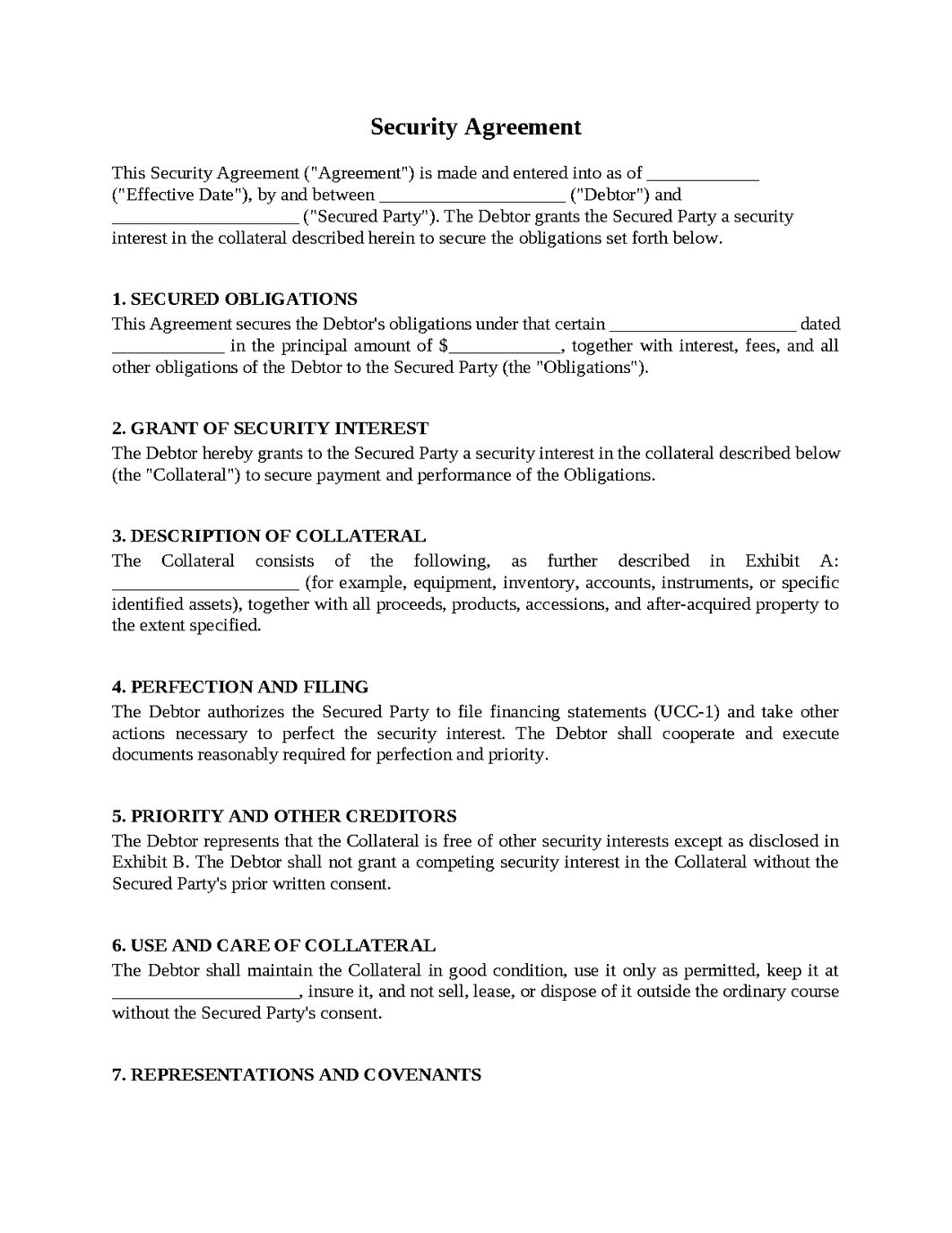
A Security Agreement is a legal contract through which a borrower grants a lender a security interest in specific collateral to secure repayment of a loan or performance of another obligation. Security Agreements are commonly used in commercial lending, equipment financing, business acquisitions, inventory financing, lines of credit, private loans, and asset-based lending transactions. The collateral may include equipment, inventory, accounts receivable, vehicles, intellectual property, securities, or other valuable assets. Because Security Agreements give lenders important rights in a borrower's property, disputes can arise when collateral rights, default provisions, and enforcement procedures are not clearly documented. A well-drafted Security Agreement helps protect both lenders and borrowers while reducing uncertainty throughout the financing relationship.
The Borrower Uses Collateral in Unexpected Ways
A manufacturing company obtains financing secured by its equipment and inventory.
At the time the loan is made, both parties understand that the collateral provides important protection for the lender. As business operations evolve, however, the company begins selling equipment, replacing machinery, and transferring assets among affiliated entities.
The borrower views these actions as normal business decisions necessary to remain competitive. The lender becomes concerned that the value of the collateral securing the loan may be declining.
Neither party intended conflict, but both have different expectations regarding how collateral can be used during the term of the loan.
The disagreement grows because the agreement does not clearly address asset transfers and collateral substitutions.
To help avoid this problem, a Security Agreement should clearly define permitted uses of collateral, establish restrictions on transfers, and identify circumstances under which lender approval is required before assets are sold or replaced.
The Parties Disagree About What Assets Are Covered
A business owner signs a Security Agreement in connection with a commercial loan.
The lender believes the agreement grants a security interest in a broad range of business assets, including inventory, equipment, accounts receivable, and future-acquired property. The borrower believes only certain specifically identified assets were intended to serve as collateral.
For several years, the disagreement remains hidden because loan payments are made on time. When financial difficulties arise, however, the scope of the collateral becomes critically important.
The lender seeks rights in assets the borrower never expected would be covered. The borrower argues that the collateral description is overly broad and inconsistent with the parties' original understanding.
What began as a routine financing arrangement becomes a major legal dispute.
To reduce these risks, a Security Agreement should describe collateral clearly, define any included categories of property, address after-acquired assets when applicable, and eliminate ambiguity regarding the scope of the lender's security interest.
A Default Occurs and Enforcement Rights Are Challenged
A company experiences financial difficulties and misses several required loan payments.
The lender believes a default has occurred and begins considering enforcement actions against the collateral. The borrower argues that the missed payments were temporary and that additional time should be provided to cure the problem.
Questions quickly arise regarding notice requirements, cure periods, repossession rights, and disposition of collateral.
The lender wants to protect its financial interests. The borrower wants an opportunity to preserve the business and avoid losing valuable assets.
The disagreement escalates because enforcement procedures were never discussed in detail.
To help prevent these issues, a Security Agreement should clearly define events of default, establish notice requirements, identify cure rights, and describe the lender's remedies and enforcement procedures following a default.
Another Creditor Claims Rights to the Same Collateral
A growing company obtains financing from multiple lenders over several years.
Each lender receives documentation intended to secure repayment through rights in company assets. Eventually, financial problems arise and multiple creditors claim interests in the same collateral.
The lenders disagree regarding priority and entitlement to proceeds generated by the assets. The borrower becomes caught in the middle of competing claims.
What initially appeared to be a straightforward financing structure becomes increasingly complex because different parties interpret their rights differently.
The dispute delays resolution and increases legal costs for everyone involved.
To help avoid these problems, a Security Agreement should clearly identify collateral, address priority issues when appropriate, and coordinate with applicable filing and perfection requirements. Proper documentation helps reduce uncertainty if multiple creditors become involved.
The Loan Is Repaid but the Security Interest Remains
A borrower successfully repays a secured loan after many years of timely payments.
The borrower assumes that all lender rights in the collateral will be terminated automatically. Months later, while seeking additional financing, the borrower discovers that public filings reflecting the lender's security interest remain active.
Although the debt has been paid in full, the lender has not yet completed all required release documentation.
The borrower becomes frustrated because the lingering security interest interferes with future transactions. The lender acknowledges that the obligation has been satisfied but points to administrative delays.
A financing relationship that ended successfully now creates unnecessary complications.
To reduce these risks, a Security Agreement should establish release procedures, require prompt termination of security interests once obligations are satisfied, and identify responsibilities for completing necessary filings and documentation.
Security Agreements are among the most important documents used in secured lending transactions because they define the collateral that protects a lender's rights. However, issues involving collateral use, collateral scope, default remedies, competing creditor claims, and collateral releases can become significant sources of conflict when expectations are not documented clearly. A carefully drafted Security Agreement provides a structured framework for managing these relationships and protecting both lenders and borrowers. When prepared thoughtfully, it can help reduce misunderstandings, preserve collateral value, facilitate enforcement when necessary, and support successful financing arrangements.

Get started with Upsign today!
Easily send, sign and track your documents