

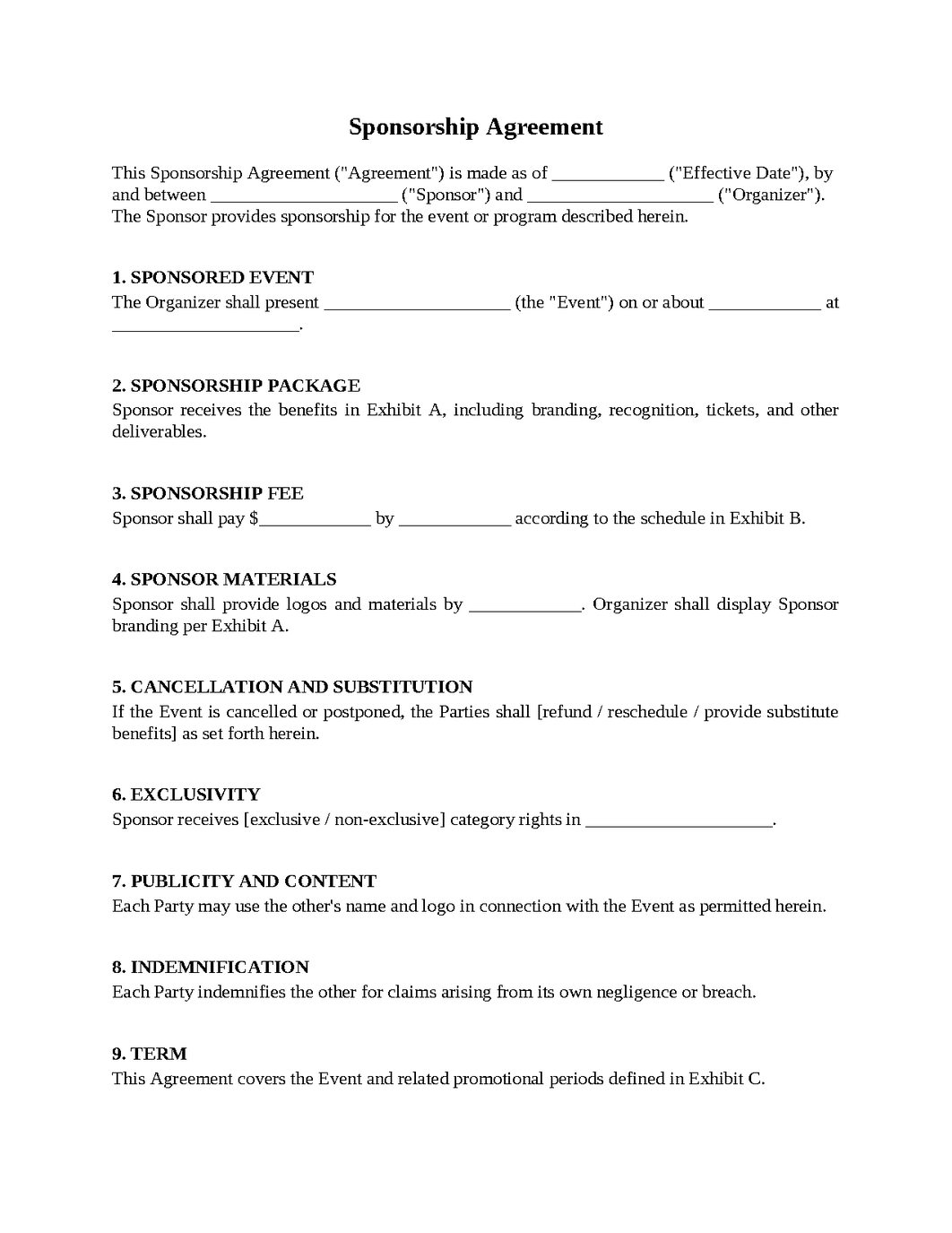
Sponsorship Agreement
A Sponsorship Agreement is a legal contract that establishes the terms under which one party provides financial support, products, services, promotional assistance, or other resources to another party in exchange for marketing benefits, brand exposure, promotional opportunities, or business development advantages. Sponsorship Agreements are commonly used for sporting events, conferences, trade shows, charitable organizations, podcasts, influencers, educational programs, community events, entertainment productions, and professional organizations. Because sponsorship arrangements often involve public visibility, brand reputation, and measurable promotional expectations, disputes can arise when obligations and performance standards are not documented clearly. A well-drafted Sponsorship Agreement helps protect both sponsors and sponsored parties while maximizing the value of the relationship.
The Sponsor Believes It Did Not Receive the Promised Exposure
A company agrees to sponsor a large industry conference in exchange for branding opportunities and visibility among attendees.
The event organizer promises logo placement, promotional materials, speaking opportunities, and recognition throughout the event. Based on those expectations, the sponsor commits significant financial resources.
After the event concludes, the sponsor believes the exposure was substantially less than anticipated. Logo placement was limited, promotional mentions were fewer than expected, and attendee engagement did not meet projections.
The organizer believes all contractual obligations were fulfilled and points to the promotional efforts that were provided.
The disagreement develops because expectations regarding visibility were never defined with sufficient detail.
What began as a marketing partnership becomes a dispute regarding value received.
To help avoid this problem, a Sponsorship Agreement should clearly define promotional benefits, identify placement requirements, establish performance expectations, and document all sponsor recognition obligations.
An Event Is Canceled After Sponsorship Funds Are Paid
A business agrees to sponsor a major community event and provides funding months before the scheduled date.
Planning proceeds successfully, vendors are engaged, and promotional activities begin. Shortly before the event, however, unforeseen circumstances force organizers to cancel or postpone the program.
The sponsor wants reimbursement because the marketing benefits that justified the sponsorship will no longer be received. The organizer argues that sponsorship funds were already spent on planning and operational expenses.
Both parties face financial consequences and disagree regarding who should bear the risk.
Neither side anticipated the cancellation when the agreement was signed.
To reduce these risks, a Sponsorship Agreement should address cancellation scenarios, define refund rights, establish force majeure provisions, and identify how sponsorship funds will be treated if the event cannot occur as planned.
A Sponsor's Reputation Creates Problems
An organization enters into a sponsorship relationship with a company that appears to be a strong strategic fit.
Months later, negative publicity involving the sponsor begins attracting media attention. The sponsored organization becomes concerned that continued association could damage its own reputation and relationships.
The sponsor argues that the agreement remains binding and that promotional commitments should continue as planned.
The organization believes its reputation and stakeholder relationships must be protected.
The disagreement becomes increasingly sensitive because public perception is involved.
To help prevent these issues, a Sponsorship Agreement should include morality clauses, reputation protections, termination rights, and procedures for addressing circumstances that may negatively affect either party's public image.
Exclusivity Expectations Were Never Clearly Defined
A company agrees to sponsor an event because it expects unique access to attendees and brand visibility.
After the sponsorship begins, the company discovers that competing businesses are also participating in promotional activities and receiving similar exposure.
The sponsor believes exclusivity was implied by the nature of the arrangement. The event organizer believes no exclusivity rights were granted.
The disagreement becomes significant because the sponsor's marketing strategy depended on standing apart from competitors.
Both parties genuinely believed they understood the arrangement.
To help avoid these problems, a Sponsorship Agreement should clearly address exclusivity rights, identify restricted competitors if applicable, and define the extent of any exclusive promotional opportunities.
Performance Metrics Become a Source of Disagreement
A company sponsors a digital media platform, podcast, influencer, or online event based on audience reach and engagement expectations.
The sponsor anticipates significant exposure through impressions, downloads, views, registrations, or other measurable metrics. After the campaign concludes, the sponsor questions whether the promised results were achieved.
The sponsored party believes substantial promotional efforts were delivered. The sponsor believes performance fell short of expectations.
The disagreement centers on how success should be measured and whether specific outcomes were guaranteed.
What began as a marketing opportunity becomes a dispute regarding accountability.
To reduce these risks, a Sponsorship Agreement should clearly identify performance metrics, establish reporting requirements, distinguish promotional efforts from guaranteed results, and define remedies if agreed benchmarks are not achieved.
Sponsorship Agreements play an important role in connecting organizations with promotional opportunities, financial support, and strategic partnerships. However, issues involving marketing exposure, event cancellations, reputational concerns, exclusivity rights, and performance expectations can become significant sources of conflict when responsibilities are not documented clearly. A carefully drafted Sponsorship Agreement provides a structured framework for managing these relationships and protecting all parties involved. When prepared thoughtfully, it can help reduce misunderstandings, improve promotional effectiveness, strengthen partnerships, and support successful sponsorship outcomes.

Get started with Upsign today!
Easily send, sign and track your documents