

Volunteer Release and Waiver
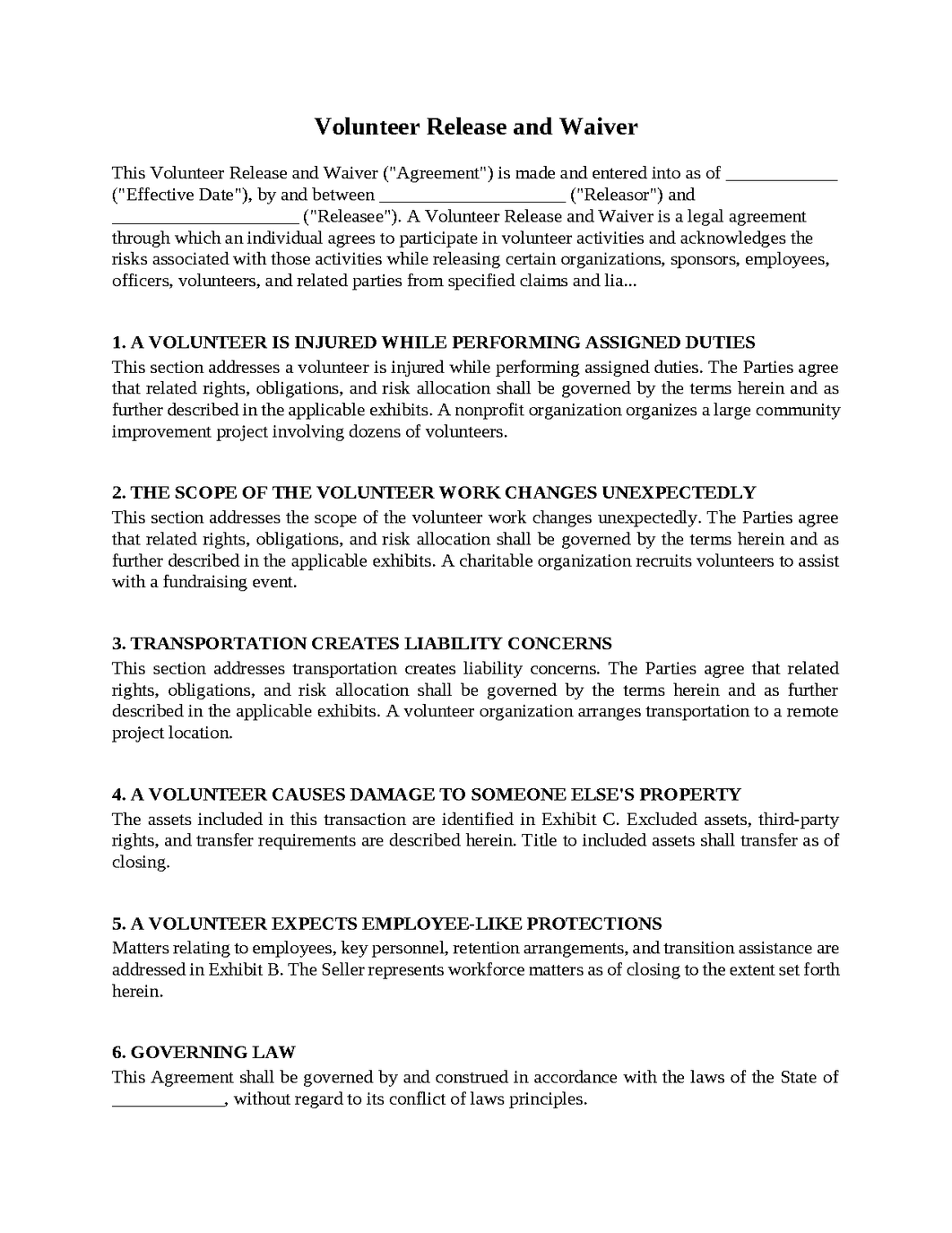
A Volunteer Release and Waiver is a legal agreement through which an individual agrees to participate in volunteer activities and acknowledges the risks associated with those activities while releasing certain organizations, sponsors, employees, officers, volunteers, and related parties from specified claims and liabilities. These agreements are commonly used by nonprofits, charities, religious organizations, schools, community groups, event organizers, government programs, and humanitarian organizations. Volunteer activities often involve physical labor, travel, public interaction, construction projects, fundraising events, disaster relief efforts, and other activities that may expose participants to varying levels of risk. Because volunteers are typically donating their time and services rather than acting as paid employees, disputes can arise when expectations regarding safety, responsibility, and liability are not documented clearly. A carefully drafted Volunteer Release and Waiver helps protect both volunteers and organizations while supporting meaningful community service activities.
A Volunteer Is Injured While Performing Assigned Duties
A nonprofit organization organizes a large community improvement project involving dozens of volunteers.
Participants sign Volunteer Release and Waiver forms before beginning work and receive instructions regarding their assigned responsibilities. The organization believes reasonable safety measures are in place and expects the project to proceed successfully.
During the event, a volunteer suffers an injury while performing assigned tasks. Medical treatment becomes necessary, and the volunteer incurs expenses and lost personal time as a result of the incident.
The volunteer believes inadequate training, supervision, or safety precautions contributed to the injury. The organization believes the volunteer knowingly accepted the risks associated with the activity and voluntarily chose to participate.
What began as a community service opportunity becomes a dispute regarding responsibility for the injury.
To help avoid this problem, a Volunteer Release and Waiver should clearly identify the risks associated with the volunteer activities and explain the claims participants are agreeing to release.
The Scope of the Volunteer Work Changes Unexpectedly
A charitable organization recruits volunteers to assist with a fundraising event.
Volunteers review the event description, sign Volunteer Release and Waiver forms, and arrive expecting to perform relatively simple tasks. As the event unfolds, staffing shortages require volunteers to assist with activities that differ from their original assignments.
One volunteer is uncomfortable with the new responsibilities and later suffers an injury while performing tasks that were not anticipated when agreeing to participate.
The volunteer believes consent was based upon a different understanding of the work involved. The organization argues that flexibility is often necessary during volunteer events and that the waiver applies to all event-related activities.
The disagreement focuses on whether the activity that led to the injury was within the scope of the original agreement.
To help prevent these issues, a Volunteer Release and Waiver should clearly describe the nature of the volunteer activities and explain whether duties may change during the course of participation.
Transportation Creates Liability Concerns
A volunteer organization arranges transportation to a remote project location.
Participants sign Volunteer Release and Waiver forms and travel together using vehicles provided by the organization, volunteers, or third-party transportation providers. Most participants view the travel as a routine part of the volunteer experience.
During transportation, an accident occurs that results in injuries and property damage. Questions arise regarding whether transportation-related risks were included within the scope of the waiver.
The organization believes travel was an integral part of the volunteer activity and covered by the agreement. The volunteers argue that transportation risks were not explained adequately before participation.
The disagreement becomes more complicated because multiple parties may have been involved in organizing or providing transportation.
To help avoid these problems, a Volunteer Release and Waiver should clearly address transportation activities and explain whether travel-related risks are included within the scope of the release.
A Volunteer Causes Damage to Someone Else's Property
A community service organization organizes volunteers to assist with neighborhood improvement projects.
Volunteers work on private property with the permission of property owners and perform landscaping, repairs, cleanup, and maintenance activities. The organization provides basic guidance and oversight throughout the project.
During the course of the work, a volunteer accidentally damages property belonging to a homeowner. The homeowner seeks compensation and questions who should be responsible for the loss.
The volunteer believes the organization should assume responsibility because the work was performed under its direction. The organization believes the circumstances must be evaluated according to the specific facts involved.
The dispute expands beyond the original property damage and becomes a question of responsibility among multiple parties.
To help prevent these issues, a Volunteer Release and Waiver should clearly explain the allocation of risk and responsibility associated with volunteer activities involving third-party property.
A Volunteer Expects Employee-Like Protections
A nonprofit organization relies heavily on volunteers to support its mission and daily operations.
Many volunteers contribute substantial amounts of time and perform duties similar to those handled by paid staff members. Over time, some volunteers begin viewing themselves as integral members of the organization.
After an incident occurs, a volunteer seeks benefits, protections, or compensation similar to those that might be available to employees. The organization explains that volunteers occupy a different legal status and are not covered by certain employment-related programs.
The volunteer believes the distinction was never explained clearly. The organization believes the volunteer relationship was understood from the outset.
The disagreement focuses on expectations regarding the legal status of volunteers and the protections available to them.
To help avoid these problems, a Volunteer Release and Waiver should clearly explain the volunteer relationship and distinguish volunteer participation from employment.
Volunteer Release and Waiver agreements are important tools for helping organizations and volunteers understand the risks and responsibilities associated with community service activities. However, issues involving participant injuries, changing responsibilities, transportation, property damage, and volunteer status can become significant sources of conflict when expectations are not documented clearly. A carefully drafted Volunteer Release and Waiver provides a structured framework for communicating risks and allocating responsibility before volunteer activities begin. When prepared thoughtfully, it can reduce misunderstandings, support volunteer participation, protect organizational resources, and provide greater certainty for everyone involved.

Get started with Upsign today!
Easily send, sign and track your documents