

Waiver Agreement
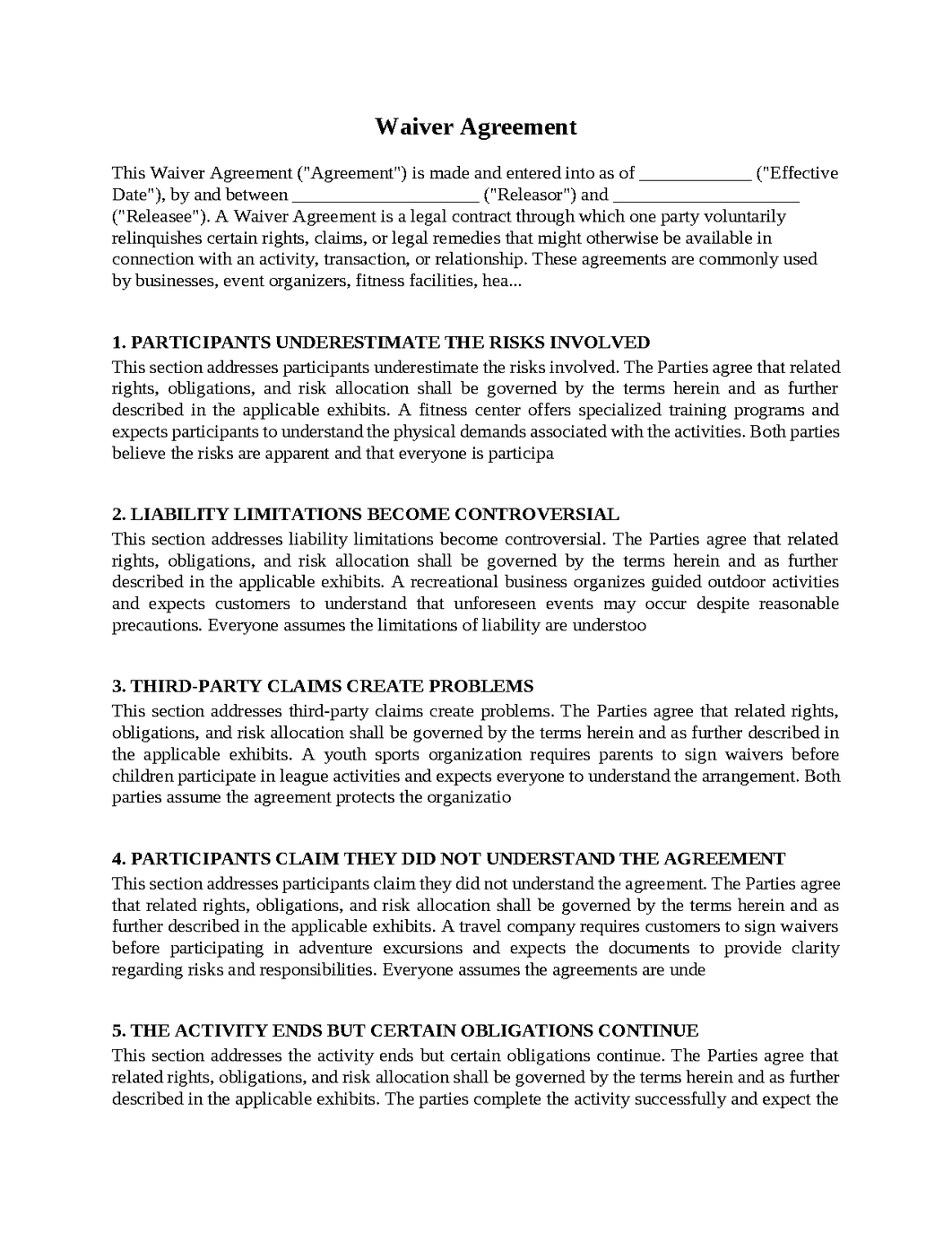
A Waiver Agreement is a legal contract through which one party voluntarily relinquishes certain rights, claims, or legal remedies that might otherwise be available in connection with an activity, transaction, or relationship. These agreements are commonly used by businesses, event organizers, fitness facilities, healthcare providers, educational institutions, and recreational organizations seeking to reduce liability and clarify the risks associated with particular activities. A Waiver Agreement typically addresses the rights being waived, assumption of risk provisions, liability limitations, indemnification obligations, dispute resolution procedures, and conditions governing termination. Because injuries, losses, and unexpected events can occur despite the intentions of all parties, disputes can arise when expectations regarding responsibilities and legal rights are not documented clearly. A carefully drafted Waiver Agreement helps establish certainty and protect the interests of everyone involved.
Participants Underestimate the Risks Involved
A fitness center offers specialized training programs and expects participants to understand the physical demands associated with the activities. Both parties believe the risks are apparent and that everyone is participating voluntarily.
Initially, the classes proceed successfully and participants enjoy the experience. Over time, however, injuries occur and questions arise regarding whether the risks were properly disclosed.
The fitness center believes participants accepted the risks because the activities were voluntary and appropriate warnings were provided. The injured participant believes certain dangers were not fully explained and argues that the facility should remain responsible for preventable injuries. As medical expenses increase, tensions emerge regarding liability.
To help avoid this problem, a Waiver Agreement should clearly establish the risks involved and define the rights being waived by participants.
Liability Limitations Become Controversial
A recreational business organizes guided outdoor activities and expects customers to understand that unforeseen events may occur despite reasonable precautions. Everyone assumes the limitations of liability are understood.
Following an accident, questions arise regarding whether the waiver protects the business from claims involving negligence or unsafe conditions. Different interpretations create uncertainty regarding responsibility.
The business believes liability protections are essential because certain risks are unavoidable and participants knowingly chose to participate. The customer believes liability should still apply when reasonable care was not exercised and argues that some responsibilities cannot be waived. As claims develop, disagreements emerge regarding liability limitations.
To help prevent these issues, a Waiver Agreement should clearly establish liability provisions and define the scope of the rights being relinquished.
Third-Party Claims Create Problems
A youth sports organization requires parents to sign waivers before children participate in league activities and expects everyone to understand the arrangement. Both parties assume the agreement protects the organization adequately.
As injuries occur and claims involve coaches, volunteers, and sponsors, questions arise regarding whether those individuals are protected under the waiver. Concerns increase regarding legal exposure.
The organization believes broad protections are necessary because volunteers and sponsors contribute to the success of the program. Parents believe certain parties should remain responsible for their actions and argue that protections should not extend beyond reasonable limits. As disputes expand, tensions develop regarding third-party rights.
To help avoid these problems, a Waiver Agreement should clearly establish who is protected under the agreement and define the rights applicable to third parties.
Participants Claim They Did Not Understand the Agreement
A travel company requires customers to sign waivers before participating in adventure excursions and expects the documents to provide clarity regarding risks and responsibilities. Everyone assumes the agreements are understandable.
After an incident occurs, questions arise regarding whether participants fully understood the language and implications of the waiver. Different expectations create uncertainty regarding enforceability.
The company believes the waiver should remain effective because customers voluntarily signed the agreement before participating. The customer believes technical language and inadequate explanations prevented informed consent and argues that the agreement should not limit available remedies. As legal challenges arise, disagreements emerge regarding the validity of the waiver.
To help prevent these issues, a Waiver Agreement should clearly explain the rights being waived and define the obligations and assumptions accepted by participants.
The Activity Ends but Certain Obligations Continue
The parties complete the activity successfully and expect the relationship to conclude without further complications. Future plans are built around the expectation that the matter has been resolved.
Eventually, injuries or claims arise after the event has concluded. Questions emerge regarding whether the waiver remains effective and whether certain protections survive completion of the activity.
One party believes continuing protections are essential because claims may arise long after participation has ended. The other party believes rights should be restored once the activity concludes and expects finality. As disputes emerge, disagreements arise regarding the obligations and protections that survive completion of the relationship.
To help avoid this problem, a Waiver Agreement should clearly establish survival provisions and identify the obligations and protections that continue after the activity or transaction has ended.
Waiver Agreements are valuable tools that help businesses and organizations clarify risks and manage potential liabilities while allowing participants to make informed decisions. However, issues involving risk disclosures, liability limitations, third-party protections, informed consent, and continuing obligations can become significant sources of conflict when expectations are not documented clearly. A carefully drafted Waiver Agreement provides a structured framework for allocating responsibilities and protecting the interests of all parties involved. When prepared thoughtfully, it can reduce uncertainty, strengthen trust, encourage participation, and provide the foundation necessary for successful activities and business relationships.

Get started with Upsign today!
Easily send, sign and track your documents