

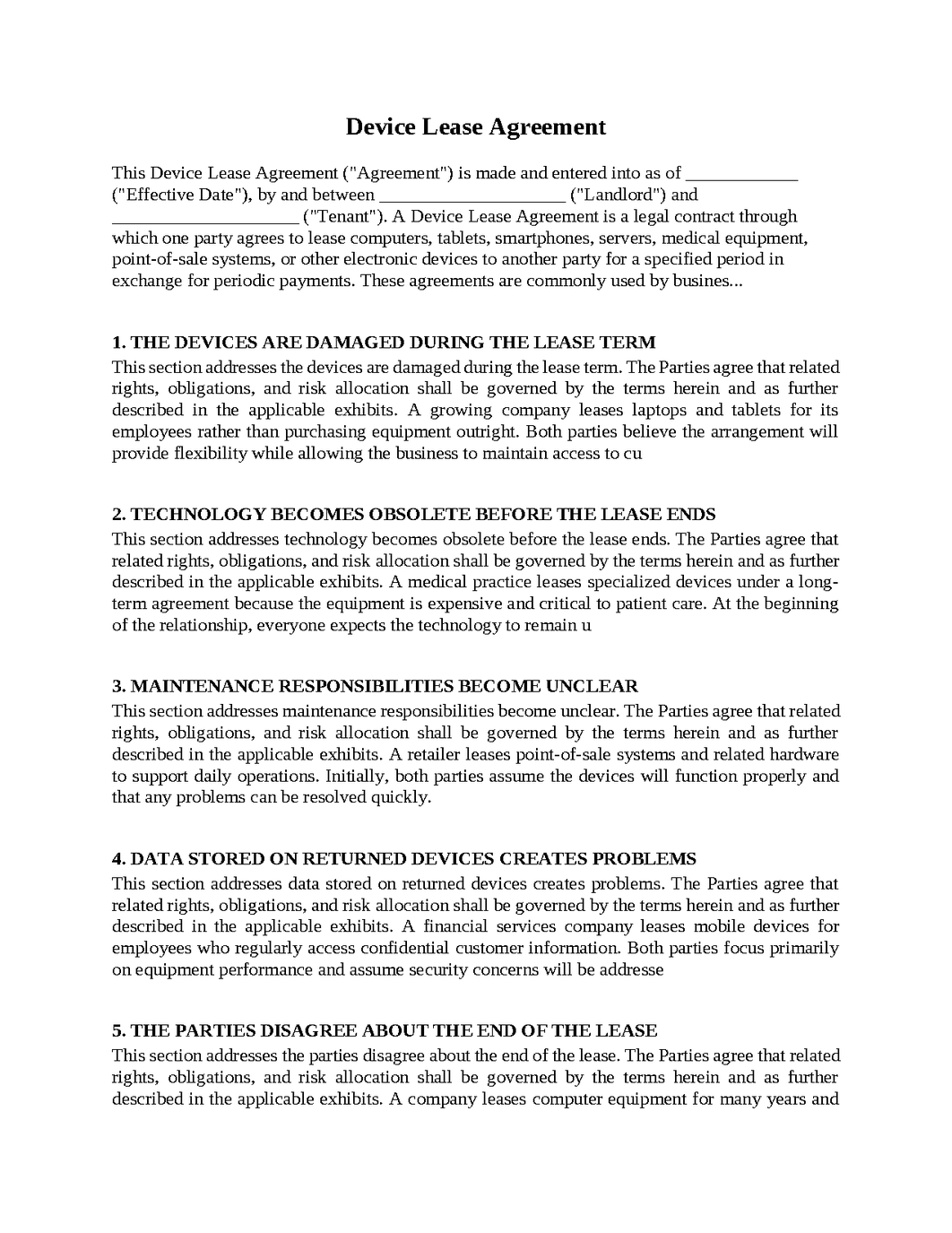
Device Lease Agreement
A Device Lease Agreement is a legal contract through which one party agrees to lease computers, tablets, smartphones, servers, medical equipment, point-of-sale systems, or other electronic devices to another party for a specified period in exchange for periodic payments. These agreements are commonly used by businesses, healthcare providers, schools, technology companies, retailers, and professional organizations seeking access to equipment without purchasing it outright. A Device Lease Agreement typically addresses lease terms, payment obligations, maintenance responsibilities, insurance requirements, upgrades, damage provisions, and procedures governing the return or replacement of leased equipment. Because devices often depreciate rapidly and are essential to business operations, disputes can arise when expectations regarding maintenance, damage, and ownership are not documented clearly. A carefully drafted Device Lease Agreement helps establish certainty and protect the interests of both lessors and lessees.
The Devices Are Damaged During the Lease Term
A growing company leases laptops and tablets for its employees rather than purchasing equipment outright. Both parties believe the arrangement will provide flexibility while allowing the business to maintain access to current technology.
For several years, the devices are used without significant issues and routine maintenance keeps everything functioning properly. Eventually, some devices are returned with cracked screens, damaged keyboards, and missing accessories after employees leave the company.
The leasing company believes the lessee should be responsible because the equipment was delivered in good condition and normal wear does not explain the extent of the damage. The lessee argues that ordinary use inevitably causes deterioration and believes the lessor is attempting to charge excessive repair costs. As replacement estimates increase, both sides begin disputing the difference between normal wear and actual damage.
To help avoid this problem, a Device Lease Agreement should clearly define acceptable wear and establish procedures for evaluating damage and allocating repair costs.
Technology Becomes Obsolete Before the Lease Ends
A medical practice leases specialized devices under a long-term agreement because the equipment is expensive and critical to patient care. At the beginning of the relationship, everyone expects the technology to remain useful throughout the lease period.
As new devices become available, the existing equipment quickly becomes outdated and less efficient. Employees and customers begin demanding features that the leased devices cannot provide, placing pressure on management to modernize operations.
The lessee believes the agreement should allow upgrades because technological advances were inevitable. The lessor believes the lease payments were calculated based upon a fixed term and expects the original agreement to remain in place. As productivity concerns increase, both parties begin discussing modifications that neither side anticipated when the relationship began.
To help prevent these issues, a Device Lease Agreement should clearly address upgrade options and establish procedures for replacing outdated equipment during the lease term.
Maintenance Responsibilities Become Unclear
A retailer leases point-of-sale systems and related hardware to support daily operations. Initially, both parties assume the devices will function properly and that any problems can be resolved quickly.
After several years of use, recurring malfunctions begin affecting transactions and customer service. Employees experience frequent disruptions, and management becomes increasingly concerned about the impact on operations.
The retailer believes the leasing company should repair or replace the devices because the equipment remains under lease. The lessor argues that routine maintenance and certain repairs are the responsibility of the lessee and points to provisions within the agreement. As downtime increases and business suffers, frustrations grow regarding who should bear the costs associated with keeping the devices operational.
To help avoid these problems, a Device Lease Agreement should clearly allocate maintenance responsibilities and establish response procedures when equipment fails.
Data Stored on Returned Devices Creates Problems
A financial services company leases mobile devices for employees who regularly access confidential customer information. Both parties focus primarily on equipment performance and assume security concerns will be addressed through ordinary practices.
At the end of the lease term, devices are returned and prepared for reassignment to other customers. Questions arise regarding customer records, passwords, and sensitive information that may still exist on the equipment.
The lessee believes the leasing company should ensure that all information is permanently erased before the devices are reused. The lessor believes the customer is responsible for removing its own data before returning the equipment. As regulatory concerns and privacy risks become more apparent, both sides begin reevaluating their assumptions regarding data security.
To help prevent these issues, a Device Lease Agreement should clearly establish procedures for removing, protecting, and destroying data stored on leased devices.
The Parties Disagree About the End of the Lease
A company leases computer equipment for many years and builds important operations around the devices. Because the relationship proves successful, management assumes the lease will be renewed or replaced without difficulty.
As the lease expiration date approaches, disagreements emerge regarding return deadlines, renewal terms, and the value of the equipment. The company wants additional time to transition to newer systems, while the lessor expects prompt return of the devices according to the agreement.
The lessee believes flexibility is necessary to avoid disrupting operations and preserve productivity. The lessor believes delayed returns interfere with future leasing opportunities and increase costs. As deadlines approach, tensions rise and both sides realize that ending the relationship is more complicated than they originally expected.
To help avoid this problem, a Device Lease Agreement should clearly establish end-of-term procedures and define the rights and responsibilities associated with renewals, purchases, and equipment returns.
Device Lease Agreements are valuable tools that allow businesses and organizations to obtain important technology without the expense of ownership. However, issues involving damage, obsolescence, maintenance obligations, data security, and end-of-term responsibilities can become significant sources of conflict when expectations are not documented clearly. A carefully drafted Device Lease Agreement provides a structured framework for allocating risks and protecting the interests of both parties. When prepared thoughtfully, it can reduce uncertainty, improve operational efficiency, preserve business relationships, and provide the flexibility necessary to manage rapidly changing technology needs.

Get started with Upsign today!
Easily send, sign and track your documents