

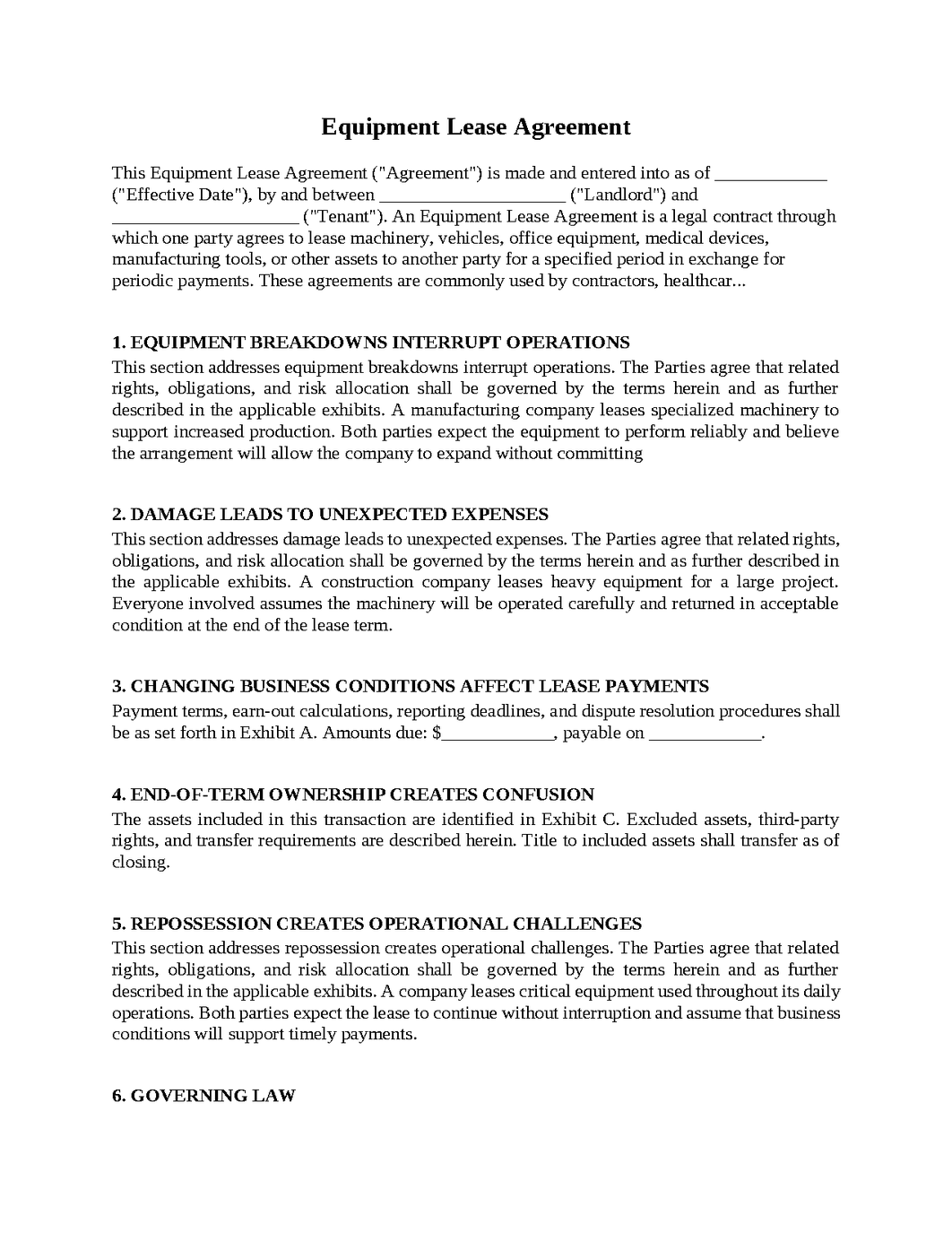
Equipment Lease Agreement
An Equipment Lease Agreement is a legal contract through which one party agrees to lease machinery, vehicles, office equipment, medical devices, manufacturing tools, or other assets to another party for a specified period in exchange for periodic payments. These agreements are commonly used by contractors, healthcare providers, restaurants, transportation companies, manufacturers, and businesses that need access to expensive equipment without purchasing it outright. An Equipment Lease Agreement typically addresses payment obligations, maintenance responsibilities, insurance requirements, repair procedures, end-of-term options, and the circumstances under which the equipment may be returned or purchased. Because leased equipment often represents a substantial investment and is essential to daily operations, disputes can arise when expectations regarding maintenance and ownership are not documented clearly. A carefully drafted Equipment Lease Agreement helps establish certainty and protect the interests of both lessors and lessees.
Equipment Breakdowns Interrupt Operations
A manufacturing company leases specialized machinery to support increased production. Both parties expect the equipment to perform reliably and believe the arrangement will allow the company to expand without committing significant capital.
For several years, the machinery operates efficiently and production goals are met. Eventually, however, repeated mechanical failures begin affecting output and causing costly delays.
The lessee believes the leasing company should repair or replace the equipment because the machinery remains under lease. The lessor believes certain maintenance responsibilities belong to the customer and argues that excessive wear and inadequate servicing contributed to the problems. As downtime continues affecting profits, frustrations increase regarding who should bear the repair costs.
To help avoid this problem, an Equipment Lease Agreement should clearly establish maintenance obligations and define the procedures that apply when equipment malfunctions occur.
Damage Leads to Unexpected Expenses
A construction company leases heavy equipment for a large project. Everyone involved assumes the machinery will be operated carefully and returned in acceptable condition at the end of the lease term.
During the project, one of the machines is damaged while working under difficult conditions. Repairs prove expensive and insurance proceeds do not fully cover the losses.
The leasing company believes the customer should be responsible because the equipment was under the lessee's control. The customer believes harsh working conditions and ordinary wear contributed to the damage and argues that the repair charges are excessive. As estimates increase, disagreements emerge regarding liability and the extent of the damage.
To help prevent these issues, an Equipment Lease Agreement should clearly distinguish ordinary wear from damage and establish procedures for evaluating repair costs.
Changing Business Conditions Affect Lease Payments
A transportation company leases equipment while anticipating continued growth and stable revenues. Both parties believe the payment schedule is manageable and expect the relationship to remain profitable.
Unexpected economic conditions eventually reduce business activity and place pressure on cash flow. Monthly lease obligations become increasingly difficult to satisfy and management begins searching for alternatives.
The lessee believes temporary accommodations are justified because the financial difficulties are beyond its control. The lessor believes the lease payments represent contractual obligations that should remain enforceable regardless of changing market conditions. As missed payments accumulate, tensions develop regarding the possibility of modifying the agreement.
To help avoid these problems, an Equipment Lease Agreement should clearly establish default provisions and define the remedies available if payments are not made as agreed.
End-of-Term Ownership Creates Confusion
A medical practice leases diagnostic equipment for many years and gradually integrates the devices into daily operations. Because the relationship has been successful, everyone assumes the equipment will remain available indefinitely.
As the lease expiration date approaches, questions arise regarding whether the equipment must be returned, renewed, or purchased. Different assumptions regarding residual values and purchase options create uncertainty.
The medical practice believes years of payments justify favorable purchase terms and continued use of the equipment. The leasing company believes the original agreement controls and expects any buyout to occur according to the agreed terms. As deadlines approach, both sides begin disagreeing about ownership rights and future options.
To help prevent these issues, an Equipment Lease Agreement should clearly establish end-of-term procedures and define purchase options, renewal rights, and return obligations.
Repossession Creates Operational Challenges
A company leases critical equipment used throughout its daily operations. Both parties expect the lease to continue without interruption and assume that business conditions will support timely payments.
Financial difficulties eventually result in defaults under the agreement. The leasing company begins exercising its rights to recover the equipment, creating immediate concerns about the company's ability to continue serving customers.
The lessee believes additional time should be granted because repossession will disrupt operations and threaten jobs. The lessor believes protecting its assets is necessary and argues that repeated defaults justify immediate action. As negotiations become more difficult, tensions arise regarding the rights available after default.
To help avoid this problem, an Equipment Lease Agreement should clearly establish remedies and define the procedures that apply when lease obligations are not satisfied.
Equipment Lease Agreements are valuable tools that allow businesses to access important assets without the cost of outright ownership. However, issues involving equipment failures, property damage, payment difficulties, ownership rights, and repossession can become significant sources of conflict when expectations are not documented clearly. A carefully drafted Equipment Lease Agreement provides a structured framework for allocating responsibilities and protecting the interests of both lessors and lessees. When prepared thoughtfully, it can reduce uncertainty, preserve business relationships, support operational growth, and provide the flexibility necessary for acquiring essential equipment.

Get started with Upsign today!
Easily send, sign and track your documents