

Dormitory Lease Agreement
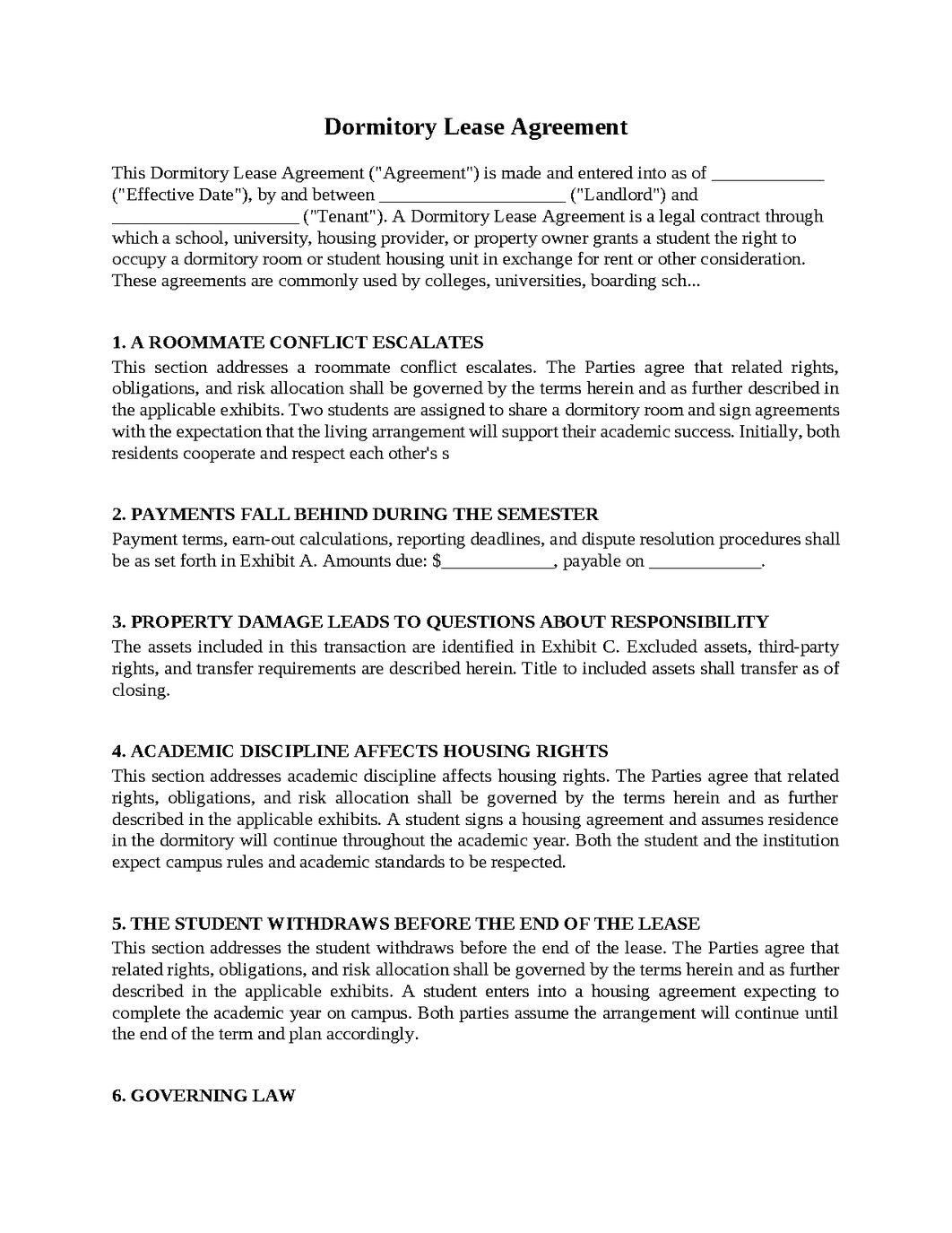
A Dormitory Lease Agreement is a legal contract through which a school, university, housing provider, or property owner grants a student the right to occupy a dormitory room or student housing unit in exchange for rent or other consideration. These agreements are commonly used by colleges, universities, boarding schools, private housing providers, and educational institutions offering residential accommodations. A Dormitory Lease Agreement typically addresses occupancy rules, payment obligations, maintenance responsibilities, guest policies, disciplinary procedures, and the circumstances under which housing privileges may be suspended or terminated. Because dormitory living involves shared facilities and changing academic circumstances, disputes can arise when expectations regarding housing and conduct are not documented clearly. A carefully drafted Dormitory Lease Agreement helps establish certainty and protect the interests of both housing providers and residents.
A Roommate Conflict Escalates
Two students are assigned to share a dormitory room and sign agreements with the expectation that the living arrangement will support their academic success. Initially, both residents cooperate and respect each other's schedules and preferences.
Over time, disagreements develop regarding noise, cleanliness, visitors, and study habits. What begin as minor frustrations gradually become more serious and begin affecting both students' ability to focus on school.
One resident believes the other is violating housing rules and creating an unreasonable living environment. The other student believes normal differences are inevitable and argues that expectations have become unrealistic. As tensions increase, university officials become involved and questions arise regarding the responsibilities of each resident.
To help avoid this problem, a Dormitory Lease Agreement should clearly establish occupancy standards and explain the procedures available for resolving roommate disputes.
Payments Fall Behind During the Semester
A student enters into a housing agreement and expects financial aid and family assistance to cover the cost of room and board. Both the student and the institution assume that payments will be made according to the schedule established at the beginning of the academic year.
Unexpected financial difficulties eventually affect the student's ability to satisfy housing obligations. Missed payments accumulate and concerns arise regarding whether the student will be permitted to remain in the dormitory.
The institution believes timely payment is necessary to maintain housing operations and ensure fairness to other residents. The student believes temporary hardships should justify additional flexibility and worries that losing housing could interfere with academic progress. As the unpaid balance grows, disagreements emerge regarding the consequences of default.
To help prevent these issues, a Dormitory Lease Agreement should clearly establish payment obligations and define the remedies available when rent or housing charges are not paid on time.
Property Damage Leads to Questions About Responsibility
A university provides furnished dormitory rooms to students and expects ordinary wear and tear to occur during the academic year. Residents understand that they are responsible for treating the facilities with care.
At the end of the semester, housing staff discover broken furniture, damaged walls, and missing equipment. Because several students occupied the room during the year, uncertainty develops regarding who caused the damage.
The housing provider believes the residents should collectively bear responsibility because they had possession of the premises. The students believe some of the problems existed before they moved in and argue that the charges are excessive. As repair costs increase, frustrations emerge regarding how liability should be allocated.
To help avoid these problems, a Dormitory Lease Agreement should clearly establish maintenance responsibilities and define how damage assessments will be handled.
Academic Discipline Affects Housing Rights
A student signs a housing agreement and assumes residence in the dormitory will continue throughout the academic year. Both the student and the institution expect campus rules and academic standards to be respected.
Following allegations involving misconduct, disciplinary proceedings are initiated and questions arise regarding whether the student should remain eligible for campus housing. The student worries that losing housing will affect educational opportunities and personal stability.
The institution believes maintaining safety and order requires the ability to restrict housing privileges when serious violations occur. The student believes disciplinary matters should not automatically result in the loss of housing and argues that additional protections are necessary. As emotions intensify, disagreements arise regarding the relationship between discipline and residential rights.
To help prevent these issues, a Dormitory Lease Agreement should clearly establish behavioral expectations and explain the circumstances under which housing privileges may be suspended or terminated.
The Student Withdraws Before the End of the Lease
A student enters into a housing agreement expecting to complete the academic year on campus. Both parties assume the arrangement will continue until the end of the term and plan accordingly.
Unexpected family circumstances and changing educational goals eventually cause the student to withdraw from school before the semester concludes. Questions quickly arise regarding refunds, future obligations, and whether another resident may occupy the room.
The student believes housing charges should end once the room is vacated and no longer used. The institution believes certain obligations survive because resources were committed based upon the original agreement. As financial consequences become more significant, both sides begin interpreting the agreement differently.
To help avoid this problem, a Dormitory Lease Agreement should clearly establish withdrawal procedures and define the rights and obligations that apply when a student leaves before the end of the housing term.
Dormitory Lease Agreements are valuable tools that provide students with stable housing while helping educational institutions manage residential communities effectively. However, issues involving roommate disputes, missed payments, property damage, disciplinary actions, and early withdrawals can become significant sources of conflict when expectations are not documented clearly. A carefully drafted Dormitory Lease Agreement provides a structured framework for allocating responsibilities and protecting the interests of both residents and housing providers. When prepared thoughtfully, it can reduce uncertainty, promote a positive living environment, support academic success, and provide the foundation necessary for effective campus housing operations.

Get started with Upsign today!
Easily send, sign and track your documents