

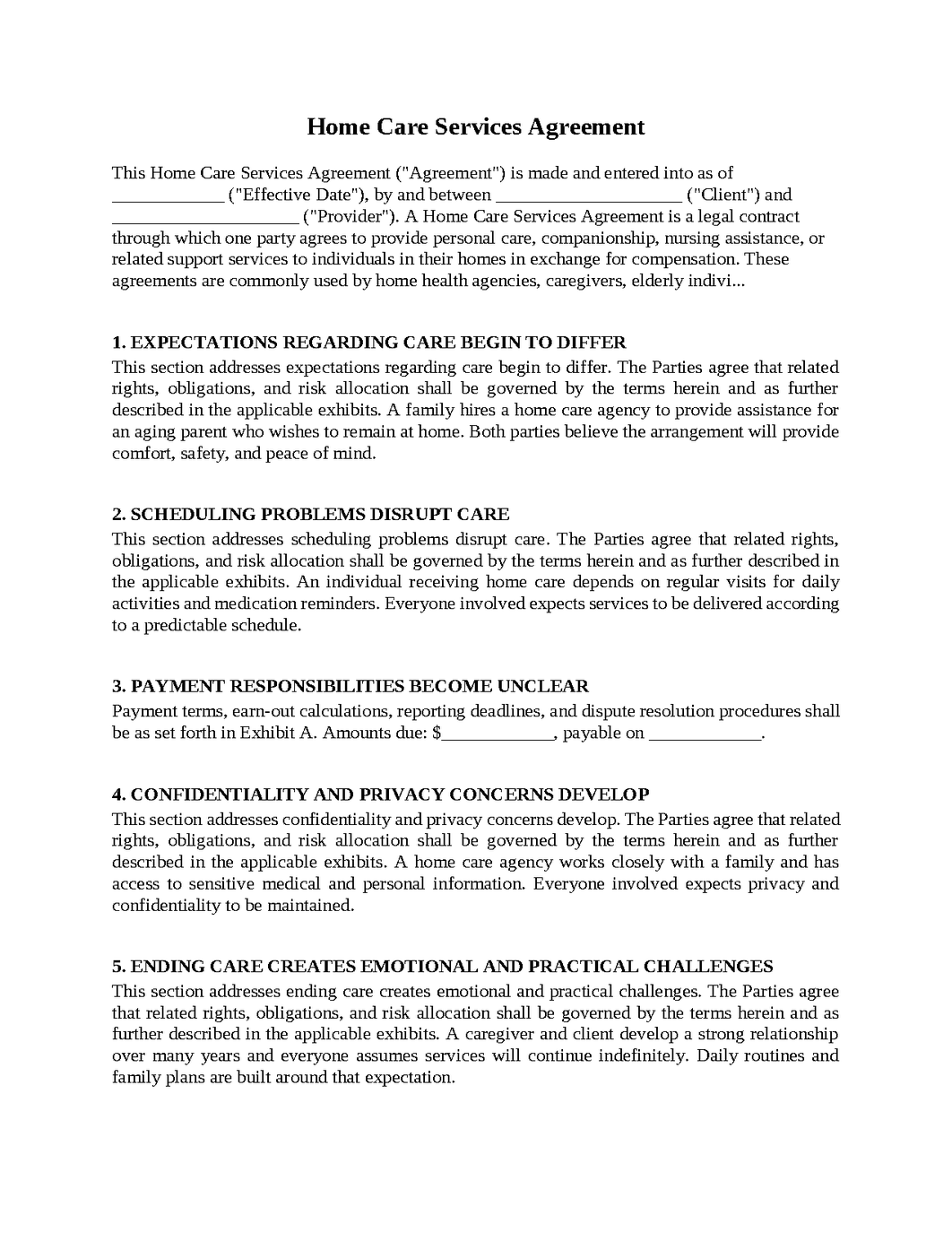
Home Care Services Agreement
A Home Care Services Agreement is a legal contract through which one party agrees to provide personal care, companionship, nursing assistance, or related support services to individuals in their homes in exchange for compensation. These agreements are commonly used by home health agencies, caregivers, elderly individuals, families, and healthcare organizations seeking to ensure that care is delivered consistently and professionally. A Home Care Services Agreement typically addresses the scope of services, scheduling, payment arrangements, confidentiality obligations, emergency procedures, and processes governing termination and disputes. Because home care involves vulnerable individuals and ongoing relationships, disputes can arise when expectations regarding responsibilities and quality of care are not documented clearly. A carefully drafted Home Care Services Agreement helps establish certainty and protect the interests of clients, families, and caregivers.
Expectations Regarding Care Begin to Differ
A family hires a home care agency to provide assistance for an aging parent who wishes to remain at home. Both parties believe the arrangement will provide comfort, safety, and peace of mind.
Initially, caregivers provide services consistently and communication remains positive. Over time, however, family members become concerned about the level of attention being provided and whether all requested tasks are being completed.
The family believes the caregiver should provide additional assistance because preserving the health and comfort of the client is the primary purpose of the arrangement. The agency believes the services being provided are consistent with the agreed responsibilities and argues that additional requests fall outside the original scope. As concerns increase, tensions emerge regarding the expected level of care.
To help avoid this problem, a Home Care Services Agreement should clearly establish the scope of services and define the expectations applicable to caregivers and clients.
Scheduling Problems Disrupt Care
An individual receiving home care depends on regular visits for daily activities and medication reminders. Everyone involved expects services to be delivered according to a predictable schedule.
Unexpected staffing shortages and illnesses begin causing missed appointments and delayed visits. Family members worry that interruptions could affect the client's well-being and safety.
The family believes the agency should maintain sufficient staffing to avoid disruptions because dependable care is essential. The agency believes unforeseen circumstances occasionally affect scheduling and argues that reasonable efforts were made to minimize interruptions. As frustrations increase, disagreements emerge regarding reliability and staffing obligations.
To help prevent these issues, a Home Care Services Agreement should clearly establish scheduling requirements and define procedures for addressing missed visits and substitute caregivers.
Payment Responsibilities Become Unclear
A family engages a caregiver to provide long-term support and expects expenses to remain manageable. Both parties initially believe the compensation arrangement is straightforward and sustainable.
As care needs increase, additional hours and specialized services become necessary. Questions arise regarding overtime charges, weekend rates, and services that were not originally anticipated.
The family believes many of the additional tasks are part of ordinary caregiving and should be included within the agreed price. The care provider believes the expanded services require additional compensation because they involve greater responsibilities and time commitments. As costs increase, tensions develop regarding the proper amount owed.
To help avoid these problems, a Home Care Services Agreement should clearly establish compensation arrangements and define how additional services and expenses will be handled.
Confidentiality and Privacy Concerns Develop
A home care agency works closely with a family and has access to sensitive medical and personal information. Everyone involved expects privacy and confidentiality to be maintained.
Over time, concerns arise regarding discussions about the client's condition and access to personal records. Family members begin questioning whether sufficient safeguards are in place.
The family believes protecting personal information is essential because trust and dignity depend upon confidentiality. The agency believes reasonable safeguards have been implemented and argues that employees understand their responsibilities. As concerns increase, disagreements emerge regarding privacy obligations.
To help prevent these issues, a Home Care Services Agreement should clearly establish confidentiality requirements and define how personal information will be protected.
Ending Care Creates Emotional and Practical Challenges
A caregiver and client develop a strong relationship over many years and everyone assumes services will continue indefinitely. Daily routines and family plans are built around that expectation.
Eventually, changing medical needs require the client to move into an assisted living facility. Questions arise regarding final payments, access to records, and responsibilities during the transition.
The family believes an orderly transition is necessary to preserve continuity and protect the client's well-being. The agency believes its obligations should conclude according to the agreement and expects all outstanding balances to be resolved promptly. As the relationship ends, disagreements emerge regarding the responsibilities that survive termination.
To help avoid this problem, a Home Care Services Agreement should clearly establish termination procedures and identify the rights and obligations that continue after services end.
Home Care Services Agreements are valuable tools that help individuals receive support and maintain independence while providing families with confidence and peace of mind. However, issues involving care expectations, scheduling disruptions, payment obligations, privacy concerns, and post-termination responsibilities can become significant sources of conflict when expectations are not documented clearly. A carefully drafted Home Care Services Agreement provides a structured framework for allocating responsibilities and protecting the interests of clients, caregivers, and families. When prepared thoughtfully, it can reduce uncertainty, strengthen trust, encourage quality care, and provide the foundation necessary for successful home care relationships.

Get started with Upsign today!
Easily send, sign and track your documents