

Personal Services Agreement
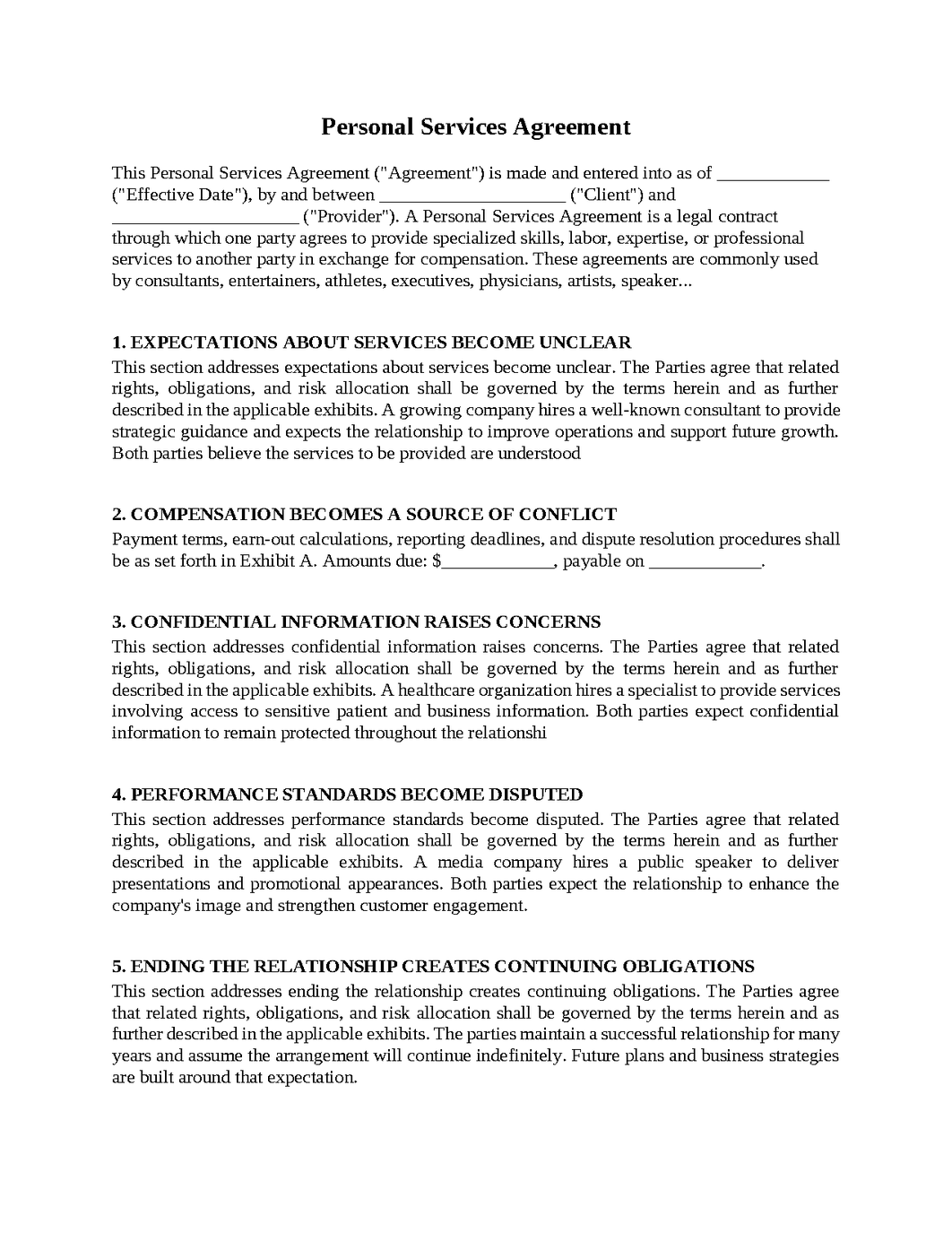
A Personal Services Agreement is a legal contract through which one party agrees to provide specialized skills, labor, expertise, or professional services to another party in exchange for compensation. These agreements are commonly used by consultants, entertainers, athletes, executives, physicians, artists, speakers, and independent contractors seeking to formalize service relationships and define expectations. A Personal Services Agreement typically addresses the scope of services, compensation arrangements, confidentiality obligations, ownership rights, performance standards, and procedures governing disputes and termination. Because these agreements often depend upon the unique abilities and reputation of an individual, disputes can arise when expectations regarding responsibilities and performance are not documented clearly. A carefully drafted Personal Services Agreement helps establish certainty and protect the interests of both service providers and clients.
Expectations About Services Become Unclear
A growing company hires a well-known consultant to provide strategic guidance and expects the relationship to improve operations and support future growth. Both parties believe the services to be provided are understood and aligned with their goals.
Initially, communication remains strong and projects proceed smoothly. Over time, however, disagreements arise regarding the extent of the consultant's responsibilities and whether additional work is included within the original arrangement.
The company believes broader assistance should be expected because the consultant was retained to provide expertise and leadership. The consultant believes the agreed services were limited and argues that additional projects require separate discussions and compensation. As expectations expand, tensions emerge regarding the scope of the engagement.
To help avoid this problem, a Personal Services Agreement should clearly establish the services being provided and define any limitations applicable to the relationship.
Compensation Becomes a Source of Conflict
An executive enters into a personal services arrangement with a private company and expects compensation to reflect the value contributed to the organization. Everyone assumes the payment terms are fair and straightforward.
As the business grows and responsibilities increase, questions arise regarding bonuses, reimbursements, and additional compensation for expanded duties. Different interpretations create uncertainty regarding the amounts owed.
The executive believes compensation should reflect the additional value created because increased responsibilities contributed to the success of the business. The company believes the original compensation structure remains controlling and argues that expectations should not change without formal amendments. As revenues increase, disagreements emerge regarding compensation.
To help prevent these issues, a Personal Services Agreement should clearly establish payment provisions and define how additional compensation and reimbursements will be handled.
Confidential Information Raises Concerns
A healthcare organization hires a specialist to provide services involving access to sensitive patient and business information. Both parties expect confidential information to remain protected throughout the relationship.
As projects progress, concerns arise regarding data access and the use of information outside the scope of the engagement. Questions emerge regarding the protection of proprietary and confidential materials.
The organization believes strong confidentiality protections are essential because privacy obligations and competitive interests depend upon safeguarding information. The service provider believes reasonable precautions are already being followed and argues that ordinary professional activities should not be restricted unnecessarily. As concerns increase, tensions develop regarding confidentiality obligations.
To help avoid these problems, a Personal Services Agreement should clearly establish confidentiality requirements and define the procedures governing the protection and use of sensitive information.
Performance Standards Become Disputed
A media company hires a public speaker to deliver presentations and promotional appearances. Both parties expect the relationship to enhance the company's image and strengthen customer engagement.
Over time, questions arise regarding preparation requirements, scheduling obligations, and the quality of the appearances being provided. Different expectations create uncertainty regarding whether contractual obligations are being satisfied.
The company believes consistent performance is essential because the speaker's reputation and presentations influence public perception. The speaker believes reasonable flexibility is necessary and argues that creative and professional services cannot always be measured according to rigid standards. As concerns increase, disagreements emerge regarding performance expectations.
To help prevent these issues, a Personal Services Agreement should clearly establish performance standards and define the expectations applicable to the services being provided.
Ending the Relationship Creates Continuing Obligations
The parties maintain a successful relationship for many years and assume the arrangement will continue indefinitely. Future plans and business strategies are built around that expectation.
Eventually, changing priorities lead one side to end the engagement. Questions arise regarding outstanding compensation, confidential information, unfinished projects, and restrictions that survive termination.
The service provider believes compensation for completed work should be paid promptly because years of effort contributed to the relationship. The client believes confidentiality and other protective provisions should continue after the engagement ends and expects contractual obligations to be respected. As the relationship concludes, disagreements emerge regarding the rights and responsibilities that survive termination.
To help avoid this problem, a Personal Services Agreement should clearly establish termination procedures and identify the rights and responsibilities that continue after the relationship ends.
Personal Services Agreements are valuable tools that allow individuals and organizations to define expectations and establish productive professional relationships. However, issues involving the scope of services, compensation, confidentiality concerns, performance expectations, and post-termination responsibilities can become significant sources of conflict when expectations are not documented clearly. A carefully drafted Personal Services Agreement provides a structured framework for allocating responsibilities and protecting the interests of both service providers and clients. When prepared thoughtfully, it can reduce uncertainty, strengthen professional relationships, encourage accountability, and provide the foundation necessary for successful service arrangements.

Get started with Upsign today!
Easily send, sign and track your documents