

Pet Addendum to Lease
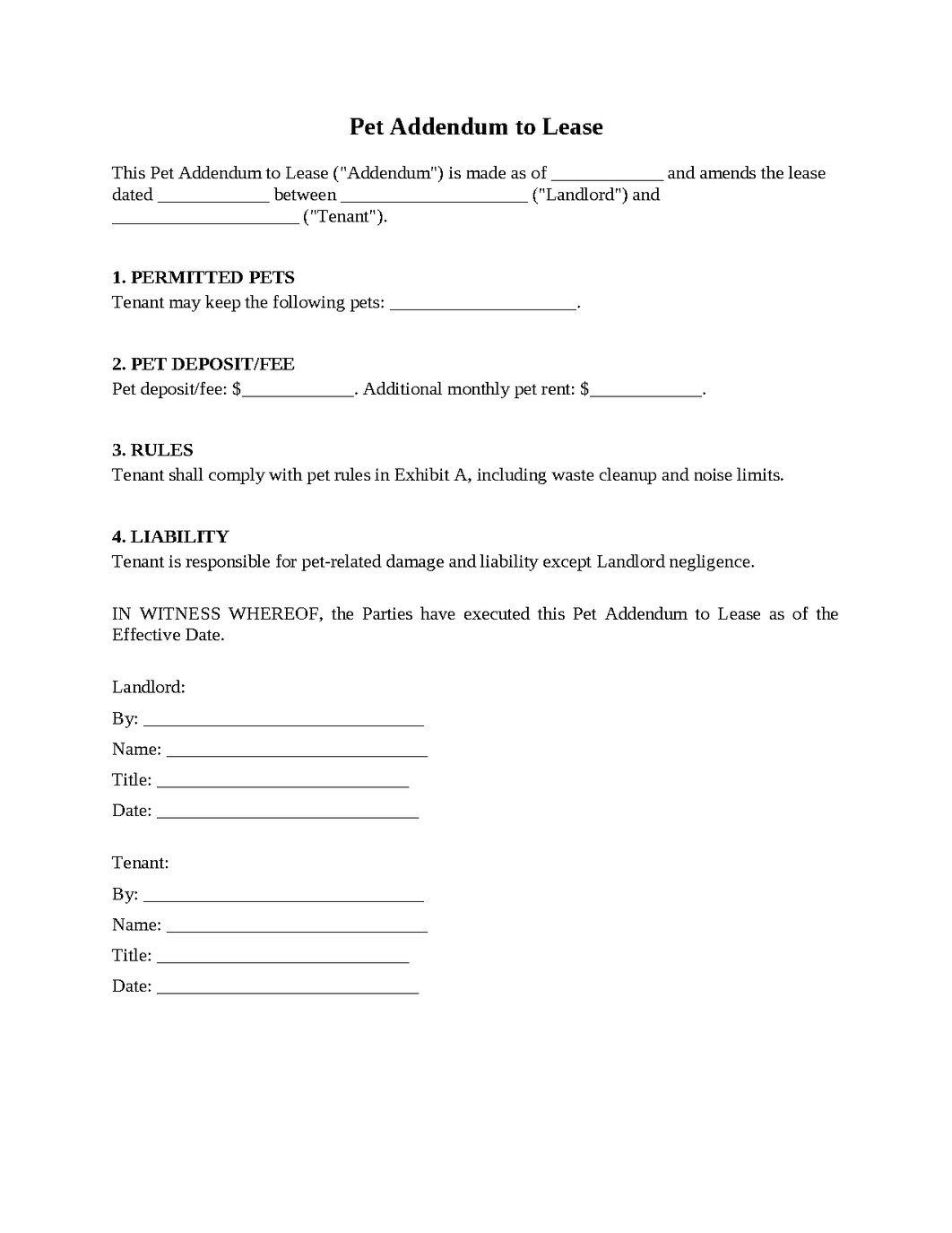
A Pet Addendum to Lease is a legal document that supplements a residential or commercial lease by establishing the rights, responsibilities, and restrictions that apply when a tenant keeps a pet on leased property. The addendum typically addresses permitted animals, pet deposits, monthly pet fees, vaccination requirements, behavioral standards, property damage, waste removal, liability issues, and circumstances that may result in the pet's removal. Pet Addendums are commonly used by landlords, property management companies, apartment complexes, condominium rentals, and single-family home owners. Because pets can create concerns involving property damage, noise complaints, safety issues, and liability exposure, disputes frequently arise when expectations are not clearly documented. A well-drafted Pet Addendum to Lease helps protect both landlords and tenants while allowing pets to reside on the property under agreed-upon conditions.
The Tenant Brings Home a Different Pet
A landlord approves a tenant's request to keep a twelve-pound miniature poodle in a rental home. The pet is specifically identified in the lease documents, and the landlord is comfortable with the arrangement because of the dog's size, breed, and temperament.
Several months later, the tenant adopts a second dog from a local rescue organization. Unlike the original pet, the new dog is significantly larger and requires more exercise and supervision. The tenant assumes that because pets are already allowed, additional approval is unnecessary.
The landlord eventually discovers the second animal during a routine property inspection. Concerns immediately arise regarding occupancy limits, insurance requirements, and the increased risk of property damage. The landlord believes the tenant violated the lease by introducing an unauthorized pet.
The tenant argues that the property already permits animals and that the second dog has caused no problems. The disagreement quickly escalates because the parties have different interpretations of what approval was originally granted.
To help avoid this problem, a Pet Addendum to Lease should clearly identify each approved animal and require written approval before any additional pets are brought onto the property. The addendum should also explain the consequences of keeping unauthorized animals so that expectations remain clear throughout the tenancy.
Property Damage Exceeds the Security Deposit
A tenant rents a townhouse and receives approval to keep a large dog. The landlord collects a standard security deposit and believes the arrangement is adequately protected.
Over the course of several years, the dog scratches hardwood floors, damages interior doors, chews portions of trim, and causes significant staining on carpets. Because the damage develops gradually, neither party fully appreciates the extent of the problem during the tenancy.
When the tenant eventually moves out, repair estimates far exceed the amount of the security deposit. The landlord seeks reimbursement for the additional costs and provides documentation supporting the repairs.
The tenant argues that much of the damage represents normal wear and tear. The landlord responds that the deterioration was caused directly by the animal and falls outside ordinary use of the property.
What began as a routine move-out inspection becomes a significant financial dispute.
To reduce these risks, a Pet Addendum to Lease should clearly define responsibility for pet-related damage, explain how repair costs will be handled, and identify whether additional deposits, fees, or insurance requirements apply. Detailed provisions can help minimize disagreements when damage occurs.
A Neighbor Complains About Aggressive Behavior
A tenant leases an apartment and obtains approval for a medium-sized dog. Initially, there are no issues, and the dog appears well behaved.
As time passes, however, neighbors begin reporting concerns. Several residents complain that the dog lunges aggressively while being walked through common areas. Others report excessive barking and uncomfortable encounters near building entrances.
Property management investigates and receives multiple written complaints. Although no serious incident has occurred, concerns continue to grow regarding resident safety and quality of life within the community.
The tenant insists the dog is harmless and believes the complaints are exaggerated. Property management argues that the behavior violates community standards and creates unnecessary risk.
The disagreement becomes increasingly difficult because both sides have different views regarding what constitutes unacceptable conduct.
To help prevent these disputes, a Pet Addendum to Lease should establish behavioral expectations, identify prohibited conduct, and describe the procedures that apply if complaints are received. The agreement should also reserve the landlord's right to require corrective action or remove a pet that poses safety concerns.
An Injury Leads to Questions About Liability
A tenant keeps an approved dog at a rental property under a properly executed pet addendum.
One afternoon, a guest visits the property and is bitten by the dog while entering the backyard. Medical treatment is required, and the injured individual later seeks compensation for medical expenses and related damages.
The landlord becomes concerned because the incident occurred on the rental property. Questions arise regarding insurance coverage, responsibility for legal claims, and whether the landlord may also be exposed to liability.
The tenant argues that the dog had never displayed aggressive behavior previously. The injured party focuses primarily on recovering damages and determining who may be legally responsible.
What began as an ordinary pet ownership arrangement now involves insurance carriers, attorneys, and potentially significant financial exposure.
To help reduce these risks, a Pet Addendum to Lease should require tenants to assume responsibility for pet-related injuries, maintain appropriate insurance when necessary, and indemnify the landlord against claims arising from the animal's conduct. Clear liability provisions can provide important protection when unexpected incidents occur.
The Tenant Leaves but Abandons the Pet
A tenant experiences financial difficulties and unexpectedly vacates a rental property before the lease expires.
When property management enters the unit, staff discover that a pet has been left behind. Food supplies are limited, the animal requires immediate care, and no instructions have been provided regarding ownership or future arrangements.
Property management must act quickly to protect the animal's welfare while also addressing legal and logistical concerns.
Questions arise regarding who will pay for veterinary care, temporary boarding, transportation, and other expenses associated with the abandoned pet. The former tenant cannot be reached, and the landlord is left handling a situation that was never anticipated.
The resulting costs and responsibilities create frustration for everyone involved.
To help avoid these problems, a Pet Addendum to Lease should address pet abandonment, authorize emergency action when necessary, and establish the tenant's responsibility for costs incurred if an animal is left behind. These provisions can provide clear guidance during unexpected situations.
Pets can bring companionship, comfort, and enjoyment to rental properties, but they can also create unique risks involving property damage, safety concerns, liability exposure, and community relations. A Pet Addendum to Lease provides a structured framework for addressing these issues before problems arise. When drafted carefully, it can help protect landlords, clarify tenant responsibilities, reduce disputes, and support a positive rental experience for everyone involved.

Get started with Upsign today!
Easily send, sign and track your documents