

Residential Lease Agreement
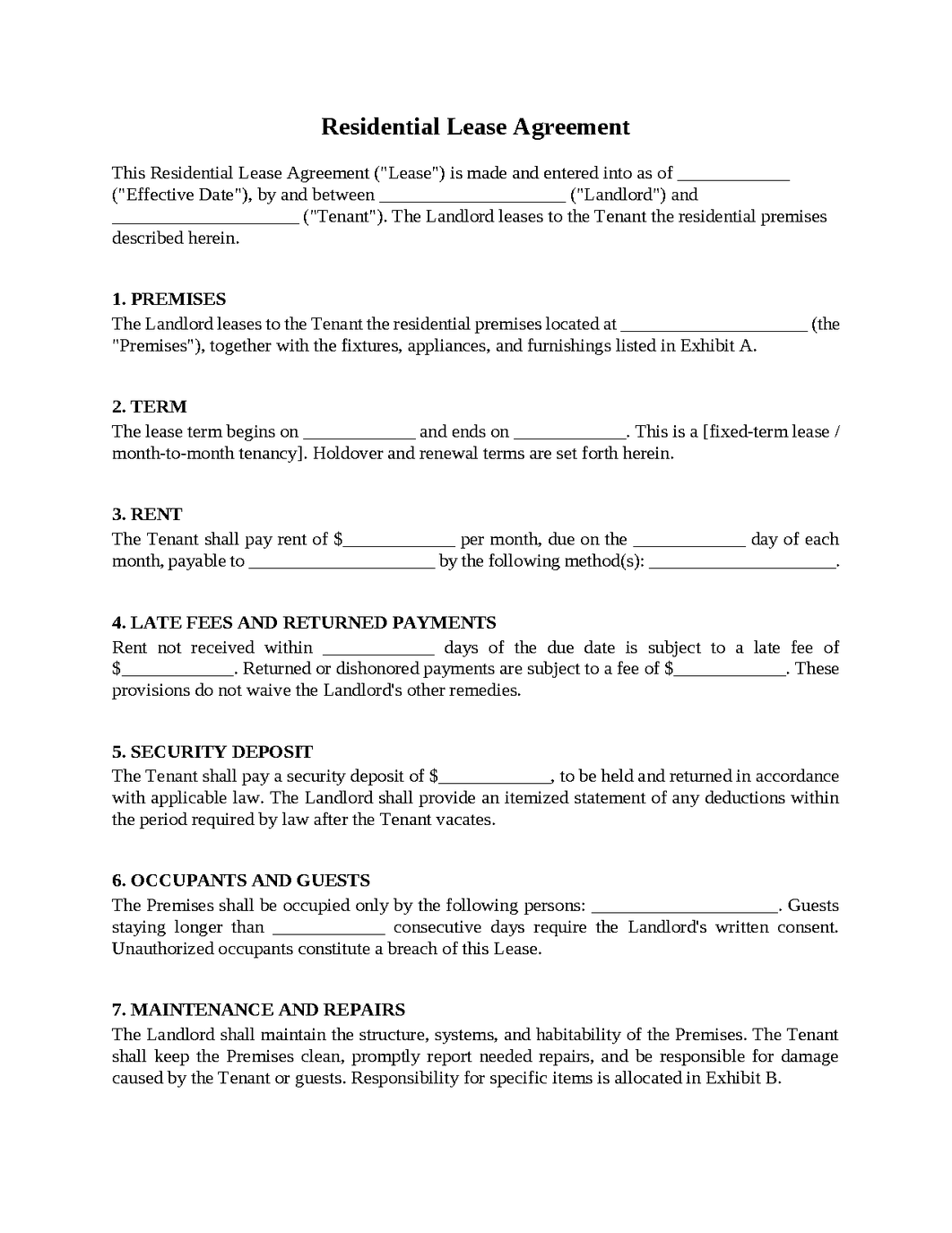
A Residential Lease Agreement is a legal contract between a landlord and a tenant that establishes the terms under which a residential property is rented. These agreements are commonly used for houses, apartments, condominiums, townhomes, duplexes, and other residential dwellings. A Residential Lease Agreement typically addresses rent obligations, security deposits, maintenance responsibilities, occupancy restrictions, lease duration, utilities, termination rights, and property-use rules. Because landlords and tenants often have different expectations regarding the property and their respective responsibilities, disputes can arise when terms are not documented clearly. A well-drafted Residential Lease Agreement helps protect both parties while providing a framework for a successful tenancy.
The Tenant Believes Certain Repairs Are the Landlord's Responsibility
A family rents a home under a one-year lease agreement. For the first several months, the tenancy proceeds smoothly and both parties are satisfied with the arrangement.
As the property ages, several maintenance issues begin to emerge. A plumbing problem develops in one bathroom, appliances begin malfunctioning, and damage appears in areas subject to ordinary wear and tear.
The tenants believe the landlord is responsible for correcting the issues because they affect the property's habitability and normal use. The landlord argues that some of the problems resulted from tenant actions and should therefore be addressed at the tenant's expense.
The disagreement becomes increasingly frustrating because neither party has a clear understanding of maintenance responsibilities.
What began as a routine repair request becomes a dispute regarding who must pay for the work.
To help avoid this problem, a Residential Lease Agreement should clearly define maintenance obligations, identify landlord and tenant responsibilities, establish repair-request procedures, and explain how damage caused by tenants will be handled.
Rent Payments Become a Source of Conflict
A tenant signs a lease requiring monthly rent payments on a specific date each month.
For several months, payments are made on time. Eventually, financial difficulties arise and the tenant begins making payments late. The landlord initially accepts delayed payments in an effort to maintain a positive relationship.
Over time, however, late payments become more frequent. The landlord expects late fees and strict compliance with the lease terms. The tenant believes occasional delays should be accommodated because payments are eventually made.
The disagreement escalates as unpaid balances, fees, and communication problems accumulate.
Neither party wants the tenancy to end, but both have different expectations regarding payment flexibility.
To reduce these risks, a Residential Lease Agreement should clearly establish rent due dates, late fees, grace periods, payment methods, and remedies available if rent is not paid as required.
Unauthorized Occupants Move Into the Property
A landlord rents a property to a single tenant after carefully reviewing the tenant's application and qualifications.
Several months later, neighbors report that additional individuals appear to be living at the property full time. The landlord becomes concerned because occupancy levels may affect wear and tear, insurance requirements, and compliance with local regulations.
The tenant argues that family members and friends are merely visiting or helping temporarily. The landlord believes the property is being occupied by people who were never approved under the lease.
The disagreement creates tension because the parties never discussed occupancy expectations in detail.
What started as a simple living arrangement becomes a dispute regarding who is permitted to reside at the property.
To help prevent these issues, a Residential Lease Agreement should clearly define authorized occupants, guest limitations, approval requirements, and consequences for unauthorized occupancy.
The Tenant Moves Out but Disputes the Security Deposit
At the conclusion of a lease term, a tenant vacates the property and expects the security deposit to be returned promptly.
After inspecting the property, the landlord identifies damage, cleaning costs, and repair expenses that exceed normal wear and tear. The landlord withholds a portion of the deposit to cover those costs.
The tenant believes the property was left in acceptable condition and argues that the deductions are excessive. The landlord believes the charges are necessary and justified.
The disagreement becomes increasingly contentious because both parties have different views regarding the property's condition.
What should have been a routine move-out process becomes a financial dispute.
To help avoid these problems, a Residential Lease Agreement should clearly explain security deposit procedures, define normal wear and tear, establish inspection processes, and identify the circumstances under which deductions may be made.
The Landlord Wants to End the Lease Early
A property owner decides to sell a rental property during an active lease term.
The landlord believes selling the property is necessary for personal or financial reasons and hopes the tenant will cooperate. The tenant, however, expects to remain in the property for the full lease term as originally agreed.
Questions arise regarding notice requirements, termination rights, property showings, and the effect of the sale on the existing lease.
The landlord wants flexibility to complete the transaction. The tenant wants stability and protection from unexpected relocation.
The disagreement creates uncertainty for both parties.
To reduce these risks, a Residential Lease Agreement should clearly address early termination rights, sale-related procedures, notice requirements, and the parties' obligations if ownership of the property changes during the lease term.
Residential Lease Agreements serve as the foundation for landlord-tenant relationships and play a critical role in establishing expectations regarding occupancy, payments, maintenance, and property use. However, issues involving repairs, rent payments, occupancy restrictions, security deposits, and lease termination can become significant sources of conflict when responsibilities are not documented clearly. A carefully drafted Residential Lease Agreement provides a structured framework for managing these relationships and protecting both landlords and tenants. When prepared thoughtfully, it can help reduce misunderstandings, preserve positive landlord-tenant relationships, support compliance with applicable laws, and promote successful residential tenancies.

Get started with Upsign today!
Easily send, sign and track your documents