

Quality Testing Services Agreement
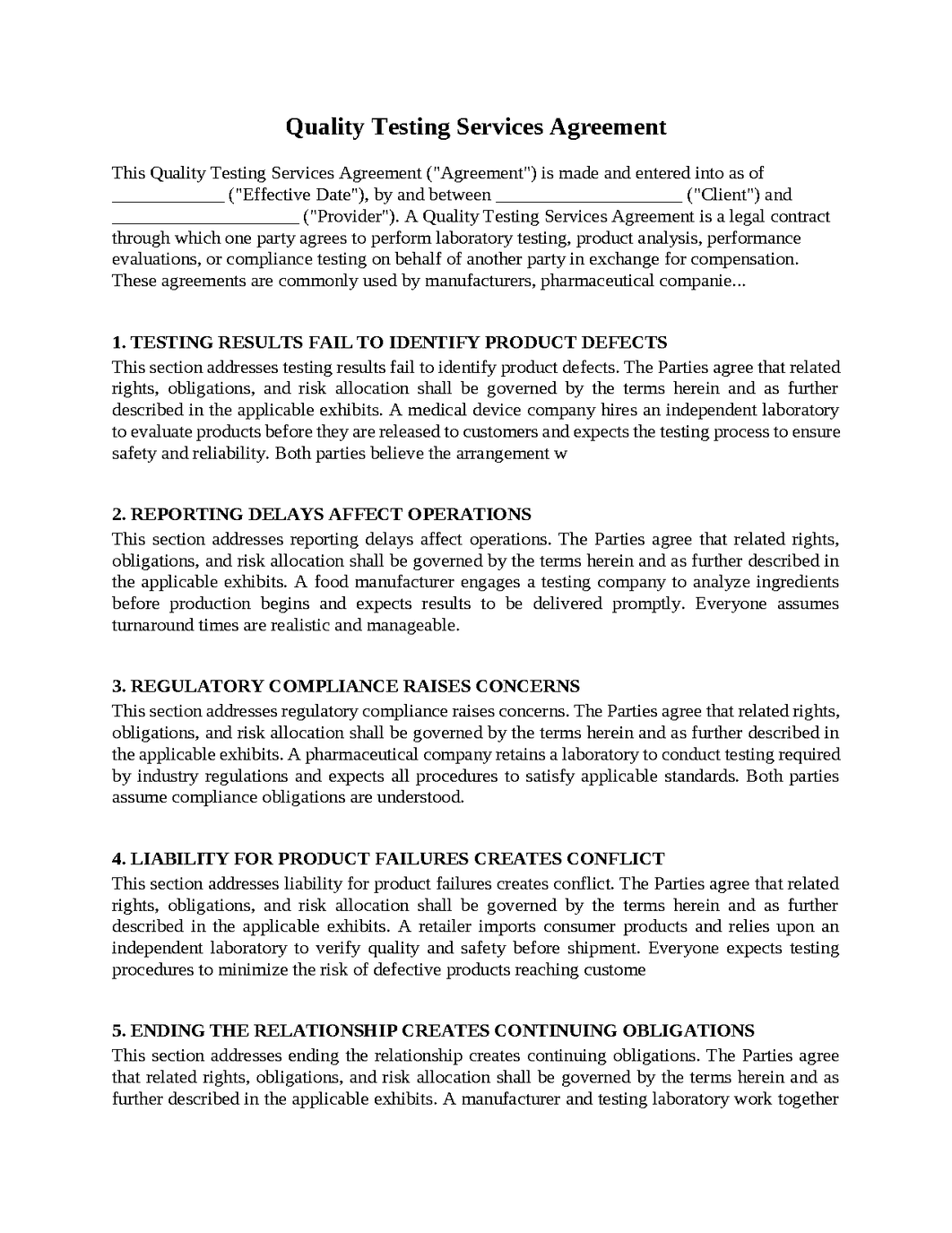
A Quality Testing Services Agreement is a legal contract through which one party agrees to perform laboratory testing, product analysis, performance evaluations, or compliance testing on behalf of another party in exchange for compensation. These agreements are commonly used by manufacturers, pharmaceutical companies, food producers, technology businesses, medical device companies, and retailers seeking independent verification that products meet quality standards and regulatory requirements. A Quality Testing Services Agreement typically addresses testing procedures, reporting obligations, turnaround times, compliance responsibilities, compensation arrangements, and procedures governing disputes and termination. Because testing results influence production decisions, customer safety, and regulatory compliance, disputes can arise when expectations regarding responsibilities and performance are not documented clearly. A carefully drafted Quality Testing Services Agreement helps establish certainty and protect the interests of both clients and testing providers.
Testing Results Fail to Identify Product Defects
A medical device company hires an independent laboratory to evaluate products before they are released to customers and expects the testing process to ensure safety and reliability. Both parties believe the arrangement will minimize risks and support regulatory compliance.
Initially, products perform as expected and customer confidence remains strong. Over time, however, defects begin appearing despite favorable testing reports. Questions arise regarding whether the testing procedures were adequate.
The medical device company believes testing should have identified significant issues because customer safety and regulatory approvals depend upon accurate evaluations. The laboratory believes the agreed procedures were followed properly and argues that certain failures could not reasonably have been detected. As complaints increase, tensions emerge regarding responsibility for the problems.
To help avoid this problem, a Quality Testing Services Agreement should clearly establish testing standards and define the procedures governing evaluations and certifications.
Reporting Delays Affect Operations
A food manufacturer engages a testing company to analyze ingredients before production begins and expects results to be delivered promptly. Everyone assumes turnaround times are realistic and manageable.
As demand increases, delays in testing reports begin affecting production schedules and customer commitments. Questions arise regarding whether the laboratory is meeting performance expectations.
The manufacturer believes timely reporting is essential because production and distribution depend upon accurate and prompt test results. The testing company believes increased workloads and unexpected circumstances contributed to the delays and argues that maintaining accuracy requires additional time. As disruptions continue, disagreements emerge regarding reporting obligations.
To help prevent these issues, a Quality Testing Services Agreement should clearly establish turnaround times and define expectations relating to reporting and communication.
Regulatory Compliance Raises Concerns
A pharmaceutical company retains a laboratory to conduct testing required by industry regulations and expects all procedures to satisfy applicable standards. Both parties assume compliance obligations are understood.
As regulations evolve, questions arise regarding testing methodologies, certifications, and documentation requirements. Concerns increase regarding the possibility of penalties and product recalls.
The pharmaceutical company believes regulatory compliance was one of the primary reasons for hiring an independent laboratory and expects the required standards to be maintained. The laboratory believes changing regulations affect both parties and argues that compliance responsibilities should be shared. As scrutiny increases, tensions develop regarding accountability.
To help avoid these problems, a Quality Testing Services Agreement should clearly establish compliance responsibilities and define the obligations relating to laws, regulations, and industry standards.
Liability for Product Failures Creates Conflict
A retailer imports consumer products and relies upon an independent laboratory to verify quality and safety before shipment. Everyone expects testing procedures to minimize the risk of defective products reaching customers.
Despite the testing process, defective products are distributed and significant losses occur. Questions arise regarding whether the laboratory should bear responsibility for the damages.
The retailer believes the laboratory should be accountable because preventing defects was one of the primary purposes of the engagement. The testing company believes testing services cannot guarantee perfect outcomes and argues that liability should remain limited to the agreed scope of work. As losses increase, disagreements emerge regarding responsibility.
To help prevent these issues, a Quality Testing Services Agreement should clearly establish liability provisions and define the limitations applicable to claims arising from testing services.
Ending the Relationship Creates Continuing Obligations
A manufacturer and testing laboratory work together successfully for many years and gradually integrate reporting systems, quality procedures, and regulatory processes. Both parties assume the relationship will continue indefinitely and organize operations around that expectation.
Eventually, changing priorities lead the manufacturer to engage another laboratory. Questions arise regarding historical records, unfinished analyses, outstanding invoices, and responsibilities involving products previously tested.
The manufacturer believes continued access to records is essential because audits and future claims may depend upon historical information. The laboratory believes its obligations should end once contractual requirements are satisfied and expects finality. As the relationship concludes, disagreements emerge regarding the rights and responsibilities that survive termination.
To help avoid this problem, a Quality Testing Services Agreement should clearly establish termination procedures and identify the rights and responsibilities that continue after the relationship ends.
Quality Testing Services Agreements are valuable tools that help organizations verify product quality, satisfy regulatory requirements, and protect customers through independent analysis and testing. However, issues involving testing procedures, reporting delays, regulatory compliance, liability concerns, and post-termination obligations can become significant sources of conflict when expectations are not documented clearly. A carefully drafted Quality Testing Services Agreement provides a structured framework for allocating responsibilities and protecting the interests of both clients and testing providers. When prepared thoughtfully, it can reduce uncertainty, strengthen commercial relationships, improve product reliability, and provide the foundation necessary for effective quality assurance and testing operations.

Get started with Upsign today!
Easily send, sign and track your documents