

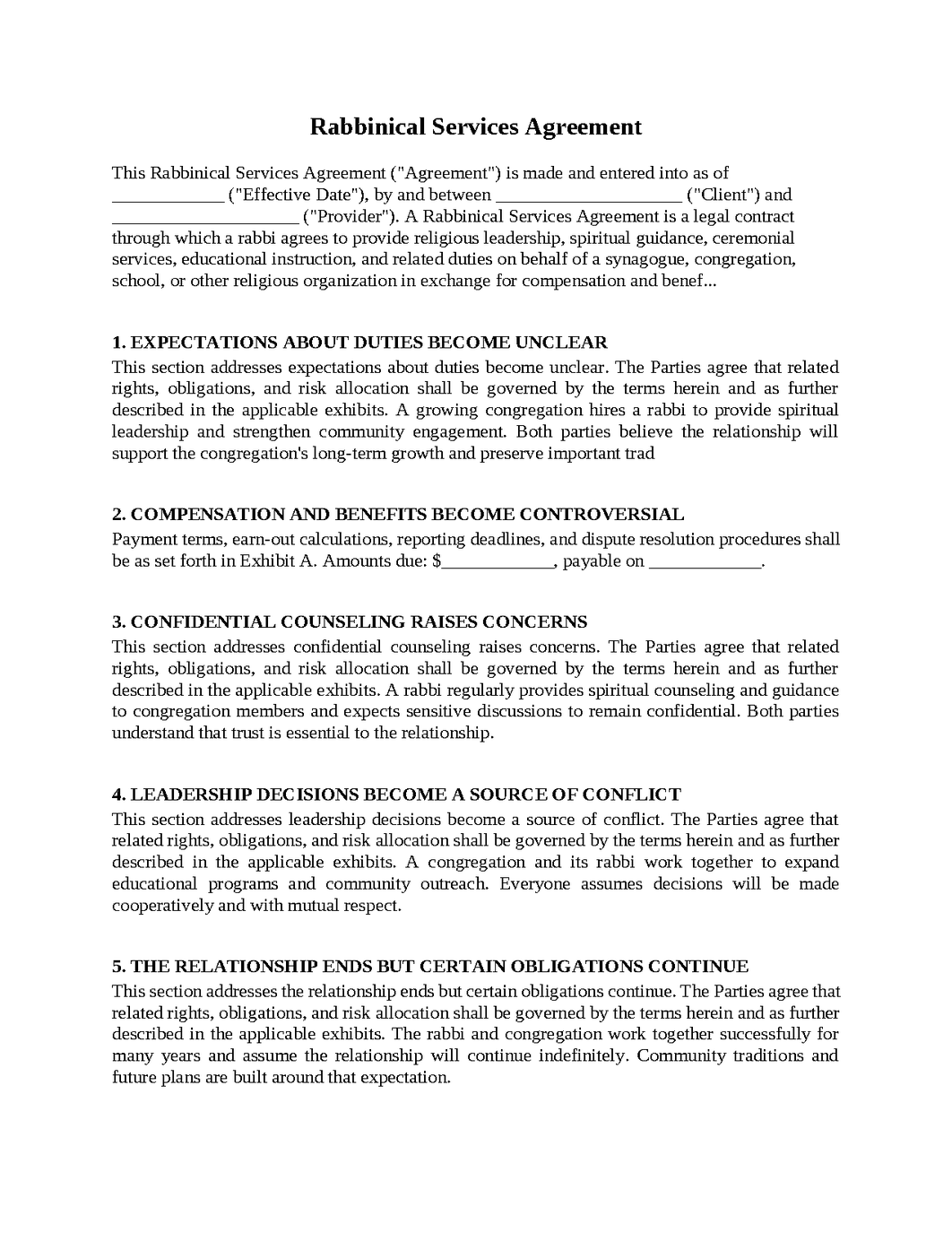
Rabbinical Services Agreement
A Rabbinical Services Agreement is a legal contract through which a rabbi agrees to provide religious leadership, spiritual guidance, ceremonial services, educational instruction, and related duties on behalf of a synagogue, congregation, school, or other religious organization in exchange for compensation and benefits. These agreements are commonly used by congregations, Jewish educational institutions, nonprofit organizations, and community centers seeking stable spiritual leadership and continuity. A Rabbinical Services Agreement typically addresses responsibilities, compensation arrangements, housing allowances, confidentiality obligations, performance expectations, and procedures governing disputes and termination. Because religious leadership involves both professional and spiritual relationships, disputes can arise when expectations regarding responsibilities and authority are not documented clearly. A carefully drafted Rabbinical Services Agreement helps establish certainty and protect the interests of both the religious organization and the rabbi.
Expectations About Duties Become Unclear
A growing congregation hires a rabbi to provide spiritual leadership and strengthen community engagement. Both parties believe the relationship will support the congregation's long-term growth and preserve important traditions.
Initially, services, educational programs, and community activities proceed smoothly. Over time, however, differing expectations arise regarding counseling responsibilities, administrative duties, and attendance at community events.
The congregation believes broader involvement is appropriate because members rely upon spiritual leadership for many aspects of communal life. The rabbi believes certain expectations extend beyond the original understanding and argues that additional responsibilities should be addressed separately. As demands increase, tensions emerge regarding the scope of services.
To help avoid this problem, a Rabbinical Services Agreement should clearly establish responsibilities and define the expectations applicable to spiritual and administrative duties.
Compensation and Benefits Become Controversial
A synagogue provides salary, housing assistance, and other benefits to attract an experienced rabbi. Everyone assumes the compensation structure reflects the needs of the congregation and the responsibilities of the position.
As membership grows and the rabbi's workload expands, questions arise regarding additional compensation and adjustments to benefits. Different expectations create uncertainty regarding financial arrangements.
The rabbi believes compensation should reflect increased responsibilities because expanded programs and membership growth require additional time and effort. The congregation believes financial resources are limited and argues that existing arrangements remain reasonable. As operating costs rise, disagreements emerge regarding compensation.
To help prevent these issues, a Rabbinical Services Agreement should clearly establish compensation provisions and define how future adjustments and benefits will be determined.
Confidential Counseling Raises Concerns
A rabbi regularly provides spiritual counseling and guidance to congregation members and expects sensitive discussions to remain confidential. Both parties understand that trust is essential to the relationship.
As difficult personal situations arise, questions emerge regarding confidentiality and the circumstances under which information may be disclosed. Concerns increase regarding privacy and ethical obligations.
The congregation believes sensitive matters should be handled carefully because members rely upon spiritual leaders for guidance and support. The rabbi believes confidentiality is fundamental to the role and argues that disclosures should occur only under limited circumstances. As concerns increase, tensions develop regarding confidentiality obligations.
To help avoid these problems, a Rabbinical Services Agreement should clearly establish confidentiality requirements and define the circumstances under which information may be disclosed.
Leadership Decisions Become a Source of Conflict
A congregation and its rabbi work together to expand educational programs and community outreach. Everyone assumes decisions will be made cooperatively and with mutual respect.
Over time, differences arise regarding worship practices, programming priorities, and organizational leadership. Questions emerge concerning who possesses authority over important matters.
The congregation believes elected leaders should retain ultimate authority because they represent the interests of members and manage the organization's resources. The rabbi believes spiritual leadership requires meaningful input and argues that religious matters deserve professional discretion. As disagreements increase, tensions emerge regarding decision-making authority.
To help prevent these issues, a Rabbinical Services Agreement should clearly establish governance procedures and define the authority applicable to religious and administrative matters.
The Relationship Ends but Certain Obligations Continue
The rabbi and congregation work together successfully for many years and assume the relationship will continue indefinitely. Community traditions and future plans are built around that expectation.
Eventually, changing priorities or personal circumstances lead the relationship to end. Questions arise regarding severance benefits, congregation records, confidentiality obligations, and ongoing community relationships.
The rabbi believes years of service deserve fair treatment because strong relationships and traditions were built over time. The congregation believes certain responsibilities and protections should continue after separation and expects contractual obligations to be respected. As the relationship concludes, disagreements emerge regarding the rights and responsibilities that survive termination.
To help avoid this problem, a Rabbinical Services Agreement should clearly establish termination procedures and identify the rights and responsibilities that continue after the relationship ends.
Rabbinical Services Agreements are valuable tools that allow religious organizations and spiritual leaders to establish clear expectations while preserving trust and continuity. However, issues involving responsibilities, compensation, confidentiality, leadership authority, and post-termination obligations can become significant sources of conflict when expectations are not documented clearly. A carefully drafted Rabbinical Services Agreement provides a structured framework for allocating responsibilities and protecting the interests of both congregations and rabbis. When prepared thoughtfully, it can reduce uncertainty, strengthen community relationships, preserve traditions, and provide the foundation necessary for effective spiritual leadership.

Get started with Upsign today!
Easily send, sign and track your documents