

Subscription Agreement
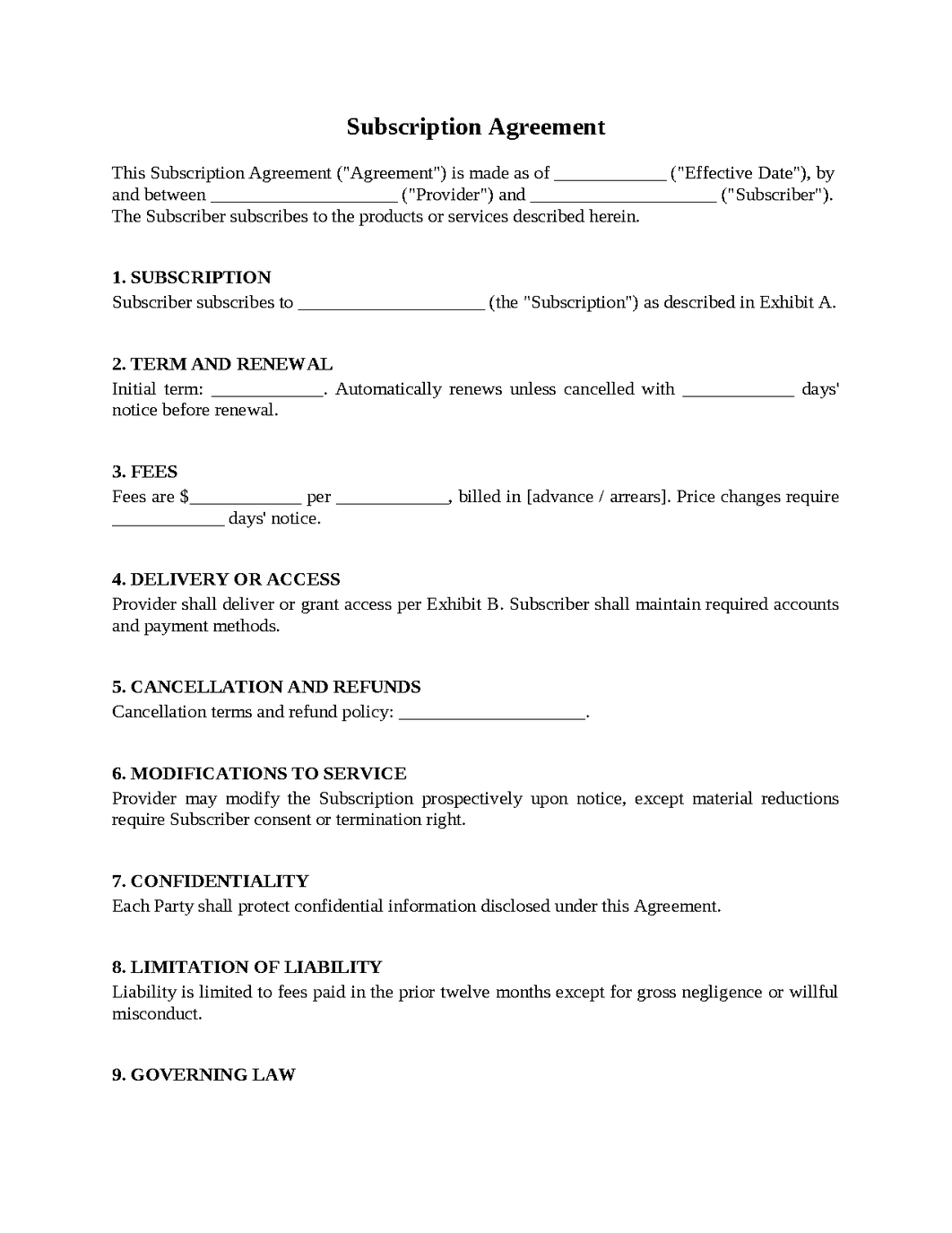
A Subscription Agreement is a legal contract through which an investor agrees to purchase securities, ownership interests, membership units, partnership interests, or shares in a company, fund, or investment vehicle. Subscription Agreements are commonly used in private placements, startup financings, venture capital investments, private equity transactions, real estate investment funds, limited partnerships, and closely held businesses. These agreements typically address the investment amount, representations regarding investor qualifications, ownership interests being acquired, regulatory compliance, funding obligations, and closing conditions. Because Subscription Agreements often involve significant financial commitments and securities law considerations, disputes can arise when expectations regarding the investment are not documented clearly. A well-drafted Subscription Agreement helps protect both issuers and investors while facilitating a successful capital raise.
The Investor Believes Important Information Was Not Disclosed
A startup seeks funding from private investors to support product development and future growth.
An investor reviews marketing materials, financial projections, and management presentations before deciding to participate in the offering. Based on the information provided, the investor believes the opportunity has strong growth potential.
After investing, however, the investor learns about operational challenges, pending legal issues, financial difficulties, or competitive risks that were not fully understood during the investment process.
The investor believes this information should have been disclosed before committing capital. The company argues that all material information required under the circumstances was provided.
The disagreement becomes significant because the value of the investment may be affected substantially.
To help avoid this problem, a Subscription Agreement should clearly identify investor disclosures, incorporate offering materials where appropriate, and establish representations regarding the information provided to prospective investors.
The Investor Fails to Fund the Commitment
A private investment fund raises capital through Subscription Agreements with multiple investors.
Each investor agrees to contribute a specified amount of money in exchange for an ownership interest. The fund relies on those commitments when planning acquisitions and business activities.
Before closing occurs, one investor experiences financial difficulties and is unable or unwilling to provide the promised funds.
The fund believes the investor should remain obligated to complete the investment. The investor argues that circumstances have changed and seeks to withdraw from the commitment.
The disagreement affects not only the investor and the fund but also other participants relying on the capital raise.
To reduce these risks, a Subscription Agreement should clearly define funding obligations, establish remedies for failure to fund, identify withdrawal rights if any exist, and explain the consequences of default.
Questions Arise Regarding Accredited Investor Status
A company conducts a private securities offering available only to certain qualified investors.
As part of the subscription process, investors make representations regarding their financial qualifications and eligibility to participate in the offering.
After the investment closes, concerns arise regarding whether an investor actually met the required qualifications at the time of the investment.
The company becomes concerned about regulatory compliance and potential securities law implications. The investor believes participation was appropriate based on information available at the time.
The issue creates uncertainty because regulatory requirements play a central role in the transaction.
Neither party intended noncompliance, but qualification standards were not evaluated carefully enough.
To help prevent these issues, a Subscription Agreement should clearly establish investor representations, require appropriate supporting information when necessary, and address the consequences of inaccurate eligibility certifications.
The Investor Expects Greater Control Over the Business
An individual invests a substantial amount of money in a privately held company through a Subscription Agreement.
The investor believes the financial contribution should result in meaningful influence over management decisions and business strategy. Company leadership views the investment primarily as a source of capital rather than governance authority.
As important decisions arise, the investor becomes frustrated by limited involvement in operational matters.
The company believes ownership percentages and governing documents already define the investor's rights.
The disagreement develops because expectations regarding control and participation were never aligned.
To help avoid these problems, a Subscription Agreement should clearly identify the rights being acquired, define voting and governance rights, and distinguish ownership interests from management authority.
Future Financing Dilutes the Investment
A private investor purchases ownership interests in a growing business through a Subscription Agreement.
Initially, the investment represents a meaningful ownership percentage and appears likely to appreciate in value. As the business expands, however, additional financing rounds are required to support growth.
New investors acquire ownership interests, reducing the original investor's percentage ownership.
The investor becomes concerned that dilution is diminishing the value and influence associated with the investment. Management believes the additional capital is necessary to increase the overall value of the company.
The disagreement centers on balancing growth opportunities against ownership protection.
To reduce these risks, a Subscription Agreement should address dilution rights, preemptive rights where applicable, future financing expectations, and any protections available to existing investors.
Subscription Agreements are foundational documents in private investment transactions because they establish the terms under which capital is contributed and ownership interests are acquired. However, issues involving disclosures, funding obligations, investor qualifications, governance expectations, and future dilution can become significant sources of conflict when expectations are not documented clearly. A carefully drafted Subscription Agreement provides a structured framework for managing these transactions and protecting both issuers and investors. When prepared thoughtfully, it can help reduce uncertainty, support regulatory compliance, facilitate successful capital formation, and promote long-term investment success.

Get started with Upsign today!
Easily send, sign and track your documents