

Technical Services Agreement
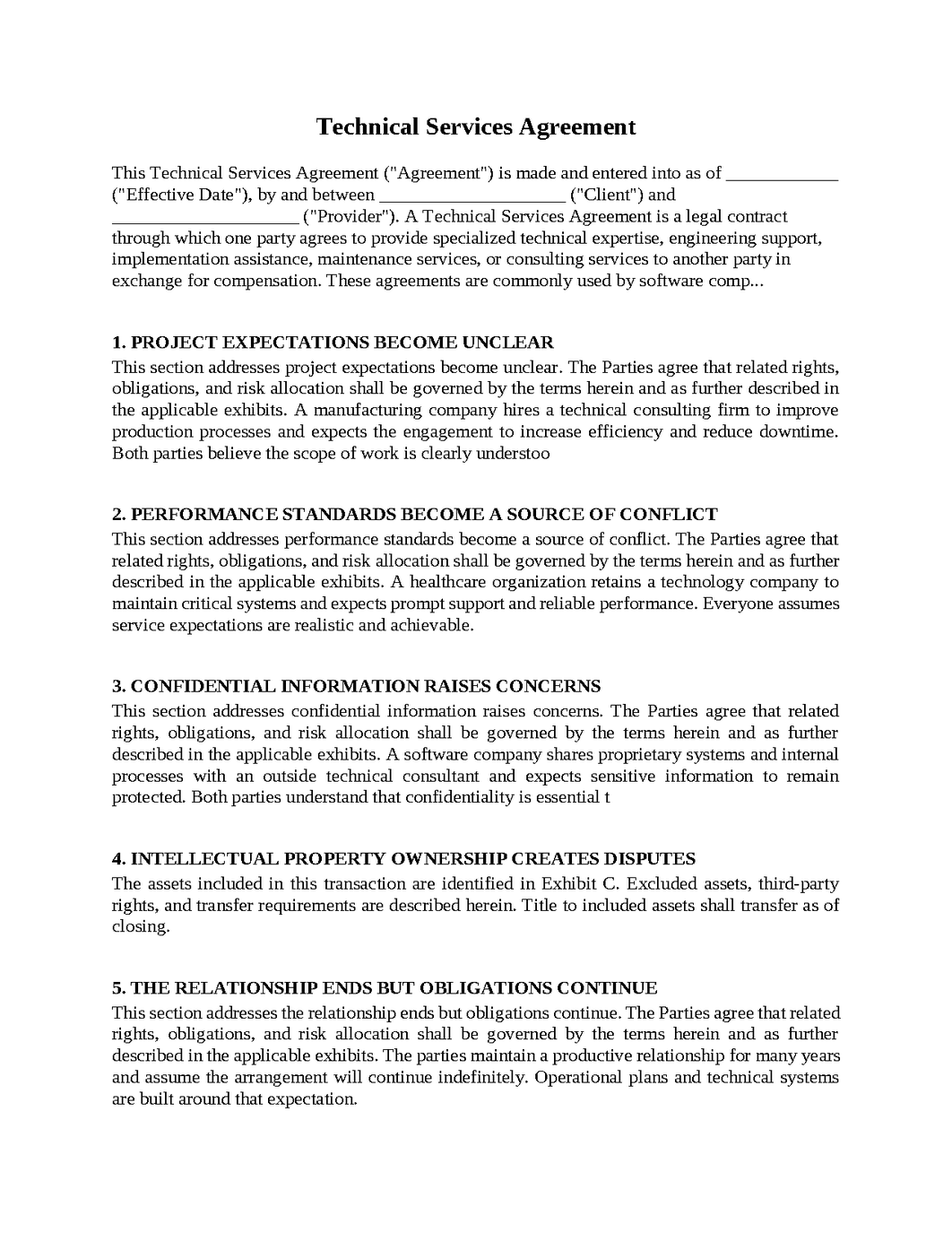
A Technical Services Agreement is a legal contract through which one party agrees to provide specialized technical expertise, engineering support, implementation assistance, maintenance services, or consulting services to another party in exchange for compensation. These agreements are commonly used by software companies, manufacturers, healthcare organizations, energy companies, telecommunications providers, and engineering firms seeking access to specialized knowledge and technical capabilities. A Technical Services Agreement typically addresses the scope of services, performance standards, compensation arrangements, confidentiality obligations, intellectual property rights, and procedures governing disputes and termination. Because technical projects often involve complex requirements and mission-critical operations, disputes can arise when expectations regarding responsibilities and performance are not documented clearly. A carefully drafted Technical Services Agreement helps establish certainty and protect the interests of both clients and service providers.
Project Expectations Become Unclear
A manufacturing company hires a technical consulting firm to improve production processes and expects the engagement to increase efficiency and reduce downtime. Both parties believe the scope of work is clearly understood.
Initially, communication remains strong and milestones are achieved according to schedule. Over time, however, additional requests and changing priorities create uncertainty regarding what services are included in the original arrangement.
The client believes expanded support is appropriate because the technical provider was hired to solve operational challenges and provide expertise. The service provider believes additional work requires separate approval and compensation and argues that expectations have grown beyond the original agreement. As demands increase, tensions emerge regarding the scope of services.
To help avoid this problem, a Technical Services Agreement should clearly establish the services being provided and define any limitations applicable to the engagement.
Performance Standards Become a Source of Conflict
A healthcare organization retains a technology company to maintain critical systems and expects prompt support and reliable performance. Everyone assumes service expectations are realistic and achievable.
As technical problems increase, questions arise regarding response times, service quality, and whether performance obligations are being satisfied. Different interpretations create uncertainty regarding accountability.
The healthcare organization believes dependable support is essential because patient care and operational continuity depend upon reliable systems. The provider believes unexpected circumstances and evolving requirements affected performance and argues that reasonable efforts have been made. As outages continue, disagreements emerge regarding performance standards.
To help prevent these issues, a Technical Services Agreement should clearly establish service levels and define the criteria used to evaluate performance.
Confidential Information Raises Concerns
A software company shares proprietary systems and internal processes with an outside technical consultant and expects sensitive information to remain protected. Both parties understand that confidentiality is essential to preserving competitive advantages.
As additional personnel become involved in the project, concerns arise regarding unauthorized disclosures and improper use of information. Questions emerge regarding ownership and confidentiality obligations.
The client believes strict safeguards are necessary because proprietary systems and business strategies represent valuable assets. The consultant believes reasonable procedures are already in place and argues that technical collaboration requires some flexibility. As concerns increase, tensions develop regarding confidentiality responsibilities.
To help avoid these problems, a Technical Services Agreement should clearly establish confidentiality requirements and define the procedures governing the protection and use of sensitive information.
Intellectual Property Ownership Creates Disputes
An energy company engages engineers to develop specialized software and expects the resulting work product to support long-term operations. Everyone assumes ownership rights are understood.
As the project progresses, questions arise regarding who owns newly developed technology and whether existing tools used by the provider remain proprietary. Different expectations create uncertainty regarding intellectual property rights.
The client believes ownership should belong to the company because it financed the development and intends to rely upon the resulting systems. The service provider believes certain tools and methodologies represent preexisting assets and argues that ownership rights should be shared or preserved. As the value of the project increases, disagreements emerge regarding intellectual property.
To help prevent these issues, a Technical Services Agreement should clearly establish ownership rights and define the treatment of newly developed and preexisting intellectual property.
The Relationship Ends but Obligations Continue
The parties maintain a productive relationship for many years and assume the arrangement will continue indefinitely. Operational plans and technical systems are built around that expectation.
Eventually, changing priorities lead one side to terminate the engagement. Questions arise regarding unfinished work, access to documentation, confidential information, and support obligations involving previously completed projects.
The client believes continued cooperation is necessary because operational continuity depends upon access to information and technical support. The service provider believes obligations should conclude once contractual requirements have been satisfied and expects finality. As the relationship concludes, disagreements emerge regarding the rights and responsibilities that survive termination.
To help avoid this problem, a Technical Services Agreement should clearly establish termination procedures and identify the rights and responsibilities that continue after the relationship ends.
Technical Services Agreements are valuable tools that allow businesses to access specialized expertise and improve operations through professional support and consulting services. However, issues involving project scope, performance standards, confidentiality concerns, intellectual property rights, and post-termination obligations can become significant sources of conflict when expectations are not documented clearly. A carefully drafted Technical Services Agreement provides a structured framework for allocating responsibilities and protecting the interests of both clients and service providers. When prepared thoughtfully, it can reduce uncertainty, strengthen professional relationships, encourage innovation, and provide the foundation necessary for successful technical collaborations.

Get started with Upsign today!
Easily send, sign and track your documents