

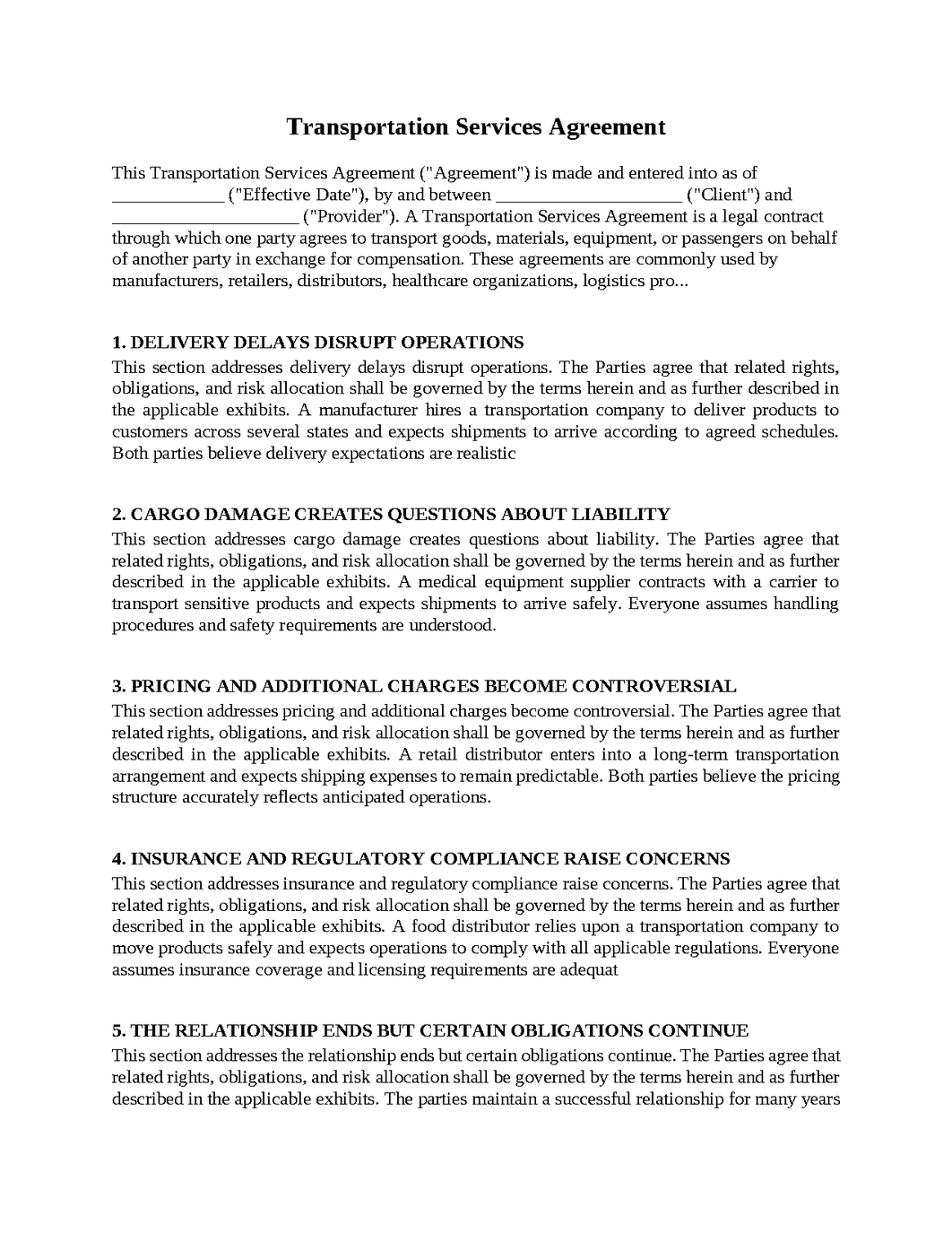
Transportation Services Agreement
A Transportation Services Agreement is a legal contract through which one party agrees to transport goods, materials, equipment, or passengers on behalf of another party in exchange for compensation. These agreements are commonly used by manufacturers, retailers, distributors, healthcare organizations, logistics providers, and commercial carriers seeking reliable transportation and delivery services. A Transportation Services Agreement typically addresses service requirements, pricing arrangements, delivery schedules, insurance obligations, liability provisions, and procedures governing disputes and termination. Because transportation activities involve valuable cargo, strict schedules, and operational risks, disputes can arise when expectations regarding responsibilities and performance are not documented clearly. A carefully drafted Transportation Services Agreement helps establish certainty and protect the interests of both customers and transportation providers.
Delivery Delays Disrupt Operations
A manufacturer hires a transportation company to deliver products to customers across several states and expects shipments to arrive according to agreed schedules. Both parties believe delivery expectations are realistic and achievable.
Initially, deliveries proceed efficiently and customer satisfaction remains strong. Over time, however, weather conditions, equipment problems, and staffing shortages begin causing delays. Questions arise regarding who should bear the resulting costs.
The manufacturer believes timely deliveries are essential because customer relationships and revenue depend upon reliable service. The transportation company believes external circumstances and operational challenges affected performance and argues that reasonable efforts were made to minimize disruptions. As delays continue, tensions emerge regarding delivery obligations.
To help avoid this problem, a Transportation Services Agreement should clearly establish delivery schedules and define the consequences applicable to delays and missed deadlines.
Cargo Damage Creates Questions About Liability
A medical equipment supplier contracts with a carrier to transport sensitive products and expects shipments to arrive safely. Everyone assumes handling procedures and safety requirements are understood.
After several deliveries, damaged products and customer complaints begin appearing. Questions arise regarding whether the damage occurred during loading, transportation, or unloading.
The supplier believes the transportation provider should be responsible because the goods were entrusted to its care. The carrier believes packaging deficiencies and conditions beyond its control contributed to the damage and argues that responsibility should be shared. As losses increase, disagreements emerge regarding liability.
To help prevent these issues, a Transportation Services Agreement should clearly establish handling procedures and define responsibility for cargo damage and losses.
Pricing and Additional Charges Become Controversial
A retail distributor enters into a long-term transportation arrangement and expects shipping expenses to remain predictable. Both parties believe the pricing structure accurately reflects anticipated operations.
As fuel costs increase and special delivery requests become more frequent, additional charges begin appearing on invoices. Different interpretations create uncertainty regarding the amounts owed.
The distributor believes pricing should remain transparent because operating budgets and customer contracts depend upon predictable expenses. The transportation provider believes increased costs and additional services justify higher fees and argues that the charges are consistent with the arrangement. As expenses rise, tensions develop regarding billing practices.
To help avoid these problems, a Transportation Services Agreement should clearly establish fee schedules and define the circumstances under which additional charges may apply.
Insurance and Regulatory Compliance Raise Concerns
A food distributor relies upon a transportation company to move products safely and expects operations to comply with all applicable regulations. Everyone assumes insurance coverage and licensing requirements are adequate.
Following an accident and regulatory investigation, questions arise regarding permits, insurance policies, and responsibility for fines and claims. Concerns increase regarding potential liabilities.
The distributor believes compliance is essential because customer confidence and regulatory approvals depend upon reliable transportation practices. The carrier believes changing requirements and external factors affected operations and argues that reasonable efforts were made to satisfy applicable standards. As scrutiny increases, disagreements emerge regarding compliance obligations.
To help prevent these issues, a Transportation Services Agreement should clearly establish insurance requirements and define the responsibilities applicable to regulatory compliance and claims.
The Relationship Ends but Certain Obligations Continue
The parties maintain a successful relationship for many years and assume the arrangement will continue indefinitely. Supply chains and customer commitments are built around that expectation.
Eventually, changing priorities lead one side to terminate the relationship. Questions arise regarding unpaid invoices, pending claims, confidential information, and responsibilities associated with shipments that occurred before termination.
The customer believes continued cooperation is necessary because claims and customer issues may arise long after deliveries have been completed. The transportation provider believes its obligations should conclude once contractual requirements have been fulfilled and expects finality. As unresolved matters remain, disagreements emerge regarding the rights and responsibilities that survive termination.
To help avoid this problem, a Transportation Services Agreement should clearly establish termination procedures and identify the rights and responsibilities that continue after the relationship ends.
Transportation Services Agreements are valuable tools that allow businesses to move goods and materials efficiently while supporting customer relationships and operational continuity. However, issues involving delivery delays, cargo damage, pricing disputes, regulatory compliance, and post-termination obligations can become significant sources of conflict when expectations are not documented clearly. A carefully drafted Transportation Services Agreement provides a structured framework for allocating responsibilities and protecting the interests of both customers and transportation providers. When prepared thoughtfully, it can reduce uncertainty, strengthen commercial relationships, improve supply chain reliability, and provide the foundation necessary for successful transportation operations.

Get started with Upsign today!
Easily send, sign and track your documents