

User License Agreement
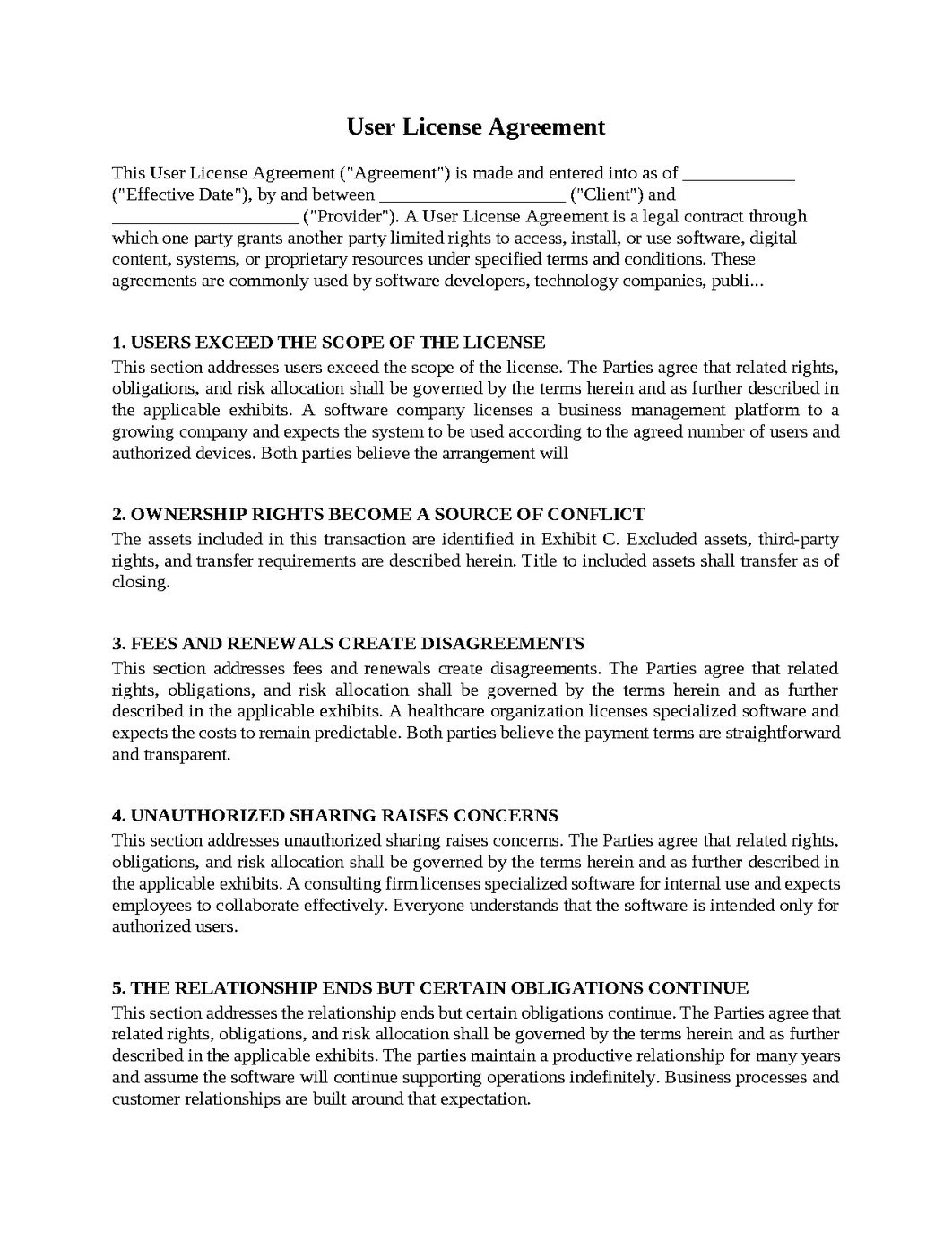
A User License Agreement is a legal contract through which one party grants another party limited rights to access, install, or use software, digital content, systems, or proprietary resources under specified terms and conditions. These agreements are commonly used by software developers, technology companies, publishers, online service providers, and content creators seeking to protect intellectual property while allowing customers to benefit from their products. A User License Agreement typically addresses permitted uses, restrictions, payment obligations, ownership rights, termination procedures, and dispute resolution provisions. Because users often rely heavily on licensed products and services while providers seek to protect valuable assets, disputes can arise when expectations regarding rights and responsibilities are not documented clearly. A carefully drafted User License Agreement helps establish certainty and protect the interests of both licensors and users.
Users Exceed the Scope of the License
A software company licenses a business management platform to a growing company and expects the system to be used according to the agreed number of users and authorized devices. Both parties believe the arrangement will support future growth and operational efficiency.
Initially, usage remains consistent with the license and the relationship progresses successfully. Over time, however, the company expands rapidly and begins allowing additional employees to access the software beyond the agreed limitations.
The software provider believes licensing restrictions are essential because pricing and support obligations were based upon anticipated usage levels. The customer believes operational growth requires flexibility and argues that expanding access reflects the success of the relationship. As usage increases, tensions emerge regarding compliance with the license.
To help avoid this problem, a User License Agreement should clearly establish permitted uses and define any limitations applicable to users, devices, and access rights.
Ownership Rights Become a Source of Conflict
A technology company grants customers access to proprietary software and expects ownership of the underlying code and intellectual property to remain protected. Everyone assumes the distinction between ownership and usage rights is understood.
As the customer customizes the platform and integrates it into daily operations, questions arise regarding whether those modifications create ownership interests or additional rights.
The provider believes ownership should remain intact because the software represents years of investment and innovation. The customer believes its efforts and expenditures justify broader rights and argues that business continuity requires flexibility. As the value of the system increases, disagreements emerge regarding ownership.
To help prevent these issues, a User License Agreement should clearly establish ownership provisions and define the rights granted to users.
Fees and Renewals Create Disagreements
A healthcare organization licenses specialized software and expects the costs to remain predictable. Both parties believe the payment terms are straightforward and transparent.
As renewal periods approach, questions arise regarding subscription increases, support fees, and additional modules. Different interpretations create uncertainty regarding future obligations.
The software provider believes additional charges are justified because ongoing development and support require continued investment. The customer believes pricing should remain stable because budgets and operational plans depend upon predictable expenses. As costs increase, tensions develop regarding compensation.
To help avoid these problems, a User License Agreement should clearly establish payment obligations and define the circumstances under which fees may change.
Unauthorized Sharing Raises Concerns
A consulting firm licenses specialized software for internal use and expects employees to collaborate effectively. Everyone understands that the software is intended only for authorized users.
As contractors and outside consultants become involved in projects, concerns arise regarding password sharing and unauthorized access. Questions emerge regarding whether the existing safeguards are sufficient.
The software provider believes strict controls are necessary because unauthorized access undermines the value of the product and creates security risks. The consulting firm believes operational efficiency requires flexibility and argues that reasonable precautions have been implemented. As concerns increase, disagreements emerge regarding access restrictions.
To help prevent these issues, a User License Agreement should clearly establish security requirements and define the procedures governing access and authorized use.
The Relationship Ends but Certain Obligations Continue
The parties maintain a productive relationship for many years and assume the software will continue supporting operations indefinitely. Business processes and customer relationships are built around that expectation.
Eventually, changing priorities lead one side to terminate the arrangement. Questions arise regarding data access, outstanding fees, confidential information, and obligations associated with prior use of the software.
The user believes continued access to information is necessary because business operations depend upon preserving important records. The software provider believes future obligations should be limited according to the agreement and expects finality. As the relationship concludes, disagreements emerge regarding the rights and responsibilities that survive termination.
To help avoid this problem, a User License Agreement should clearly establish termination procedures and identify the rights and responsibilities that continue after the relationship ends.
User License Agreements are valuable tools that allow providers to commercialize software and digital resources while preserving intellectual property rights and controlling access. However, issues involving permitted uses, ownership rights, payment obligations, unauthorized sharing, and post-termination responsibilities can become significant sources of conflict when expectations are not documented clearly. A carefully drafted User License Agreement provides a structured framework for allocating responsibilities and protecting the interests of both licensors and users. When prepared thoughtfully, it can reduce uncertainty, strengthen commercial relationships, encourage innovation, and provide the foundation necessary for successful long-term use of licensed products and services.

Get started with Upsign today!
Easily send, sign and track your documents