

Assignment of Accounts Receivable Agreement
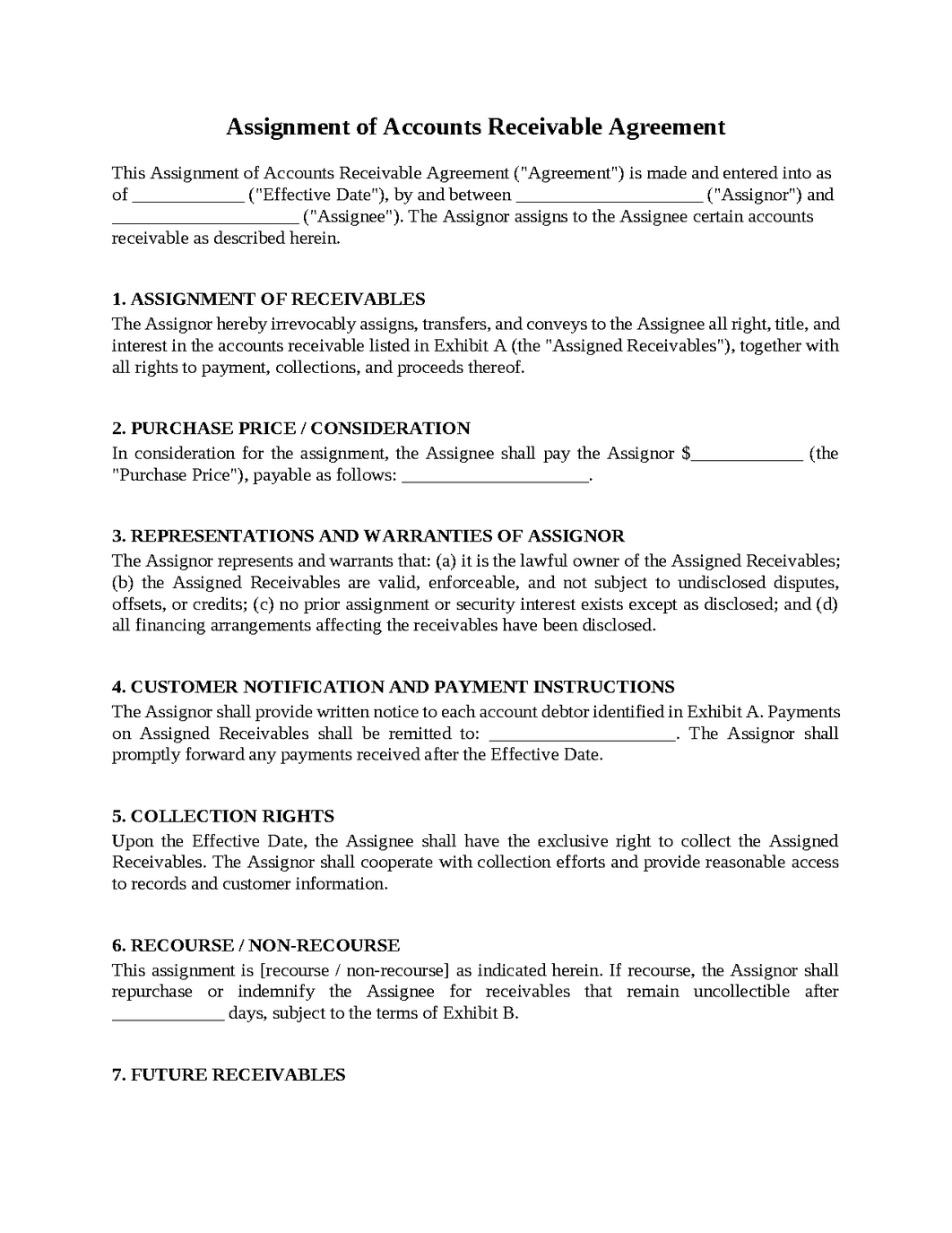
An Assignment of Accounts Receivable Agreement is a legal contract used when a business transfers ownership of its accounts receivable to another party. The party transferring the receivables is known as the assignor, while the recipient is known as the assignee. Accounts receivable represent money owed to a business by its customers for goods or services already delivered. These assignments commonly occur in factoring arrangements, asset-based lending transactions, business acquisitions, financing agreements, restructurings, and working capital transactions. Because accounts receivable often represent a significant portion of a company's assets, disputes can arise regarding ownership, collectability, customer communications, offsets, and competing claims. An Assignment of Accounts Receivable Agreement helps establish who owns the receivables and who is entitled to collect future payments.
Customers Keep Paying the Wrong Company
A wholesale distributor experiences rapid growth and needs additional working capital to fund inventory purchases. To improve cash flow, the company sells a portion of its accounts receivable to a factoring company.
The factoring company advances funds immediately and expects to collect payments directly from customers as invoices become due.
Everything appears straightforward.
Several weeks later, however, customers continue sending payments to the distributor rather than the factoring company. Many customers are unaware that the receivables have been assigned and simply follow their normal payment procedures.
The factoring company notices missing payments and begins contacting customers.
Confusion quickly develops.
Customers receive conflicting instructions. The distributor must forward payments it receives by mistake. Accounting departments spend significant time reconciling records.
What should have been a routine financing transaction becomes an administrative challenge.
To help avoid this problem, an Assignment of Accounts Receivable Agreement should clearly identify the assigned receivables, establish customer notification procedures, provide payment instructions, and require the assignor to promptly remit any payments received after the assignment becomes effective. The agreement should also address how customer communication will be handled during the transition.
The Assignee Learns the Receivables Are Disputed
A manufacturing company assigns a portfolio of accounts receivable to an investor seeking predictable cash flow.
The invoices appear legitimate and the customers involved have strong payment histories.
Based on that information, the investor purchases the receivables at a negotiated discount.
Several months later, collection efforts begin encountering resistance.
Multiple customers refuse to pay.
One customer claims the products were defective. Another argues that shipment deadlines were missed. A third asserts that it already received a credit memo that reduced the amount owed.
The investor is surprised.
The receivables appeared valuable on paper but prove far more difficult to collect than expected.
The manufacturing company argues that customer disputes are part of normal business operations. The investor believes material collection issues should have been disclosed before the assignment.
This type of dispute is common because the value of receivables depends heavily on their collectability.
To reduce these risks, an Assignment of Accounts Receivable Agreement should require disclosure of customer disputes, offsets, credits, warranty claims, and other issues affecting payment. The agreement should also contain representations regarding the validity and enforceability of the assigned receivables.
Multiple Lenders Claim the Same Receivables
A transportation company enters into several financing arrangements while attempting to expand its fleet.
One lender receives a security interest in substantially all accounts receivable. Later, the company assigns specific receivables to a factoring company in exchange for working capital.
Initially, nobody recognizes a conflict.
The issue surfaces when a large customer payment becomes due.
Both the secured lender and the factoring company claim entitlement to the funds. Each insists that its rights take priority.
The customer becomes confused and refuses to release payment until ownership is clarified.
Attorneys become involved. UCC filings are reviewed. Financing agreements are analyzed.
The dispute becomes expensive and delays collection efforts.
Competing claims involving receivables occur frequently when businesses use the same assets in multiple financing transactions without fully understanding the consequences.
To help prevent these disputes, an Assignment of Accounts Receivable Agreement should contain representations regarding ownership, existing liens, prior assignments, and competing claims. The agreement should also require disclosure of all financing arrangements that may affect the receivables.
The Buyer Assumes Future Invoices Are Included
A healthcare staffing company assigns a portfolio of receivables to a financing partner.
The assigned invoices relate to services already provided to hospitals and healthcare facilities.
After closing, the financing partner assumes future invoices from the same customers are also included.
The staffing company disagrees.
According to management, only specific receivables identified in the agreement were transferred. Future invoices remain company assets.
The disagreement creates confusion regarding ownership of new accounts.
Collection efforts are delayed while attorneys review transaction documents.
The problem stems from unclear drafting.
Receivable assignments can involve existing invoices, future receivables, revolving pools of receivables, or combinations of all three. Without precise language, parties may have very different expectations regarding the scope of the assignment.
To avoid misunderstandings, an Assignment of Accounts Receivable Agreement should clearly define which receivables are included. The agreement should specify whether future invoices, replacement receivables, revolving pools, or after-acquired accounts are part of the transaction.
A Data Breach Exposes Customer Information
A factoring company purchases thousands of accounts receivable from a national service provider.
The receivables include customer names, addresses, account histories, payment records, and billing information.
Several months after closing, the factoring company discovers that portions of the transferred data were compromised before the assignment occurred.
Internal investigations reveal weaknesses in the seller's security controls.
The factoring company becomes concerned.
Regulatory obligations may apply. Customer trust may be affected. Potential liability could arise from events that occurred before ownership transferred.
The value of the receivables is now accompanied by unexpected compliance risks.
Data-related issues are increasingly common because receivable portfolios often contain large amounts of sensitive customer information.
To reduce these risks, an Assignment of Accounts Receivable Agreement should require disclosure of known cybersecurity incidents, privacy concerns, regulatory investigations, and compliance issues affecting the receivables. The agreement should also allocate responsibility for liabilities arising before and after the assignment date.

Get started with Upsign today!
Easily send, sign and track your documents