

Brokerage Agreement
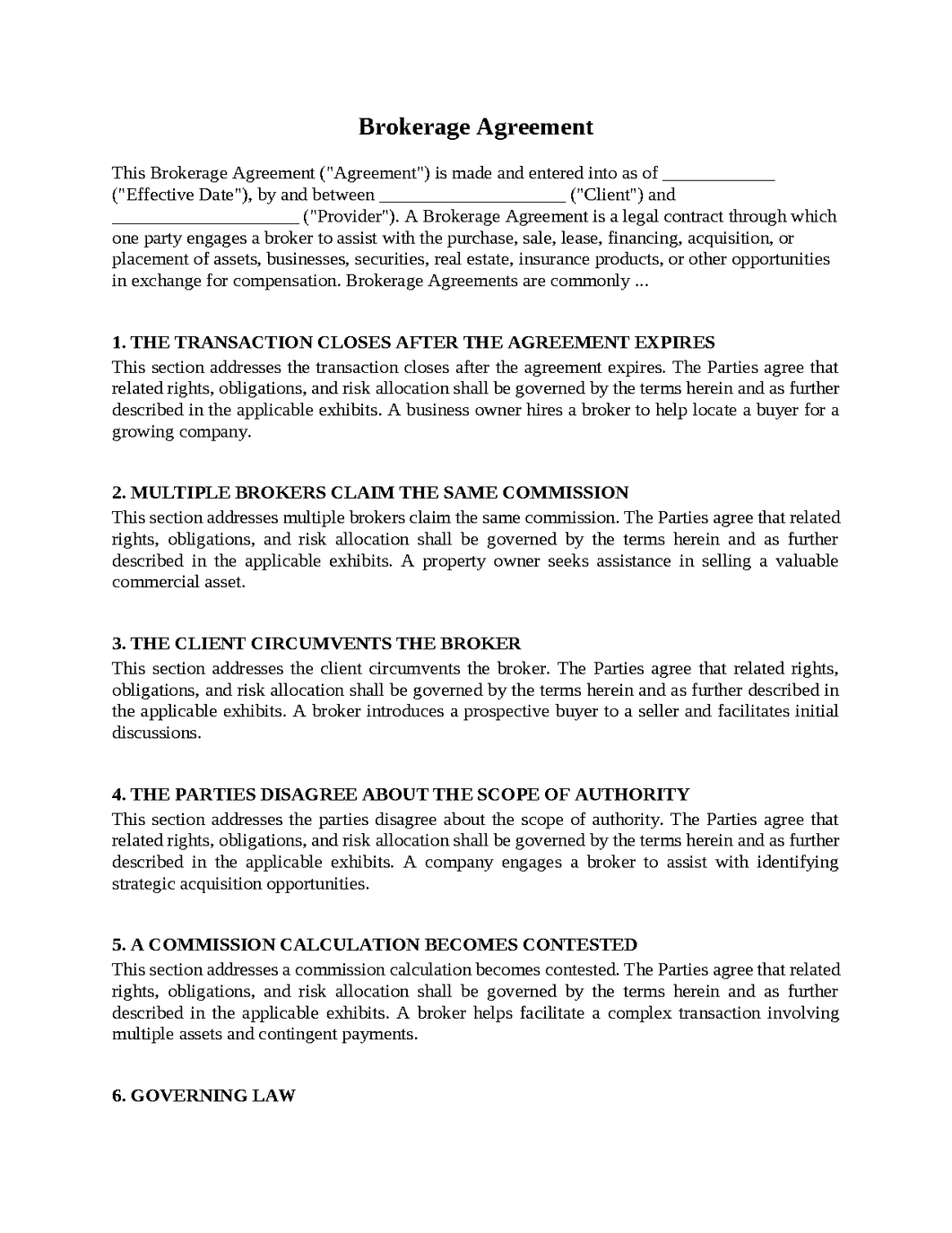
A Brokerage Agreement is a legal contract through which one party engages a broker to assist with the purchase, sale, lease, financing, acquisition, or placement of assets, businesses, securities, real estate, insurance products, or other opportunities in exchange for compensation. Brokerage Agreements are commonly used in real estate transactions, business sales, mergers and acquisitions, insurance placements, investment transactions, freight arrangements, equipment sales, and commercial financing activities. The agreement typically defines the broker's authority, compensation structure, exclusivity rights, duties, term of engagement, and circumstances under which commissions become earned. Because brokers are often compensated only when transactions occur, disputes frequently arise regarding entitlement to commissions and the scope of the broker's involvement. A carefully drafted Brokerage Agreement helps establish clear expectations and reduce the risk of conflicts.
The Transaction Closes After the Agreement Expires
A business owner hires a broker to help locate a buyer for a growing company.
The broker spends months identifying prospects, facilitating introductions, and coordinating discussions between the seller and several interested parties. Despite significant effort, no transaction closes before the Brokerage Agreement expires.
Several months later, one of the prospects originally introduced by the broker resumes negotiations directly with the seller. The discussions progress quickly, and the business is eventually sold.
The broker believes the sale resulted from relationships and opportunities created during the engagement period. The seller argues that the agreement had expired before the transaction occurred and that no commission is owed.
The disagreement focuses on whether the broker's earlier efforts were the cause of the eventual sale.
To help avoid this problem, a Brokerage Agreement should clearly address post-termination commission rights and identify circumstances under which commissions remain payable after the agreement expires.
Multiple Brokers Claim the Same Commission
A property owner seeks assistance in selling a valuable commercial asset.
Over time, the owner has conversations with multiple brokers regarding potential buyers. Several brokers provide information, make introductions, and participate in varying degrees throughout the marketing process.
Eventually, a buyer emerges and the transaction closes successfully. Shortly afterward, more than one broker claims entitlement to the commission and argues that their efforts were responsible for the completed deal.
Each broker points to communications, introductions, and negotiations as evidence of involvement. The owner becomes caught in the middle of competing claims.
The dispute becomes increasingly expensive because the commission at issue is substantial.
To help prevent these issues, a Brokerage Agreement should clearly define exclusivity, procuring cause standards, and the circumstances under which a commission becomes earned.
The Client Circumvents the Broker
A broker introduces a prospective buyer to a seller and facilitates initial discussions.
The parties appear interested in completing a transaction, and negotiations begin progressing constructively. The broker continues coordinating communications and providing assistance throughout the process.
As negotiations advance, the buyer and seller begin communicating directly and eventually complete the transaction without further involvement from the broker. After closing, they argue that the broker's services were no longer necessary.
The broker believes the completed transaction resulted directly from efforts undertaken during the engagement. The buyer and seller believe the final agreement was reached independently.
The disagreement centers on whether the broker earned compensation despite not participating in the final stages of the deal.
To help avoid these problems, a Brokerage Agreement should clearly define when commissions are earned and address transactions completed directly between parties introduced by the broker.
The Parties Disagree About the Scope of Authority
A company engages a broker to assist with identifying strategic acquisition opportunities.
The broker begins contacting potential targets, gathering information, and facilitating discussions with interested parties. The engagement proceeds successfully for several months.
As negotiations become more serious, disagreements emerge regarding the broker's authority. The company believes the broker's role is limited to introductions and information gathering.
The broker believes broader authority exists to negotiate terms, communicate proposals, and represent the company during discussions. Potential counterparties become confused regarding who possesses decision-making authority.
The uncertainty complicates negotiations and delays progress toward a transaction.
To help prevent these issues, a Brokerage Agreement should clearly define the broker's authority and identify any limitations on the broker's ability to negotiate or bind the client.
A Commission Calculation Becomes Contested
A broker helps facilitate a complex transaction involving multiple assets and contingent payments.
The Brokerage Agreement provides for compensation based upon the value of the completed transaction. At the time the agreement is signed, everyone expects calculating the commission will be straightforward.
As the transaction structure evolves, deferred payments, earn-outs, contingent consideration, and financing arrangements become part of the final deal. After closing, the parties discover they disagree regarding the amount upon which the commission should be calculated.
The broker believes compensation should be based on the full value of the transaction. The client believes certain future or contingent payments should be excluded.
The disagreement becomes substantial because the difference significantly affects the broker's compensation.
To help avoid these problems, a Brokerage Agreement should clearly define how commissions are calculated and specify whether contingent, deferred, or non-cash consideration is included.
Brokerage Agreements play a critical role in transactions where specialized expertise, industry relationships, and deal sourcing capabilities are needed to connect buyers, sellers, investors, lenders, or other participants. However, issues involving post-expiration transactions, competing brokers, circumvention, authority disputes, and commission calculations can become significant sources of conflict when expectations are not documented clearly. A carefully drafted Brokerage Agreement provides a structured framework for defining the broker's role and compensation rights. When prepared thoughtfully, it can reduce uncertainty, protect valuable business relationships, support successful transactions, and provide greater confidence for both brokers and their clients.

Get started with Upsign today!
Easily send, sign and track your documents