

Bulk Sales Agreement
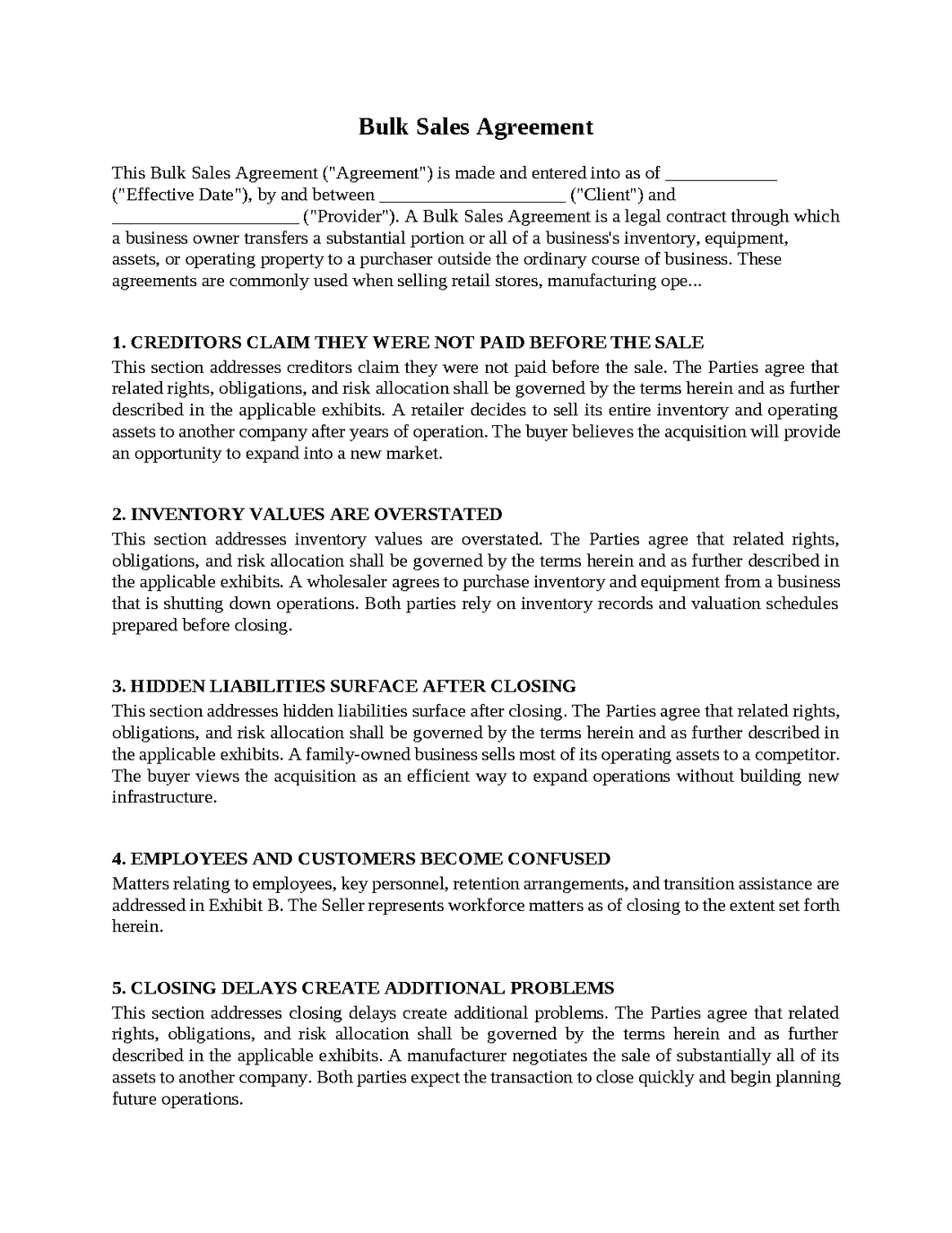
A Bulk Sales Agreement is a legal contract through which a business owner transfers a substantial portion or all of a business's inventory, equipment, assets, or operating property to a purchaser outside the ordinary course of business. These agreements are commonly used when selling retail stores, manufacturing operations, restaurants, wholesale businesses, distributors, and other enterprises that maintain significant inventories or tangible assets. A Bulk Sales Agreement typically addresses the assets being transferred, purchase price, liabilities, creditor rights, closing procedures, representations and warranties, and compliance with applicable laws. Because bulk asset sales can affect creditors, customers, suppliers, and employees, disputes can arise when expectations regarding the transaction are not documented clearly. A carefully drafted Bulk Sales Agreement helps provide certainty and protect the interests of both buyers and sellers.
Creditors Claim They Were Not Paid Before the Sale
A retailer decides to sell its entire inventory and operating assets to another company after years of operation. The buyer believes the acquisition will provide an opportunity to expand into a new market.
The parties negotiate the terms and complete the transaction quickly. Both sides focus primarily on transferring inventory and beginning operations under the new ownership.
Shortly after closing, several creditors contact the buyer claiming they are owed substantial amounts by the seller. The creditors argue that the asset sale improperly transferred assets that should have been available to satisfy outstanding obligations.
The buyer believes it purchased the assets in good faith and should not be responsible for the seller's debts. The creditors believe the transaction unfairly impaired their ability to collect what they are owed.
To help avoid this problem, a Bulk Sales Agreement should clearly address creditor claims, disclosure obligations, and procedures for satisfying outstanding liabilities before closing.
Inventory Values Are Overstated
A wholesaler agrees to purchase inventory and equipment from a business that is shutting down operations. Both parties rely on inventory records and valuation schedules prepared before closing.
At the time of the transaction, the inventory appears substantial and the purchase price reflects the estimated value of the goods. The buyer expects to resell much of the inventory quickly.
After taking possession, the buyer discovers that some items are obsolete, damaged, or missing entirely. Sales projections become difficult to achieve because the inventory is not as valuable as originally believed.
The seller argues that the buyer had an opportunity to inspect the goods before closing. The buyer believes the inventory records materially overstated the value of the assets being purchased.
To help prevent these issues, a Bulk Sales Agreement should clearly describe the assets being transferred and establish procedures for inspections, inventory counts, and valuation adjustments.
Hidden Liabilities Surface After Closing
A family-owned business sells most of its operating assets to a competitor. The buyer views the acquisition as an efficient way to expand operations without building new infrastructure.
The transaction closes successfully and the buyer begins integrating the acquired assets into existing operations. Initially, everything appears to proceed smoothly.
Several months later, claims emerge involving unpaid vendors, tax obligations, warranty issues, and unresolved customer disputes that existed before the sale. The buyer becomes concerned that these liabilities may interfere with the value of the transaction.
The seller believes the agreement transferred only assets and not liabilities. The buyer argues that important information should have been disclosed before the closing occurred.
To help avoid these problems, a Bulk Sales Agreement should clearly distinguish transferred assets from retained liabilities and establish disclosure obligations regarding known claims.
Employees and Customers Become Confused
A restaurant owner sells substantially all operating assets to a new operator. Employees, vendors, and long-time customers assume the transition will be seamless.
Although ownership changes hands, many aspects of the business appear similar from the outside. Existing relationships continue and operations resume quickly under the new management.
Confusion develops regarding employment arrangements, customer obligations, gift cards, warranties, and prepaid orders. Customers and employees begin directing complaints to both the seller and buyer.
The buyer believes only certain obligations were assumed as part of the transaction. The seller believes responsibility shifted entirely at closing.
To help prevent these issues, a Bulk Sales Agreement should clearly identify which obligations are assumed and establish procedures for communicating the transition to employees, customers, and vendors.
Closing Delays Create Additional Problems
A manufacturer negotiates the sale of substantially all of its assets to another company. Both parties expect the transaction to close quickly and begin planning future operations.
As closing approaches, additional due diligence uncovers unresolved issues involving liens, creditor notices, and asset ownership records. What initially appeared to be a straightforward transaction becomes increasingly complicated.
The buyer believes the seller should resolve these issues before closing. The seller becomes frustrated because delays increase costs and create uncertainty regarding the future of the business.
The parties begin questioning whether the transaction can proceed under the original terms. The pressure surrounding the delay creates tension that threatens the entire deal.
To help avoid these problems, a Bulk Sales Agreement should clearly establish closing conditions and identify the steps necessary to resolve title, lien, and creditor issues before ownership transfers.
Bulk Sales Agreements are important tools for transferring substantial business assets outside the ordinary course of operations. However, issues involving creditors, inventory valuations, undisclosed liabilities, customer relationships, and closing conditions can become significant sources of conflict when expectations are not documented clearly. A carefully drafted Bulk Sales Agreement provides a structured framework for allocating risk and defining the rights and obligations of both buyers and sellers. When prepared thoughtfully, it can reduce uncertainty, facilitate successful asset transfers, protect interested parties, and provide the confidence necessary for complex business transactions to proceed smoothly.

Get started with Upsign today!
Easily send, sign and track your documents