

Business Advisory Agreement
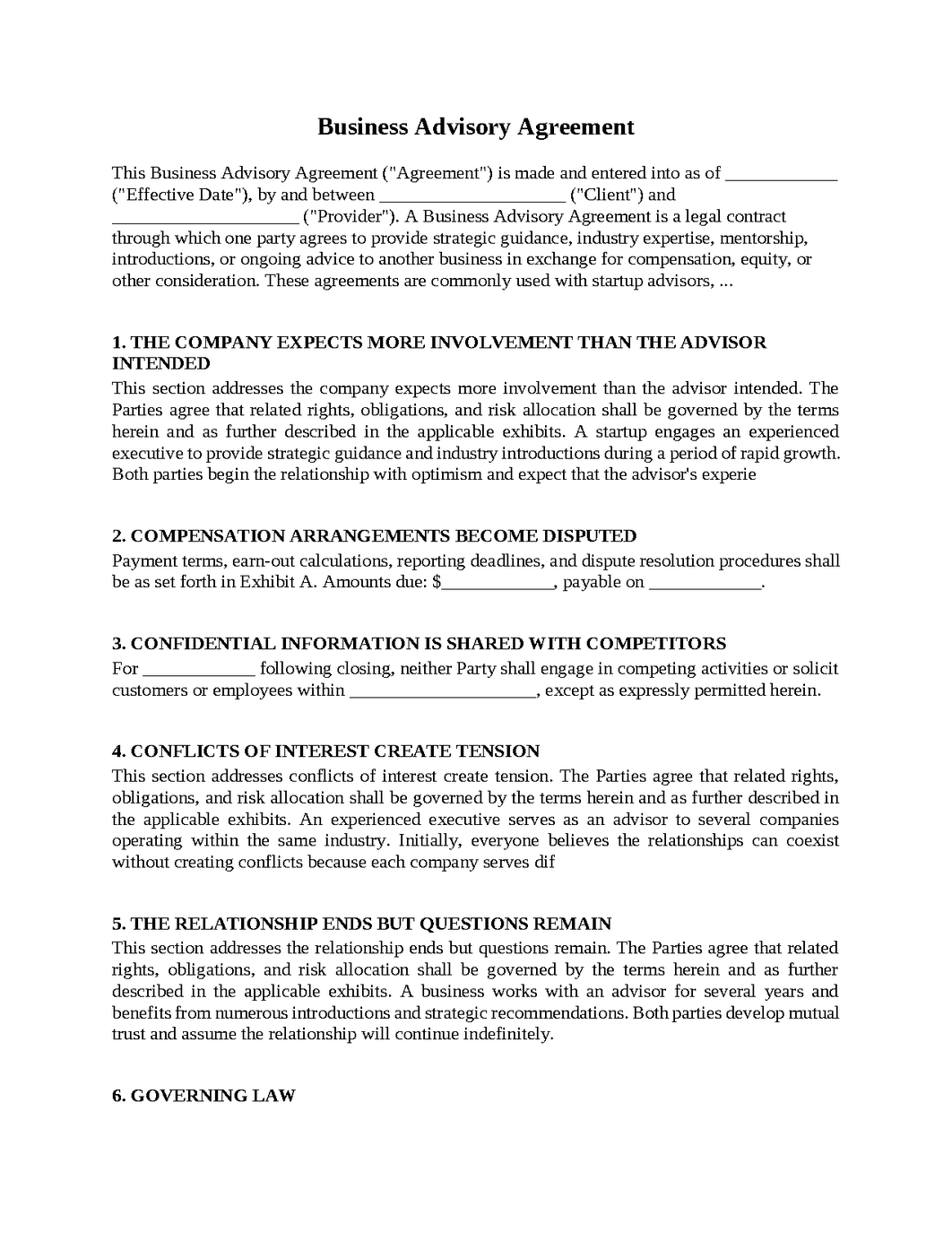
A Business Advisory Agreement is a legal contract through which one party agrees to provide strategic guidance, industry expertise, mentorship, introductions, or ongoing advice to another business in exchange for compensation, equity, or other consideration. These agreements are commonly used with startup advisors, board advisors, industry experts, former executives, strategic consultants, investors, and experienced professionals who provide insights without assuming day-to-day management responsibilities. A Business Advisory Agreement typically addresses the scope of advisory services, compensation arrangements, confidentiality obligations, intellectual property rights, conflicts of interest, and procedures for terminating the relationship. Because advisory relationships often involve subjective expectations and informal communications, disputes can arise when the parties fail to define their responsibilities and expectations clearly. A carefully drafted Business Advisory Agreement helps establish certainty and preserve productive professional relationships.
The Company Expects More Involvement Than the Advisor Intended
A startup engages an experienced executive to provide strategic guidance and industry introductions during a period of rapid growth. Both parties begin the relationship with optimism and expect that the advisor's experience will help the company avoid costly mistakes.
During the first several months, the advisor participates in meetings, provides recommendations, and introduces management to potential customers and investors. As new challenges emerge, however, management begins relying increasingly on the advisor and expects regular involvement in operational decisions.
The company believes the advisor should become more actively involved because the business faces important opportunities and risks. The advisor believes the role was always intended to be limited to high-level guidance rather than day-to-day management responsibilities. As expectations continue expanding, frustrations develop because each side views the purpose of the relationship differently.
To help avoid this problem, a Business Advisory Agreement should clearly define the advisor's responsibilities and distinguish strategic guidance from operational management.
Compensation Arrangements Become Disputed
A technology company engages an industry expert as an advisor and agrees to compensate the advisor with a combination of cash payments and equity incentives. At the beginning of the relationship, both parties believe the arrangement is fair and aligns their long-term interests.
As the company grows, the value of the equity increases significantly and the advisor continues providing introductions and strategic recommendations. New opportunities emerge, and the advisor begins devoting more time to the company than originally anticipated.
The advisor believes the expanded role and growing success justify additional compensation. The company believes the original agreement adequately compensated the advisor and argues that many of the company's achievements resulted from management's efforts. As the financial stakes increase, disagreements emerge regarding whether compensation should evolve along with the relationship.
To help prevent these issues, a Business Advisory Agreement should clearly establish compensation terms and define the circumstances under which additional compensation may be considered.
Confidential Information Is Shared With Competitors
A healthcare company hires a respected industry advisor to help evaluate growth opportunities and strengthen relationships with strategic partners. In order to provide meaningful guidance, the advisor receives access to financial information, customer data, and confidential plans.
At the outset, both parties focus on building the business and creating competitive advantages. Over time, however, concerns arise when similar strategies and ideas begin appearing in businesses that maintain relationships with the same advisor.
The company becomes concerned that sensitive information may have been disclosed or used improperly. The advisor believes years of experience naturally influence recommendations made to multiple companies and denies intentionally sharing proprietary information. As trust begins deteriorating, both sides become increasingly focused on protecting their reputations and competitive positions.
To help avoid these problems, a Business Advisory Agreement should clearly define confidential information and establish obligations governing its protection and permissible use.
Conflicts of Interest Create Tension
An experienced executive serves as an advisor to several companies operating within the same industry. Initially, everyone believes the relationships can coexist without creating conflicts because each company serves different customers and markets.
As the advisor's network expands, opportunities begin overlapping and questions emerge regarding loyalties and competing interests. Management becomes concerned that recommendations and introductions may favor other businesses with which the advisor maintains relationships.
The company believes the advisor should disclose potential conflicts and avoid situations that create divided loyalties. The advisor believes broad industry involvement is one of the reasons the relationship provides value and argues that conflicts are unavoidable in highly specialized industries. As concerns continue growing, trust between the parties begins eroding.
To help prevent these issues, a Business Advisory Agreement should clearly address conflicts of interest and establish disclosure requirements for outside relationships and competing activities.
The Relationship Ends but Questions Remain
A business works with an advisor for several years and benefits from numerous introductions and strategic recommendations. Both parties develop mutual trust and assume the relationship will continue indefinitely.
Eventually, changing priorities lead the company to terminate the arrangement. Although both sides expect the separation to proceed smoothly, disagreements emerge regarding ongoing confidentiality obligations, unfinished projects, and the advisor's ability to work with competitors.
The company believes certain obligations should survive termination to protect valuable relationships and proprietary information. The advisor believes the conclusion of the engagement should permit complete freedom to pursue new opportunities. As discussions become more complicated, both parties realize that ending the relationship is more difficult than either originally expected.
To help avoid this problem, a Business Advisory Agreement should clearly establish termination procedures and identify the obligations that survive the end of the advisory relationship.
Business Advisory Agreements are valuable tools for businesses seeking experienced guidance without transferring operational control. However, issues involving expanded responsibilities, compensation disputes, confidentiality concerns, conflicts of interest, and termination obligations can become significant sources of conflict when expectations are not documented clearly. A carefully drafted Business Advisory Agreement provides a structured framework for defining responsibilities and protecting the interests of both parties. When prepared thoughtfully, it can reduce uncertainty, strengthen professional relationships, support strategic growth, and provide the foundation necessary for successful long-term advisory arrangements.

Get started with Upsign today!
Easily send, sign and track your documents