

Business Transfer Agreement
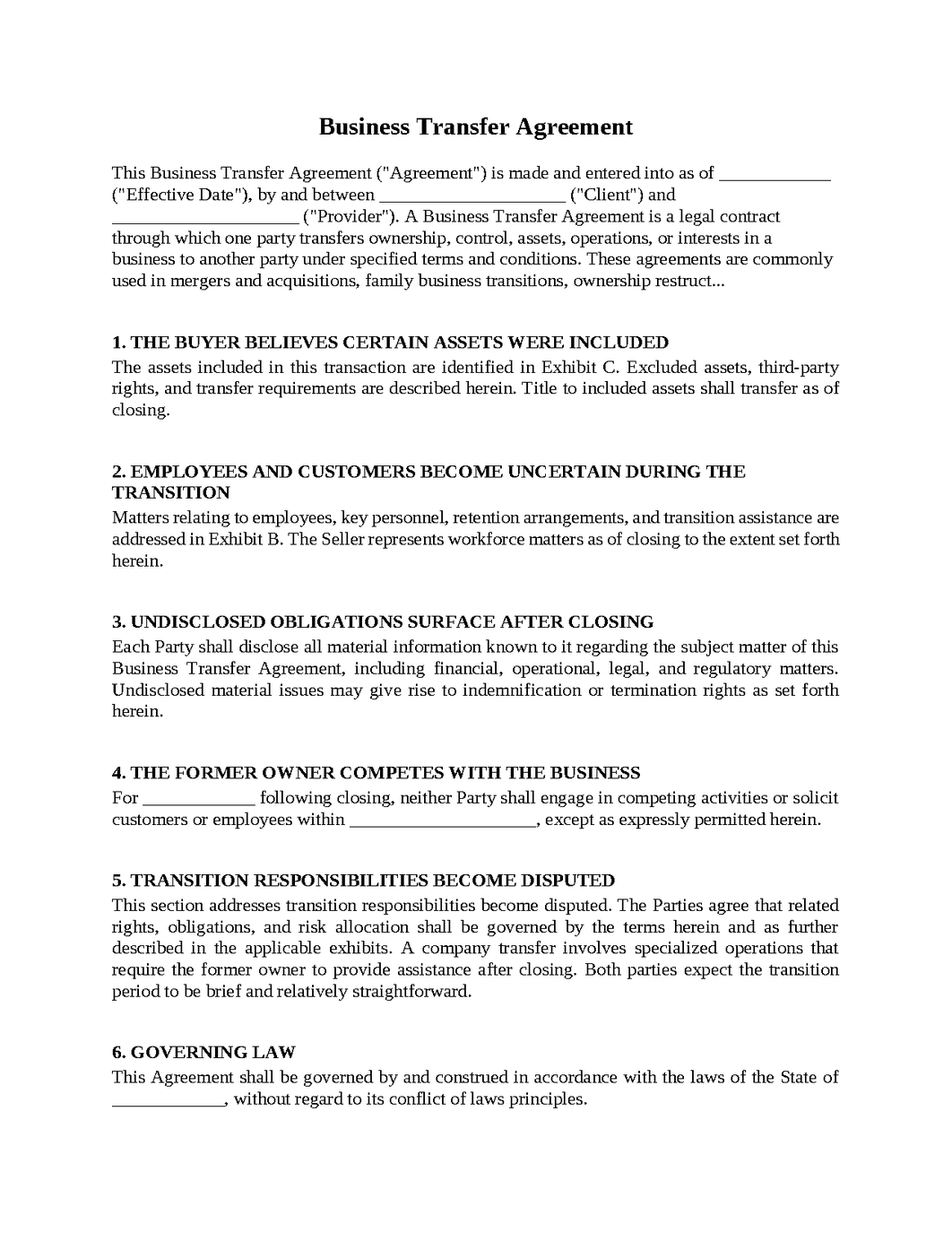
A Business Transfer Agreement is a legal contract through which one party transfers ownership, control, assets, operations, or interests in a business to another party under specified terms and conditions. These agreements are commonly used in mergers and acquisitions, family business transitions, ownership restructurings, partnership changes, internal buyouts, succession planning, and sales of operating companies. A Business Transfer Agreement typically addresses the assets being transferred, liabilities being assumed, purchase price, employee matters, intellectual property rights, transitional obligations, and the rights and responsibilities of the parties after closing. Because business transfers often involve years of accumulated goodwill, customer relationships, and financial value, disputes can arise when expectations regarding the transition are not documented clearly. A carefully drafted Business Transfer Agreement helps provide certainty and preserve the value of the enterprise during periods of change.
The Buyer Believes Certain Assets Were Included
A business owner agrees to transfer an operating company to a new owner after several months of negotiations. Both parties review financial records, customer lists, equipment schedules, and intellectual property information while preparing for the transition.
At closing, everyone believes the transaction has been completed successfully and that ownership has changed hands smoothly. The buyer immediately begins integrating the business into existing operations and making plans for future growth.
Several weeks later, questions emerge regarding software licenses, customer contracts, and specialized equipment that the buyer assumed were included in the transfer. The seller believes those assets were always intended to remain separate, while the buyer believes they formed part of the value being acquired. The disagreement becomes increasingly significant because the missing assets affect the company's ability to operate efficiently and serve customers.
To help avoid this problem, a Business Transfer Agreement should clearly identify transferred assets and distinguish them from assets that are specifically excluded from the transaction.
Employees and Customers Become Uncertain During the Transition
A successful company changes ownership after decades under the same management team. Employees, vendors, and customers initially welcome the transition and expect business operations to continue without interruption.
As the transfer progresses, uncertainty begins affecting important relationships. Employees become concerned about their future roles, and several key customers start questioning whether service levels and business practices will remain consistent under the new ownership.
The new owner believes confidence will return once operations stabilize, while employees and customers feel communication regarding the transition has been inadequate. Vendors begin tightening credit terms and competitors attempt to attract valuable clients. The resulting uncertainty creates additional challenges that neither party anticipated when negotiating the transfer.
To help prevent these issues, a Business Transfer Agreement should address transitional responsibilities and establish communication plans for employees, customers, and other stakeholders.
Undisclosed Obligations Surface After Closing
A company acquires a long-established business that appears financially healthy and operationally stable. Due diligence is completed and the transfer proceeds according to schedule.
Several months after the closing, previously unknown obligations begin surfacing. Vendor disputes, warranty claims, tax issues, and customer complaints relating to events that occurred before the transfer create unexpected complications for the new owner.
The buyer believes these obligations should remain the responsibility of the former owner because they arose before the transfer occurred. The seller believes the buyer accepted ordinary risks associated with operating the business and argues that adequate information was provided before closing. The disagreement becomes increasingly contentious because the costs associated with the claims continue growing over time.
To help avoid this problem, a Business Transfer Agreement should clearly distinguish assumed liabilities from retained liabilities and establish disclosure obligations regarding known claims and obligations.
The Former Owner Competes With the Business
A buyer acquires a business largely because of its reputation, goodwill, and customer relationships. The seller receives compensation reflecting years of effort spent building the enterprise.
Following the transfer, the parties initially maintain a cooperative relationship. Customers continue doing business with the company and employees remain optimistic about the future.
Over time, the former owner launches another venture that targets many of the same customers and employees. The buyer believes the value of the acquired business is being undermined, while the seller argues that no restrictions prohibit future business activities. As competition intensifies, both sides begin accusing the other of interfering with relationships that existed long before the transfer occurred.
To help avoid these problems, a Business Transfer Agreement should clearly address noncompetition obligations, customer solicitation restrictions, and post-closing business activities.
Transition Responsibilities Become Disputed
A company transfer involves specialized operations that require the former owner to provide assistance after closing. Both parties expect the transition period to be brief and relatively straightforward.
Initially, the former owner helps introduce customers, train employees, and answer operational questions. As time passes, however, disagreements emerge regarding how much assistance is required and how long the support obligations should continue.
The buyer believes additional guidance is necessary because certain systems and relationships remain difficult to manage. The seller believes enough assistance has already been provided and wishes to move on to other opportunities. Frustrations increase as each side develops different expectations regarding the scope and duration of post-closing support.
To help avoid this problem, a Business Transfer Agreement should clearly establish transition responsibilities and specify the duration and scope of any post-closing assistance.
Business Transfer Agreements are among the most important documents involved in ownership transitions because they govern the movement of assets, responsibilities, and valuable relationships from one party to another. However, issues involving asset ownership, customer confidence, undisclosed liabilities, post-transfer competition, and transition support can become significant sources of conflict when expectations are not documented clearly. A carefully drafted Business Transfer Agreement provides a structured framework for allocating risks and defining responsibilities during periods of change. When prepared thoughtfully, it can reduce uncertainty, preserve goodwill, support successful ownership transitions, and provide the confidence necessary for both parties to move forward successfully.

Get started with Upsign today!
Easily send, sign and track your documents