

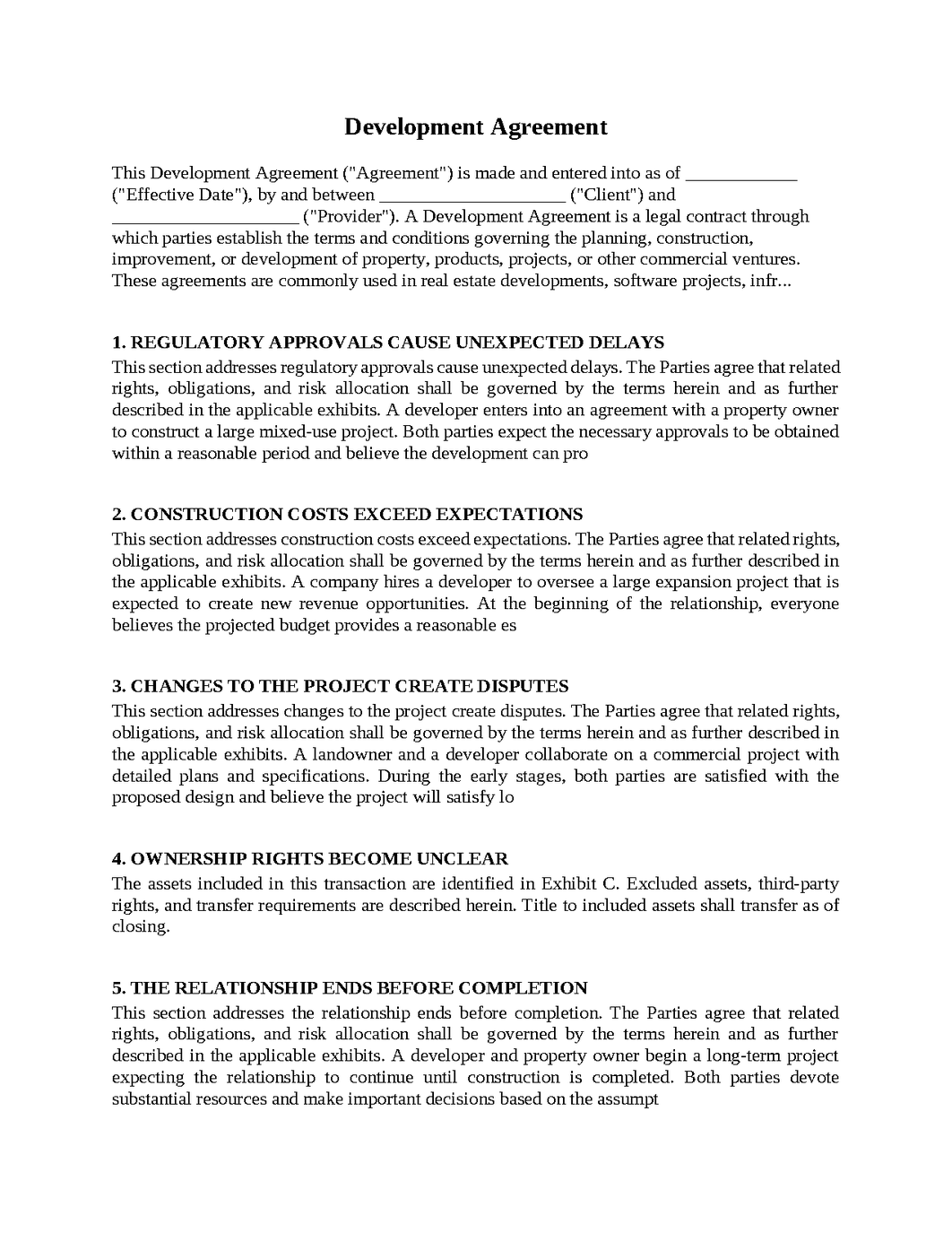
Development Agreement
A Development Agreement is a legal contract through which parties establish the terms and conditions governing the planning, construction, improvement, or development of property, products, projects, or other commercial ventures. These agreements are commonly used in real estate developments, software projects, infrastructure improvements, mixed-use communities, and business expansion initiatives. A Development Agreement typically addresses the scope of the project, timelines, approvals, financial obligations, ownership rights, and the responsibilities of each party throughout the development process. Because development projects often involve significant investments and long timelines, disputes can arise when expectations regarding performance and risk allocation are not documented clearly. A carefully drafted Development Agreement helps establish certainty and provide a framework for managing complex projects successfully.
Regulatory Approvals Cause Unexpected Delays
A developer enters into an agreement with a property owner to construct a large mixed-use project. Both parties expect the necessary approvals to be obtained within a reasonable period and believe the development can proceed according to the original schedule.
As plans move forward, local authorities require additional studies and impose conditions that neither side anticipated during negotiations. Permitting delays begin affecting financing commitments and increase carrying costs associated with the project.
The property owner believes the developer should have anticipated these challenges based on prior experience and adjusted the timeline accordingly. The developer argues that regulatory requirements changed unexpectedly and that the delays were beyond anyone's control. As costs continue rising and deadlines are missed, frustrations increase and both sides begin questioning who should bear the consequences.
To help avoid this problem, a Development Agreement should clearly establish responsibilities relating to permits and approvals and explain how delays caused by governmental actions will be handled.
Construction Costs Exceed Expectations
A company hires a developer to oversee a large expansion project that is expected to create new revenue opportunities. At the beginning of the relationship, everyone believes the projected budget provides a reasonable estimate of the costs involved.
As construction progresses, labor shortages, material price increases, and supply chain disruptions cause expenses to rise significantly above the original projections. Financing becomes strained and difficult decisions must be made regarding the future of the project.
The owner believes the developer should absorb some of the increased costs because accurate budgeting was an important part of the relationship. The developer argues that market conditions changed dramatically and that no one could have predicted the extent of the increases. As additional funding becomes necessary, disagreements emerge regarding responsibility for the unexpected expenses.
To help prevent these issues, a Development Agreement should clearly allocate responsibility for cost overruns and establish procedures for approving changes to the project budget.
Changes to the Project Create Disputes
A landowner and a developer collaborate on a commercial project with detailed plans and specifications. During the early stages, both parties are satisfied with the proposed design and believe the project will satisfy long-term objectives.
As market conditions evolve, one party begins requesting changes involving layout, amenities, and additional features. What initially appear to be minor revisions gradually increase the complexity and cost of the development.
The party requesting the changes believes flexibility is necessary to maximize the value of the project. The other party believes repeated revisions undermine schedules and increase risks that were never contemplated when the agreement was signed. As delays continue and costs increase, tensions begin affecting cooperation and trust between the parties.
To help avoid these problems, a Development Agreement should clearly establish procedures governing change orders and define how modifications to the project will affect cost and timing.
Ownership Rights Become Unclear
Several parties contribute resources to a development project involving valuable property and intellectual assets. Everyone assumes ownership issues have been addressed and focuses primarily on completing the project successfully.
As the development progresses, questions emerge regarding ownership of plans, improvements, permits, and other assets created during the relationship. The increasing value of the project makes these issues more important than anyone originally anticipated.
One party believes ownership should reflect financial contributions and investment risk. Another believes control should follow the party responsible for managing the development and obtaining approvals. As additional opportunities arise, disagreements regarding ownership rights begin affecting future plans and financing discussions.
To help prevent these issues, a Development Agreement should clearly establish ownership rights and define how assets and improvements will be treated throughout the project and after completion.
The Relationship Ends Before Completion
A developer and property owner begin a long-term project expecting the relationship to continue until construction is completed. Both parties devote substantial resources and make important decisions based on the assumption that cooperation will remain strong.
Unexpected economic conditions and changing priorities eventually cause the parties to reconsider the viability of the project. Discussions become increasingly difficult and one side decides to terminate the relationship before completion.
The party seeking to continue the project believes additional cooperation is necessary to preserve investments and avoid losses. The other party believes changing circumstances justify ending the relationship and minimizing further risks. As unfinished work, permits, and financial obligations remain unresolved, both sides realize that separating their interests is far more complicated than they originally expected.
To help avoid this problem, a Development Agreement should clearly establish termination rights and identify the responsibilities that survive if the project ends before completion.
Development Agreements are essential tools for managing projects that require substantial investments, long timelines, and cooperation among multiple parties. However, issues involving regulatory delays, cost overruns, project changes, ownership rights, and early termination can become significant sources of conflict when expectations are not documented clearly. A carefully drafted Development Agreement provides a structured framework for allocating risks and defining responsibilities throughout the life of the project. When prepared thoughtfully, it can reduce uncertainty, strengthen relationships, support successful development efforts, and provide the foundation necessary for achieving complex commercial objectives.

Get started with Upsign today!
Easily send, sign and track your documents