

Direct Sales Agreement
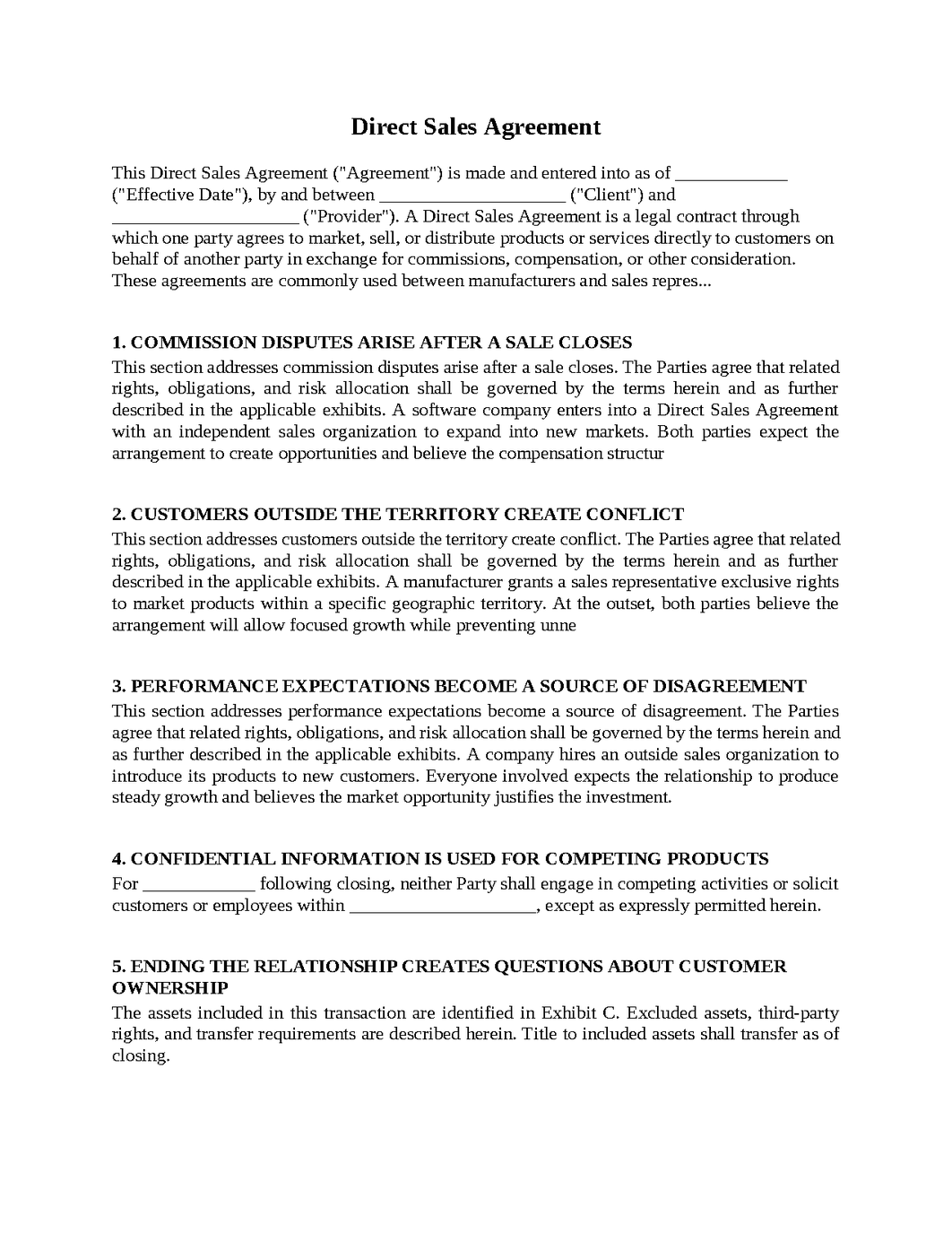
A Direct Sales Agreement is a legal contract through which one party agrees to market, sell, or distribute products or services directly to customers on behalf of another party in exchange for commissions, compensation, or other consideration. These agreements are commonly used between manufacturers and sales representatives, software companies and account executives, wholesalers and distributors, insurance agencies, and businesses that rely on direct selling channels to generate revenue. A Direct Sales Agreement typically addresses sales territories, compensation structures, performance expectations, customer ownership, confidentiality obligations, and procedures for terminating the relationship. Because direct sales relationships often depend on customer goodwill and long-term business development, disputes can arise when expectations regarding commissions and responsibilities are not documented clearly. A carefully drafted Direct Sales Agreement helps establish certainty and preserve productive commercial relationships.
Commission Disputes Arise After a Sale Closes
A software company enters into a Direct Sales Agreement with an independent sales organization to expand into new markets. Both parties expect the arrangement to create opportunities and believe the compensation structure provides appropriate incentives for growth.
Over several years, the sales organization develops relationships with prospective customers and invests substantial time in building trust. Eventually, one of those opportunities closes after lengthy negotiations and generates significant revenue for the company.
The sales organization believes it earned a commission because its efforts created the relationship that ultimately produced the sale. The company believes internal employees performed most of the work required to finalize the transaction and argues that the commission should be reduced. As the amount involved becomes more substantial, both sides begin interpreting the agreement differently and disputing who deserves credit for the business.
To help avoid this problem, a Direct Sales Agreement should clearly establish how commissions are earned and define the circumstances under which compensation becomes payable.
Customers Outside the Territory Create Conflict
A manufacturer grants a sales representative exclusive rights to market products within a specific geographic territory. At the outset, both parties believe the arrangement will allow focused growth while preventing unnecessary competition.
As the business expands, customers located near the territorial boundaries begin placing orders through multiple channels. Online inquiries and referrals create opportunities that neither party anticipated when the relationship began.
The representative believes all sales involving customers within the territory should generate commissions, regardless of how the transactions originated. The manufacturer believes certain sales belong to national accounts and internet channels that fall outside the representative's authority. As revenues increase, disagreements emerge regarding ownership of customers and the scope of territorial rights.
To help prevent these issues, a Direct Sales Agreement should clearly define territories and establish procedures for allocating sales opportunities that cross geographic boundaries.
Performance Expectations Become a Source of Disagreement
A company hires an outside sales organization to introduce its products to new customers. Everyone involved expects the relationship to produce steady growth and believes the market opportunity justifies the investment.
Initially, results are encouraging and both parties remain optimistic. Over time, however, sales growth slows and management begins questioning whether the representative is devoting sufficient effort to promoting the products.
The company believes minimum performance standards are necessary to justify maintaining the relationship. The representative argues that market conditions and competition affect results and that success cannot always be measured solely by sales volume. As frustrations increase, both sides begin disagreeing over whether expectations have been met.
To help avoid these problems, a Direct Sales Agreement should clearly establish performance expectations and define the circumstances that justify modifying or terminating the relationship.
Confidential Information Is Used for Competing Products
A medical device company enters into a Direct Sales Agreement with a sales organization that represents multiple manufacturers. In order to support the relationship, pricing strategies, customer information, and future product plans are shared with the sales team.
Initially, the arrangement benefits everyone and sales continue growing. Over time, however, concerns emerge when similar products offered by competitors begin appearing in the representative's portfolio and customers receive conflicting recommendations.
The manufacturer believes confidential information should only be used to promote its products and strengthen the relationship. The representative believes representing multiple product lines is common within the industry and denies any misuse of proprietary information. As trust begins deteriorating, both parties become increasingly concerned about protecting their competitive positions.
To help prevent these issues, a Direct Sales Agreement should clearly define confidential information and establish restrictions governing competing activities and the use of proprietary information.
Ending the Relationship Creates Questions About Customer Ownership
A company works with the same sales organization for many years and gradually builds strong customer relationships through the efforts of both parties. Everyone assumes the relationship will continue indefinitely and makes long-term decisions based on that expectation.
Eventually, changing priorities and strategic differences cause the company to terminate the agreement. Although both sides expect the separation to proceed smoothly, disagreements emerge regarding pending commissions, ongoing customer support, and ownership of customer relationships developed during the engagement.
The sales organization believes it should continue receiving commissions on accounts it developed and nurtured over many years. The company believes future business belongs exclusively to the company once the relationship ends. As customers continue placing orders, the financial consequences become increasingly significant and tensions rise.
To help avoid this problem, a Direct Sales Agreement should clearly establish post-termination commission rights and define ownership of customer relationships and sales opportunities.
Direct Sales Agreements are valuable tools that allow businesses to expand their reach and generate revenue through specialized sales channels. However, issues involving commissions, territories, performance expectations, confidentiality concerns, and customer ownership can become significant sources of conflict when expectations are not documented clearly. A carefully drafted Direct Sales Agreement provides a structured framework for allocating responsibilities and protecting the interests of both parties. When prepared thoughtfully, it can reduce uncertainty, strengthen commercial relationships, encourage growth, and provide the foundation necessary for successful long-term sales partnerships.

Get started with Upsign today!
Easily send, sign and track your documents