

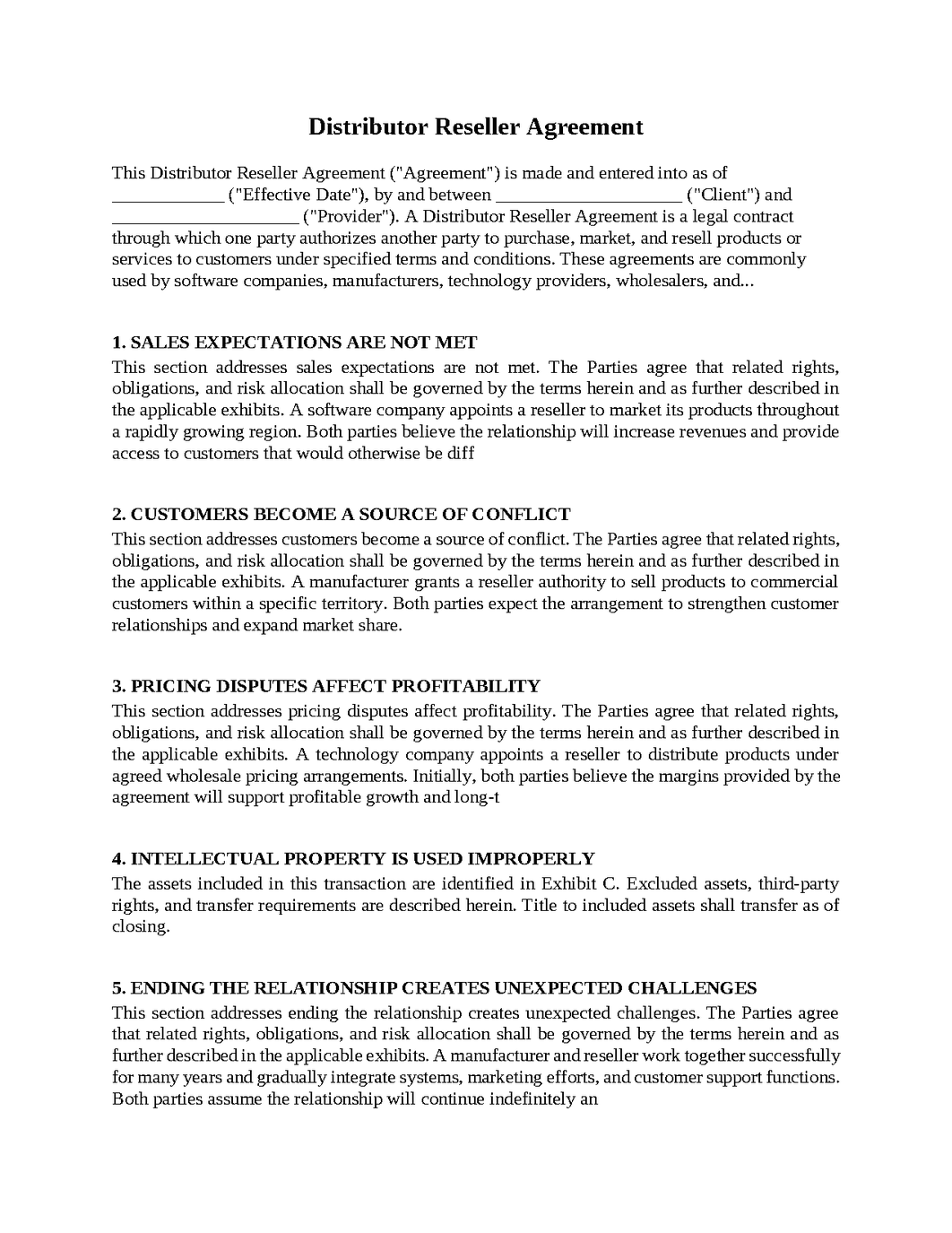
Distributor Reseller Agreement
A Distributor Reseller Agreement is a legal contract through which one party authorizes another party to purchase, market, and resell products or services to customers under specified terms and conditions. These agreements are commonly used by software companies, manufacturers, technology providers, wholesalers, and businesses seeking to expand into new markets through independent sales channels. A Distributor Reseller Agreement typically addresses territories, pricing, inventory requirements, intellectual property rights, customer support obligations, performance standards, and procedures governing the termination of the relationship. Because reseller relationships often involve shared customers and long-term investments, disputes can arise when expectations regarding responsibilities and ownership are not documented clearly. A carefully drafted Distributor Reseller Agreement helps establish certainty and protect the interests of both parties.
Sales Expectations Are Not Met
A software company appoints a reseller to market its products throughout a rapidly growing region. Both parties believe the relationship will increase revenues and provide access to customers that would otherwise be difficult to reach.
During the first year, sales activity generates promising results and both sides remain optimistic. Over time, however, growth slows and customer acquisition becomes more challenging than anyone originally anticipated. Marketing efforts become inconsistent and revenues begin falling below projections.
The software company believes the reseller should devote additional resources and increase promotional efforts to meet the expectations that justified the relationship. The reseller argues that economic conditions and increased competition have reduced demand and that the original goals are no longer realistic. As frustrations increase, both parties begin questioning whether the relationship continues to provide sufficient value.
To help avoid this problem, a Distributor Reseller Agreement should clearly establish performance expectations and define the consequences that apply when sales objectives are not achieved.
Customers Become a Source of Conflict
A manufacturer grants a reseller authority to sell products to commercial customers within a specific territory. Both parties expect the arrangement to strengthen customer relationships and expand market share.
As the business grows, several important customers begin interacting directly with the manufacturer for support, upgrades, and additional purchases. The reseller becomes concerned that years of effort devoted to developing those accounts may no longer produce future revenues.
The reseller believes customer relationships developed through its efforts should remain protected and continue generating compensation. The manufacturer believes customers ultimately belong to the company and should be free to purchase products through any available channel. As additional opportunities arise, disagreements emerge regarding who owns the customer relationships and future sales opportunities.
To help prevent these issues, a Distributor Reseller Agreement should clearly establish customer ownership rights and define the circumstances under which direct sales may occur.
Pricing Disputes Affect Profitability
A technology company appoints a reseller to distribute products under agreed wholesale pricing arrangements. Initially, both parties believe the margins provided by the agreement will support profitable growth and long-term cooperation.
As market conditions evolve, the manufacturer introduces promotions and direct sales programs that offer lower prices to certain customers. The reseller discovers that competing channels are able to offer products at prices that are difficult to match.
The reseller believes the pricing changes undermine its ability to compete and diminish the value of the relationship. The manufacturer argues that market conditions require flexibility and that maintaining competitive pricing is essential to preserving market share. As margins decline, tensions increase and both parties begin reevaluating the economics of the arrangement.
To help avoid these problems, a Distributor Reseller Agreement should clearly address pricing policies and establish procedures governing discounts, promotions, and changes to wholesale pricing.
Intellectual Property Is Used Improperly
A medical equipment manufacturer authorizes a reseller to market products using trademarks, logos, technical materials, and promotional content. Both parties expect these resources to strengthen the brand and improve customer confidence.
Over time, the manufacturer discovers that marketing materials have been modified and used in ways that were never contemplated during the original negotiations. Questions also emerge regarding whether the reseller is promoting competing products alongside the manufacturer's brand.
The manufacturer believes its intellectual property should be used only according to approved standards and solely to support authorized products. The reseller believes certain modifications were necessary to meet local market conditions and denies causing any harm. As concerns regarding brand reputation increase, trust between the parties begins deteriorating.
To help prevent these issues, a Distributor Reseller Agreement should clearly establish intellectual property rights and define how trademarks and marketing materials may be used.
Ending the Relationship Creates Unexpected Challenges
A manufacturer and reseller work together successfully for many years and gradually integrate systems, marketing efforts, and customer support functions. Both parties assume the relationship will continue indefinitely and make investments based upon that expectation.
Eventually, changing business priorities lead the manufacturer to pursue a different sales strategy. Although both sides initially expect the transition to proceed smoothly, disagreements emerge regarding existing customers, unsold inventory, warranty obligations, and pending commissions.
The reseller believes compensation and transition assistance are necessary because years of effort created significant market value. The manufacturer believes the relationship has reached its conclusion and expects all obligations to end promptly. As customers continue requesting support and placing orders, the separation becomes increasingly complicated.
To help avoid this problem, a Distributor Reseller Agreement should clearly establish termination procedures and identify the obligations that survive the conclusion of the relationship.
Distributor Reseller Agreements are valuable tools that allow companies to expand their reach and leverage independent sales organizations. However, issues involving sales performance, customer ownership, pricing disputes, intellectual property concerns, and termination responsibilities can become significant sources of conflict when expectations are not documented clearly. A carefully drafted Distributor Reseller Agreement provides a structured framework for allocating responsibilities and protecting the interests of both parties. When prepared thoughtfully, it can reduce uncertainty, strengthen commercial relationships, encourage growth, and provide the foundation necessary for successful long-term reseller arrangements.

Get started with Upsign today!
Easily send, sign and track your documents