

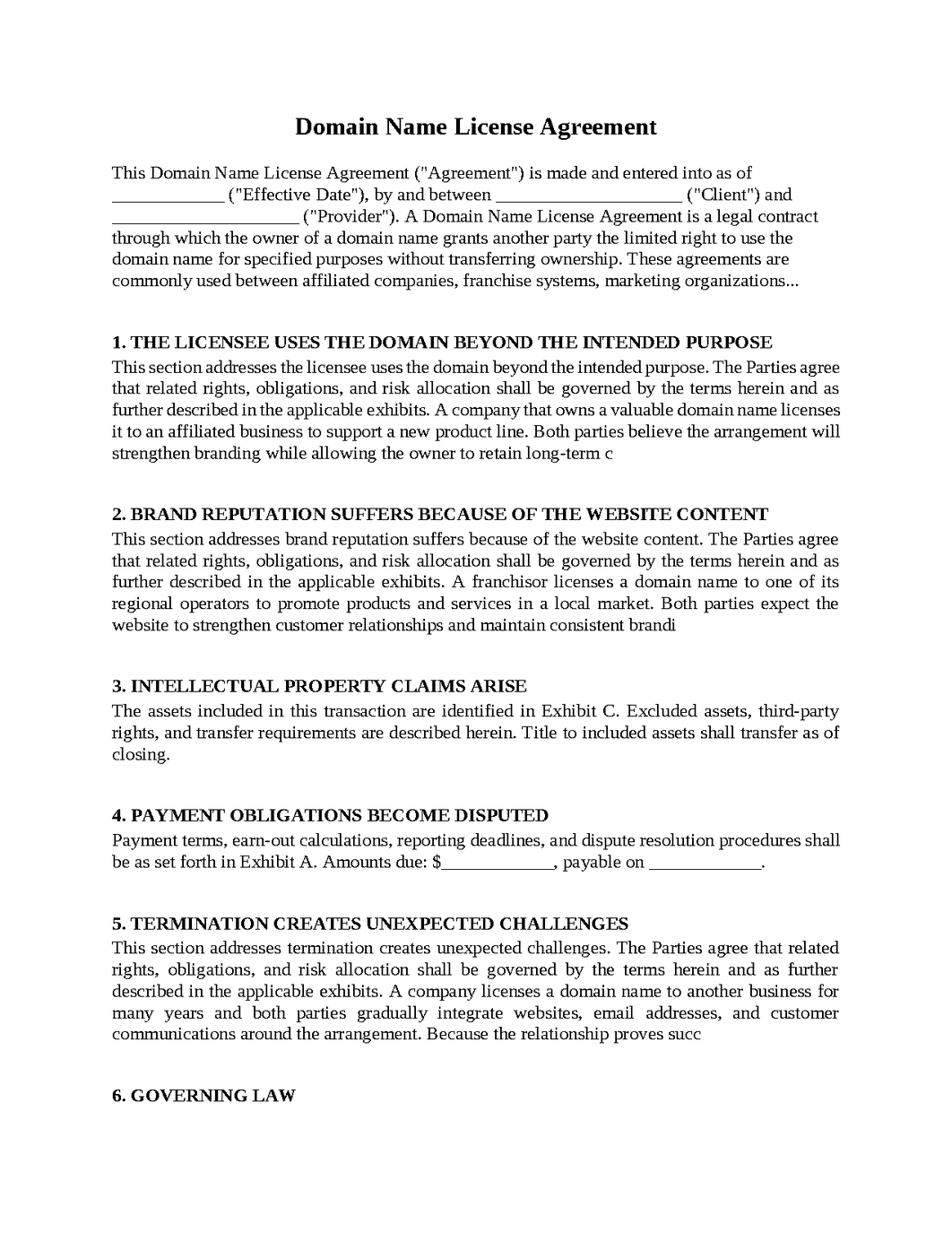
Domain Name License Agreement
A Domain Name License Agreement is a legal contract through which the owner of a domain name grants another party the limited right to use the domain name for specified purposes without transferring ownership. These agreements are commonly used between affiliated companies, franchise systems, marketing organizations, software providers, joint ventures, and businesses seeking to leverage valuable branding assets while preserving ultimate control over the domain. A Domain Name License Agreement typically addresses the scope of use, quality standards, intellectual property rights, payment obligations, renewal terms, and procedures governing the termination of the arrangement. Because domain names often represent valuable brands and online identities, disputes can arise when expectations regarding ownership and permitted uses are not documented clearly. A carefully drafted Domain Name License Agreement helps establish certainty and protect the interests of both licensors and licensees.
The Licensee Uses the Domain Beyond the Intended Purpose
A company that owns a valuable domain name licenses it to an affiliated business to support a new product line. Both parties believe the arrangement will strengthen branding while allowing the owner to retain long-term control over the digital asset.
Initially, the licensed domain is used exactly as intended and both organizations benefit from increased customer recognition. Over time, however, the licensee begins expanding its operations and uses the domain to promote products and services that were never discussed during the original negotiations.
The owner believes the domain should only be used for the specific activities originally contemplated. The licensee argues that broader use creates additional value and helps strengthen the overall brand. As new revenue opportunities emerge, disagreements develop regarding the limits of the rights granted under the agreement.
To help avoid this problem, a Domain Name License Agreement should clearly define the permitted uses of the domain and establish restrictions on activities that fall outside the intended scope of the license.
Brand Reputation Suffers Because of the Website Content
A franchisor licenses a domain name to one of its regional operators to promote products and services in a local market. Both parties expect the website to strengthen customer relationships and maintain consistent branding.
As the regional business grows, website content and marketing materials begin changing. Customers complain about inaccurate information and advertising practices that do not align with the standards maintained by the franchisor.
The domain owner believes the quality of the content affects the value of the brand and expects the licensee to maintain higher standards. The licensee believes it should have flexibility to adapt marketing efforts to local preferences and argues that excessive oversight limits growth. As customer complaints increase, tensions begin affecting the relationship.
To help prevent these issues, a Domain Name License Agreement should clearly establish branding requirements and quality standards governing the use of the domain.
Intellectual Property Claims Arise
A company licenses one of its domain names to a business partner as part of a strategic alliance. At the beginning of the relationship, everyone assumes the arrangement will strengthen both businesses without creating additional legal risks.
Several years later, a third party asserts trademark rights and challenges the use of the domain. Legal proceedings and cease-and-desist letters create uncertainty regarding whether the website can continue operating.
The licensee believes the owner should be responsible for defending the domain and addressing intellectual property claims because the owner retained title to the asset. The owner argues that the licensee's marketing activities contributed to the dispute and believes responsibility should be shared. As legal costs increase, disagreements emerge regarding who should bear the burden.
To help avoid these problems, a Domain Name License Agreement should clearly address intellectual property issues and establish procedures for handling third-party claims.
Payment Obligations Become Disputed
A domain investor licenses a premium domain name to an e-commerce company in exchange for recurring fees. Initially, both parties view the arrangement as mutually beneficial and expect it to continue for many years.
As the e-commerce business grows, revenues fluctuate and financial pressures begin affecting cash flow. The company occasionally misses payments and seeks additional flexibility while continuing to use the domain.
The owner believes timely payments are essential because the domain represents a valuable asset that could be licensed elsewhere. The licensee believes temporary delays should not threaten the entire relationship and argues that its success enhances the value of the domain. As missed payments continue, both sides begin disagreeing over default rights and future obligations.
To help prevent these issues, a Domain Name License Agreement should clearly establish payment terms and define the consequences that apply when fees are not paid as agreed.
Termination Creates Unexpected Challenges
A company licenses a domain name to another business for many years and both parties gradually integrate websites, email addresses, and customer communications around the arrangement. Because the relationship proves successful, everyone assumes it will continue indefinitely.
Eventually, changing priorities lead the owner to terminate the agreement. Although both parties initially expect the transition to proceed smoothly, disagreements arise regarding email accounts, customer notifications, website redirects, and the handling of historical content.
The owner believes control over the domain should return immediately and that the licensee should promptly discontinue all use. The licensee believes additional time is necessary to avoid disrupting customers and preserve business relationships. As the transition becomes more complicated, both sides realize that ending the arrangement is far more difficult than originally anticipated.
To help avoid this problem, a Domain Name License Agreement should clearly establish termination procedures and identify the obligations that survive the conclusion of the relationship.
Domain Name License Agreements are valuable tools that allow businesses to leverage important digital assets without transferring ownership. However, issues involving unauthorized uses, brand reputation, intellectual property claims, payment disputes, and termination challenges can become significant sources of conflict when expectations are not documented clearly. A carefully drafted Domain Name License Agreement provides a structured framework for allocating rights and responsibilities while protecting valuable branding assets. When prepared thoughtfully, it can reduce uncertainty, strengthen commercial relationships, preserve intellectual property, and provide the flexibility necessary for successful long-term licensing arrangements.

Get started with Upsign today!
Easily send, sign and track your documents