

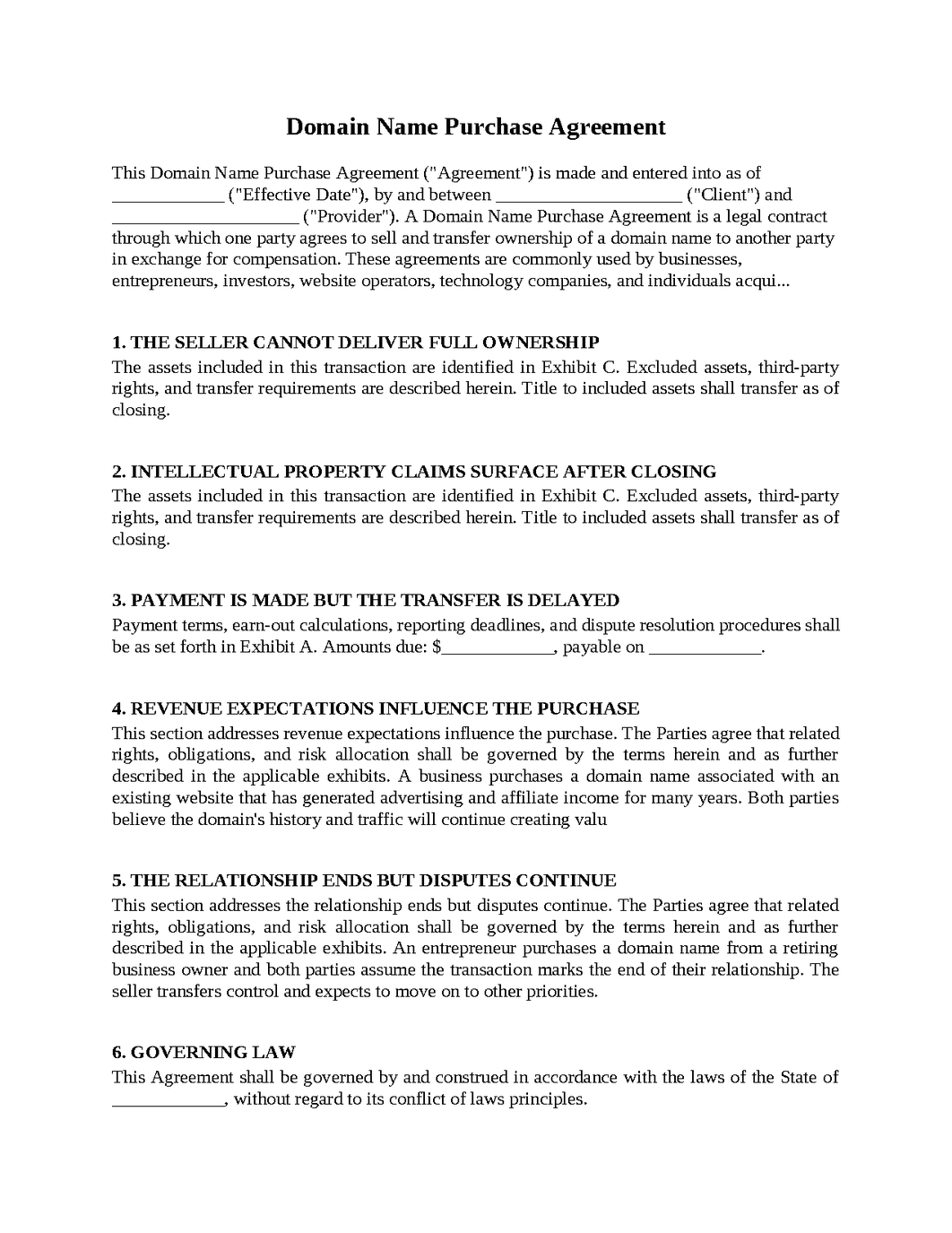
Domain Name Purchase Agreement
A Domain Name Purchase Agreement is a legal contract through which one party agrees to sell and transfer ownership of a domain name to another party in exchange for compensation. These agreements are commonly used by businesses, entrepreneurs, investors, website operators, technology companies, and individuals acquiring valuable online assets. A Domain Name Purchase Agreement typically addresses the purchase price, transfer procedures, intellectual property concerns, representations regarding ownership, payment terms, and the obligations that survive after closing. Because domain names often possess significant commercial value and are critical to branding, disputes can arise when expectations regarding ownership and transfer are not documented clearly. A carefully drafted Domain Name Purchase Agreement helps establish certainty and protect the interests of both buyers and sellers.
The Seller Cannot Deliver Full Ownership
A growing software company negotiates the purchase of a premium domain name that perfectly matches its brand. Both parties expect the transaction to proceed smoothly and believe the seller possesses complete authority to transfer ownership.
After payment arrangements are finalized, complications arise when the buyer discovers that the domain is subject to registrar restrictions and is associated with third-party services and accounts that complicate the transfer process. Questions emerge regarding whether the seller truly controls all rights necessary to complete the transaction.
The buyer believes the seller should have disclosed these issues before entering into the agreement. The seller argues that the complications are administrative in nature and that ownership itself has never been disputed. As the planned launch date approaches, frustrations increase and both sides begin disagreeing about their obligations.
To help avoid this problem, a Domain Name Purchase Agreement should clearly establish ownership representations and define the procedures required to complete a successful transfer.
Intellectual Property Claims Surface After Closing
An e-commerce business purchases a domain name because it aligns perfectly with its marketing strategy and long-term branding plans. Initially, everyone assumes the transaction will provide a valuable asset without creating additional risks.
Several months after the acquisition, another company claims that the domain infringes upon existing trademark rights and demands that the buyer stop using the name. Legal threats and administrative proceedings create uncertainty regarding the future of the website and associated branding.
The buyer believes the seller should have disclosed any potential intellectual property concerns before completing the sale. The seller argues that no claims existed at the time of the transaction and maintains that the buyer accepted ordinary business risks associated with branding. As legal expenses increase, tensions develop regarding who should bear responsibility.
To help prevent these issues, a Domain Name Purchase Agreement should clearly address intellectual property representations and establish procedures for handling claims that arise after closing.
Payment Is Made but the Transfer Is Delayed
A marketing company agrees to purchase a valuable domain name from an investor. Both parties expect the transaction to proceed efficiently and assume that payment and transfer can be completed quickly.
The buyer sends payment according to the agreed terms and begins preparing marketing materials based upon the new domain. Unexpected administrative problems and registrar restrictions delay the transfer process, preventing the buyer from gaining control over the asset.
The buyer believes ownership should transfer immediately because payment has already been made. The seller argues that certain delays are outside its control and that reasonable efforts are being made to complete the process. As project deadlines are affected, both sides become increasingly frustrated.
To help avoid these problems, a Domain Name Purchase Agreement should clearly establish transfer procedures and define the responsibilities of each party during the closing process.
Revenue Expectations Influence the Purchase
A business purchases a domain name associated with an existing website that has generated advertising and affiliate income for many years. Both parties believe the domain's history and traffic will continue creating value after the sale.
Following the acquisition, website traffic declines and revenues fall below expectations. The buyer becomes concerned that certain assumptions regarding visitors and search rankings may have been inaccurate.
The buyer believes the seller overstated the commercial value of the domain and failed to disclose important information. The seller argues that traffic patterns naturally fluctuate and that no guarantees regarding future performance were ever made. As financial results continue disappointing expectations, disagreements emerge regarding the information provided before the transaction.
To help prevent these issues, a Domain Name Purchase Agreement should clearly address representations regarding traffic, revenues, and the absence of performance guarantees.
The Relationship Ends but Disputes Continue
An entrepreneur purchases a domain name from a retiring business owner and both parties assume the transaction marks the end of their relationship. The seller transfers control and expects to move on to other priorities.
Months later, questions arise regarding email accounts, archived content, social media references, and legacy services connected to the domain. The buyer believes certain additional assets should have been included in the transaction, while the seller believes the agreement covered only the domain name itself.
As customers continue contacting old email addresses and technical issues emerge, both parties realize that the transfer involved more interconnected assets than originally anticipated. Disagreements begin affecting what had initially been an amicable transaction.
To help avoid this problem, a Domain Name Purchase Agreement should clearly identify the assets included in the sale and establish the obligations that survive after the transfer is completed.
Domain Name Purchase Agreements are valuable tools that allow businesses and individuals to acquire important digital assets with confidence. However, issues involving ownership rights, intellectual property claims, transfer delays, performance expectations, and post-closing responsibilities can become significant sources of conflict when expectations are not documented clearly. A carefully drafted Domain Name Purchase Agreement provides a structured framework for allocating risks and protecting the interests of both buyers and sellers. When prepared thoughtfully, it can reduce uncertainty, support successful branding efforts, preserve business relationships, and provide the confidence necessary for acquiring valuable online assets.

Get started with Upsign today!
Easily send, sign and track your documents