

Donor Agreement
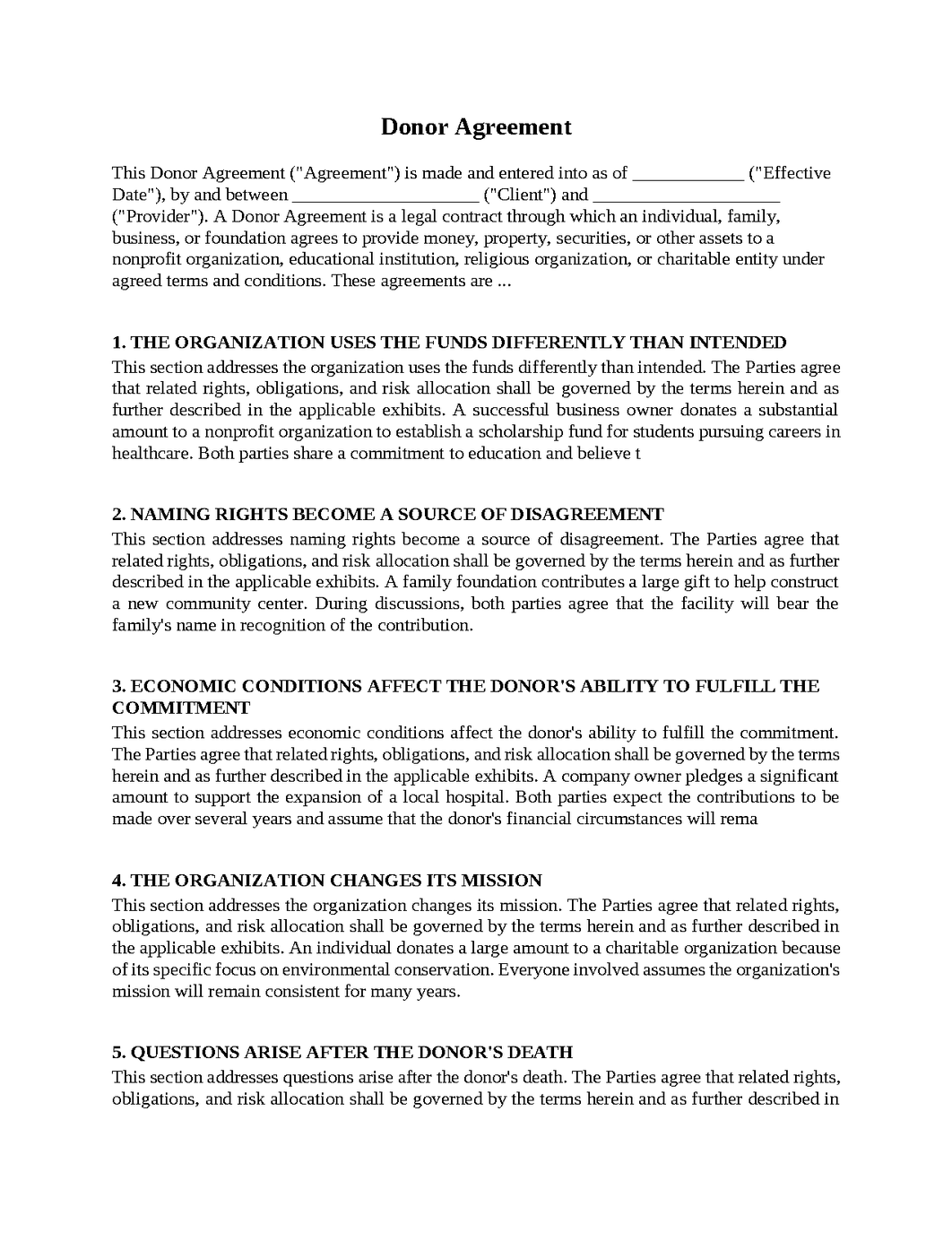
A Donor Agreement is a legal contract through which an individual, family, business, or foundation agrees to provide money, property, securities, or other assets to a nonprofit organization, educational institution, religious organization, or charitable entity under agreed terms and conditions. These agreements are commonly used for major gifts, endowments, scholarship funds, capital campaigns, naming opportunities, and restricted charitable contributions. A Donor Agreement typically addresses the amount and timing of contributions, restrictions on the use of funds, reporting requirements, recognition rights, and procedures for handling changed circumstances. Because significant donations often involve long-term expectations and personal values, disputes can arise when intentions and obligations are not documented clearly. A carefully drafted Donor Agreement helps establish certainty and preserve positive relationships between donors and charitable organizations.
The Organization Uses the Funds Differently Than Intended
A successful business owner donates a substantial amount to a nonprofit organization to establish a scholarship fund for students pursuing careers in healthcare. Both parties share a commitment to education and believe the gift will create opportunities for future generations.
For several years, the organization administers the program according to the donor's wishes and regularly highlights the students benefiting from the scholarship fund. Eventually, however, changing financial pressures and new priorities lead the organization to redirect a portion of the money toward unrelated programs.
The donor believes the funds should only be used for the purpose that inspired the gift. The organization believes flexibility is necessary to meet evolving community needs and argues that the alternative programs remain consistent with its broader mission. As concerns grow, both sides begin interpreting the donor's intentions differently and tensions emerge regarding how the contribution should be managed.
To help avoid this problem, a Donor Agreement should clearly establish any restrictions governing the use of donated assets and define the circumstances under which those restrictions may be modified.
Naming Rights Become a Source of Disagreement
A family foundation contributes a large gift to help construct a new community center. During discussions, both parties agree that the facility will bear the family's name in recognition of the contribution.
Construction is completed and the facility becomes an important resource for the community. Several years later, leadership changes and new fundraising opportunities emerge that create pressure to reconsider the naming arrangement.
The donor believes the naming rights were an important part of the agreement and expects the recognition to remain permanent. The organization believes changing circumstances justify revisiting earlier commitments and argues that flexibility is necessary to support future growth. As emotions become intertwined with the dispute, both sides become increasingly frustrated by their differing expectations.
To help prevent these issues, a Donor Agreement should clearly establish recognition rights and define the circumstances under which naming opportunities may be modified.
Economic Conditions Affect the Donor's Ability to Fulfill the Commitment
A company owner pledges a significant amount to support the expansion of a local hospital. Both parties expect the contributions to be made over several years and assume that the donor's financial circumstances will remain stable.
Unexpected economic challenges eventually affect the donor's business and reduce available cash flow. The donor becomes concerned about fulfilling the pledge while preserving employees and maintaining operations.
The hospital believes the commitment represents an important source of funding and has already made decisions based on the expected contributions. The donor believes extraordinary circumstances justify adjusting the payment schedule and argues that preserving the business serves the broader community. As financial pressures intensify, disagreements arise regarding whether the original commitment should remain unchanged.
To help avoid these problems, a Donor Agreement should clearly establish payment obligations and define how unforeseen financial circumstances will be addressed.
The Organization Changes Its Mission
An individual donates a large amount to a charitable organization because of its specific focus on environmental conservation. Everyone involved assumes the organization's mission will remain consistent for many years.
As leadership changes and new opportunities emerge, the organization gradually expands into additional areas and shifts some of its resources away from the original programs. The donor becomes concerned that the contribution is no longer supporting the causes that motivated the gift.
The donor believes the funds should continue advancing the original mission that inspired the contribution. The organization believes evolving priorities are necessary to maximize its impact and better serve the public. As both sides become more committed to their respective positions, disagreements emerge regarding whether the donor's expectations are still being honored.
To help prevent these issues, a Donor Agreement should clearly address how donated assets will be treated if the organization changes its structure, mission, or priorities.
Questions Arise After the Donor's Death
A philanthropist makes a substantial contribution to establish an endowment and works closely with the organization for many years. Both parties assume the relationship will continue indefinitely and devote considerable effort to preserving the donor's legacy.
Following the donor's death, family members and estate representatives begin reviewing the terms of the gift. Questions emerge regarding reporting obligations, restrictions on the funds, and whether future leaders of the organization remain bound by the original understanding.
The donor's family believes the organization should continue honoring the donor's wishes exactly as originally intended. The organization believes certain adjustments are necessary to address changing circumstances and maintain operational flexibility. As new generations become involved, tensions arise regarding how the donor's legacy should be preserved.
To help avoid this problem, a Donor Agreement should clearly establish the rights and obligations that survive the donor's death and define how future circumstances should be addressed.
Donor Agreements are valuable tools that allow individuals and organizations to work together toward meaningful charitable goals while creating clarity regarding expectations and responsibilities. However, issues involving restricted uses, recognition rights, changing financial circumstances, evolving missions, and posthumous obligations can become significant sources of conflict when expectations are not documented clearly. A carefully drafted Donor Agreement provides a structured framework for protecting the interests of both donors and charitable organizations. When prepared thoughtfully, it can reduce uncertainty, strengthen trust, preserve legacies, and provide the foundation necessary for achieving lasting philanthropic objectives.

Get started with Upsign today!
Easily send, sign and track your documents