

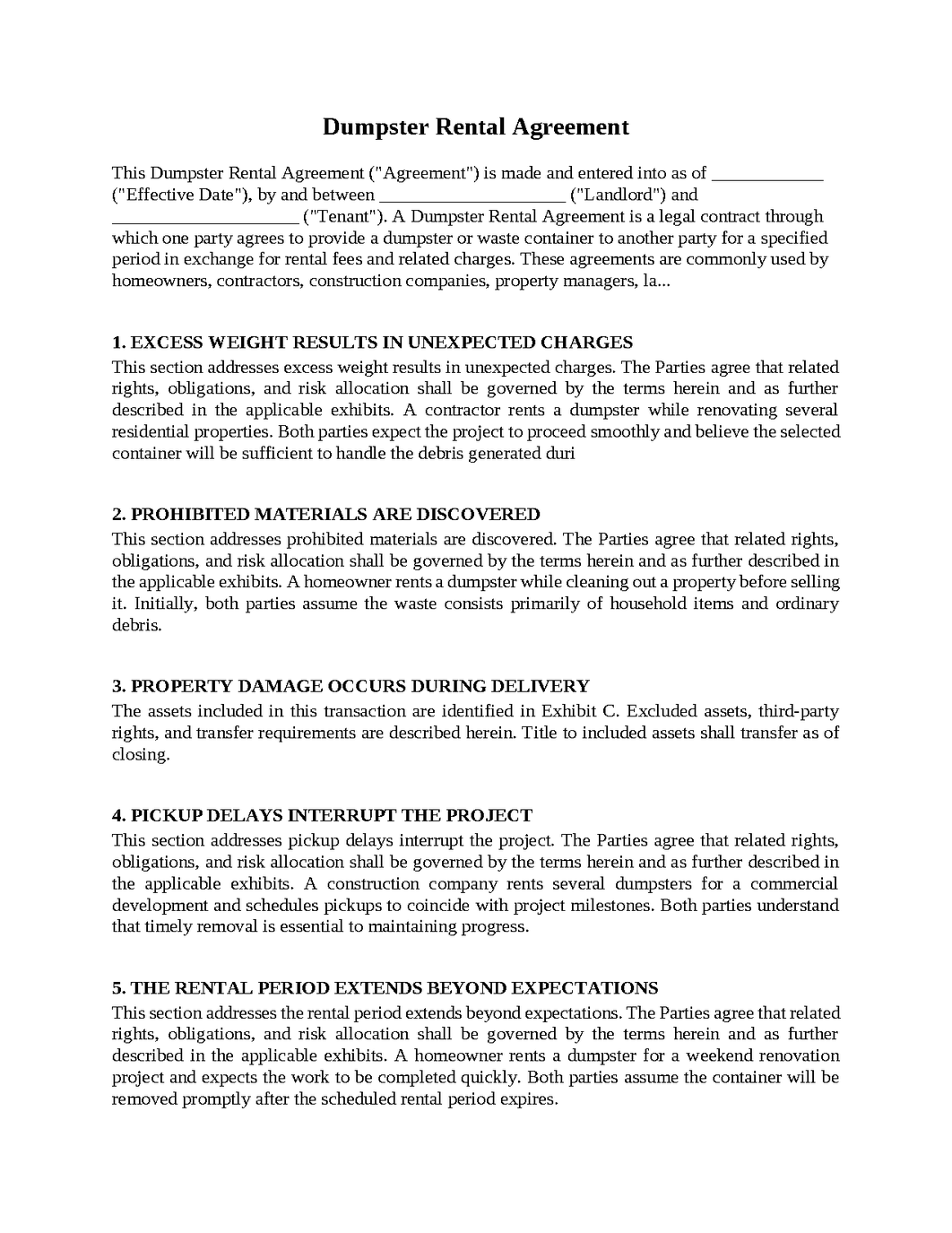
Dumpster Rental Agreement
A Dumpster Rental Agreement is a legal contract through which one party agrees to provide a dumpster or waste container to another party for a specified period in exchange for rental fees and related charges. These agreements are commonly used by homeowners, contractors, construction companies, property managers, landscapers, and businesses undertaking renovations or cleanup projects. A Dumpster Rental Agreement typically addresses delivery and pickup schedules, permitted waste materials, weight limitations, fees, liability for damage, and procedures governing extensions or termination. Because waste disposal projects often involve changing conditions and regulatory requirements, disputes can arise when expectations regarding responsibilities and costs are not documented clearly. A carefully drafted Dumpster Rental Agreement helps establish certainty and protect the interests of both service providers and customers.
Excess Weight Results in Unexpected Charges
A contractor rents a dumpster while renovating several residential properties. Both parties expect the project to proceed smoothly and believe the selected container will be sufficient to handle the debris generated during construction.
During the project, additional demolition work becomes necessary and significantly more material is placed into the container than originally anticipated. When the dumpster is collected, the contents exceed the weight limits established by the waste company.
The contractor believes the additional charges are excessive and argues that the rental price should have covered ordinary variations in weight. The rental company believes disposal costs increase substantially when containers exceed their limits and expects reimbursement for those expenses. As invoices are reviewed, both sides begin disagreeing about the amount owed.
To help avoid this problem, a Dumpster Rental Agreement should clearly establish weight limitations and explain the fees that apply when those limits are exceeded.
Prohibited Materials Are Discovered
A homeowner rents a dumpster while cleaning out a property before selling it. Initially, both parties assume the waste consists primarily of household items and ordinary debris.
As the container is processed, the waste company discovers hazardous materials and items prohibited under local regulations. Additional disposal requirements create delays and increase the cost of handling the contents.
The homeowner believes the materials were disposed of unintentionally and did not realize certain items required special treatment. The rental company believes customers are responsible for understanding disposal restrictions and argues that the additional costs should be reimbursed. As regulatory concerns arise, tensions develop regarding who should bear responsibility.
To help prevent these issues, a Dumpster Rental Agreement should clearly identify prohibited materials and explain the consequences associated with improper disposal.
Property Damage Occurs During Delivery
A business owner rents a large dumpster for a remodeling project and expects the delivery process to occur without affecting surrounding property. Everyone involved assumes the placement location is suitable and safe.
During delivery, the heavy container damages portions of the driveway and landscaping. Repair estimates reveal costs that neither party anticipated when the rental was arranged.
The customer believes the rental company should be responsible because its employees controlled the delivery process. The rental company argues that the designated location was selected by the customer and that certain risks are unavoidable when placing heavy equipment. As repair expenses increase, disagreements emerge regarding liability for the damage.
To help avoid these problems, a Dumpster Rental Agreement should clearly address placement responsibilities and establish how property damage claims will be handled.
Pickup Delays Interrupt the Project
A construction company rents several dumpsters for a commercial development and schedules pickups to coincide with project milestones. Both parties understand that timely removal is essential to maintaining progress.
Unexpected staffing shortages and equipment problems prevent the rental company from collecting full containers according to schedule. Work crews begin losing productivity because debris accumulates and replacement containers are unavailable.
The contractor believes the delays have disrupted operations and increased labor costs. The rental company argues that unforeseen circumstances temporarily affected service and that reasonable efforts were made to minimize interruptions. As deadlines become more difficult to satisfy, frustrations increase and both sides begin disputing responsibility for the losses.
To help prevent these issues, a Dumpster Rental Agreement should clearly establish delivery and pickup schedules and define how service interruptions will be addressed.
The Rental Period Extends Beyond Expectations
A homeowner rents a dumpster for a weekend renovation project and expects the work to be completed quickly. Both parties assume the container will be removed promptly after the scheduled rental period expires.
Unexpected complications delay the project and the homeowner keeps using the dumpster for several additional weeks. Questions arise regarding extension fees, scheduling priorities, and whether the container remains available for continued use.
The homeowner believes additional time should be granted at minimal cost because the delay was unintentional. The rental company believes the container could have been used for other customers and expects compensation according to its standard policies. As charges continue accumulating, disagreements emerge regarding the financial consequences of the extended rental.
To help avoid this problem, a Dumpster Rental Agreement should clearly establish rental periods and explain the fees and procedures that apply when additional time is required.
Dumpster Rental Agreements are valuable tools that allow homeowners and businesses to manage waste disposal efficiently while creating clear expectations for both parties. However, issues involving excess weight, prohibited materials, property damage, pickup delays, and rental extensions can become significant sources of conflict when expectations are not documented clearly. A carefully drafted Dumpster Rental Agreement provides a structured framework for allocating responsibilities and protecting the interests of everyone involved. When prepared thoughtfully, it can reduce uncertainty, preserve working relationships, improve project efficiency, and provide the foundation necessary for successful waste management services.

Get started with Upsign today!
Easily send, sign and track your documents