

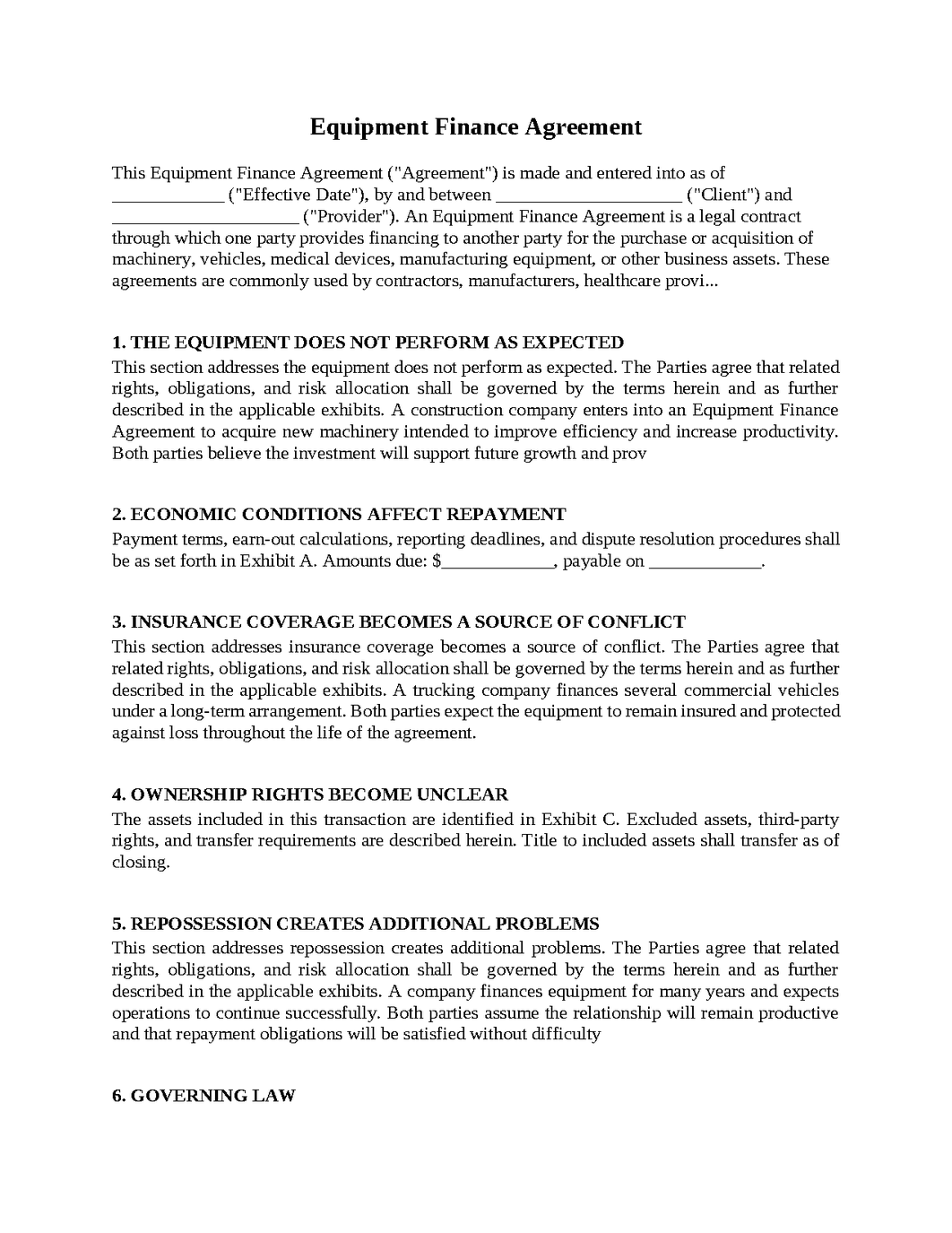
Equipment Finance Agreement
An Equipment Finance Agreement is a legal contract through which one party provides financing to another party for the purchase or acquisition of machinery, vehicles, medical devices, manufacturing equipment, or other business assets. These agreements are commonly used by contractors, manufacturers, healthcare providers, transportation companies, and businesses seeking to acquire expensive equipment without paying the full cost upfront. An Equipment Finance Agreement typically addresses repayment terms, interest rates, collateral rights, maintenance responsibilities, insurance requirements, and procedures governing default and repossession. Because equipment purchases often represent significant investments, disputes can arise when expectations regarding ownership and obligations are not documented clearly. A carefully drafted Equipment Finance Agreement helps establish certainty and protect the interests of both lenders and borrowers.
The Equipment Does Not Perform as Expected
A construction company enters into an Equipment Finance Agreement to acquire new machinery intended to improve efficiency and increase productivity. Both parties believe the investment will support future growth and provide long-term value.
Shortly after the equipment is placed into service, recurring mechanical problems begin affecting operations. Repair costs increase and the machinery fails to deliver the performance that management originally anticipated.
The borrower believes the financing obligations should be adjusted because the equipment has not provided the expected benefits. The lender believes its role was limited to financing the purchase and argues that equipment performance issues should be resolved with the manufacturer. As financial pressures increase, tensions develop regarding whether loan payments should continue without interruption.
To help avoid this problem, an Equipment Finance Agreement should clearly distinguish financing obligations from warranty rights and establish the responsibilities of each party.
Economic Conditions Affect Repayment
A manufacturing company finances several pieces of expensive equipment while expecting strong demand for its products. Everyone involved believes future revenues will support the repayment schedule established under the agreement.
Unexpected changes in the economy reduce customer orders and significantly affect cash flow. Monthly payments become increasingly difficult to manage, and management begins exploring alternatives.
The borrower believes temporary modifications are justified because the downturn was beyond its control. The lender believes timely repayment is essential to preserving the economics of the transaction and expects the original terms to remain in effect. As missed payments accumulate, disagreements emerge regarding whether accommodations should be granted.
To help prevent these issues, an Equipment Finance Agreement should clearly establish default provisions and define the procedures available for modifying repayment obligations.
Insurance Coverage Becomes a Source of Conflict
A trucking company finances several commercial vehicles under a long-term arrangement. Both parties expect the equipment to remain insured and protected against loss throughout the life of the agreement.
Following a serious accident, questions arise regarding the adequacy of the insurance coverage maintained by the borrower. The resulting claim does not fully satisfy the remaining balance owed under the financing agreement.
The lender believes maintaining sufficient coverage was the borrower's responsibility and expects repayment of the deficiency. The borrower believes the insurance requirements were unclear and argues that the loss should not create additional financial hardship. As costs increase, both sides begin disputing who should bear the remaining liability.
To help avoid these problems, an Equipment Finance Agreement should clearly establish insurance requirements and define the consequences associated with insufficient coverage.
Ownership Rights Become Unclear
A healthcare provider finances specialized equipment needed for expanding services. Although the provider makes regular payments, management assumes ownership rights increase automatically over time.
Several years later, the provider seeks to sell certain assets and discovers that title remains subject to the lender's security interest. Questions emerge regarding whether the equipment can be transferred before the financing obligations are fully satisfied.
The borrower believes years of payments should provide flexibility regarding ownership and disposition. The lender believes its collateral rights remain essential until the balance is paid in full. As business opportunities arise, disagreements develop regarding control over the equipment.
To help prevent these issues, an Equipment Finance Agreement should clearly establish ownership rights and explain the lender's security interests throughout the repayment period.
Repossession Creates Additional Problems
A company finances equipment for many years and expects operations to continue successfully. Both parties assume the relationship will remain productive and that repayment obligations will be satisfied without difficulty.
Unexpected financial difficulties eventually result in defaults under the agreement. The lender begins exercising its rights to recover the equipment, creating disruptions to the borrower's operations.
The borrower believes additional time should be granted because repossession will jeopardize the business and affect employees and customers. The lender believes protecting its collateral is necessary and argues that repeated defaults justify immediate action. As negotiations become increasingly difficult, tensions arise regarding the rights available after default.
To help avoid this problem, an Equipment Finance Agreement should clearly establish remedies and define the procedures that apply when repayment obligations are not satisfied.
Equipment Finance Agreements are valuable tools that allow businesses to acquire important assets while preserving working capital. However, issues involving equipment performance, repayment difficulties, insurance requirements, ownership rights, and repossession can become significant sources of conflict when expectations are not documented clearly. A carefully drafted Equipment Finance Agreement provides a structured framework for allocating responsibilities and protecting the interests of both lenders and borrowers. When prepared thoughtfully, it can reduce uncertainty, support business growth, preserve relationships, and provide the foundation necessary for successful equipment acquisitions.

Get started with Upsign today!
Easily send, sign and track your documents