

Exclusive Sales Agreement
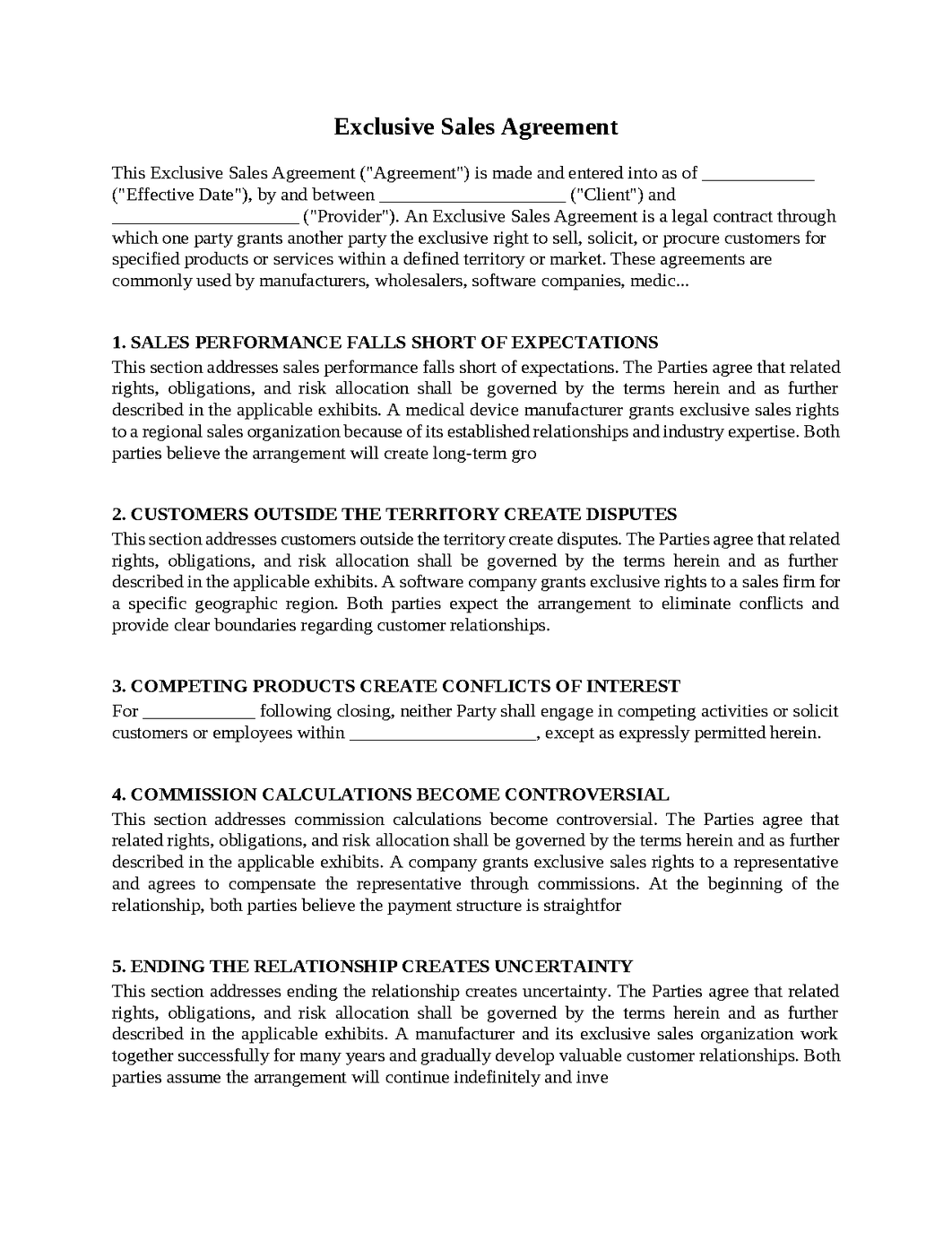
An Exclusive Sales Agreement is a legal contract through which one party grants another party the exclusive right to sell, solicit, or procure customers for specified products or services within a defined territory or market. These agreements are commonly used by manufacturers, wholesalers, software companies, medical device suppliers, consumer brands, and businesses seeking to expand through dedicated sales representatives or organizations. An Exclusive Sales Agreement typically addresses territories, sales quotas, compensation, customer ownership, intellectual property rights, and procedures governing termination and renewal. Because exclusive sales arrangements often require substantial investments and restrict alternative channels, disputes can arise when expectations regarding performance and rights are not documented clearly. A carefully drafted Exclusive Sales Agreement helps establish certainty and protect the interests of both parties.
Sales Performance Falls Short of Expectations
A medical device manufacturer grants exclusive sales rights to a regional sales organization because of its established relationships and industry expertise. Both parties believe the arrangement will create long-term growth and increase market share.
Initially, revenues increase and customer response is encouraging. Over time, however, new competitors enter the market and sales begin falling below projections. Marketing efforts become less aggressive and opportunities are lost to competing products.
The manufacturer believes the sales organization should increase its efforts because exclusivity was granted in reliance upon strong performance. The sales organization believes changing market conditions have reduced demand and argues that sales targets should be adjusted accordingly. As results continue declining, frustrations increase and both parties begin questioning the value of maintaining the exclusive relationship.
To help avoid this problem, an Exclusive Sales Agreement should clearly establish performance expectations and define the circumstances under which exclusivity may be modified or terminated.
Customers Outside the Territory Create Disputes
A software company grants exclusive rights to a sales firm for a specific geographic region. Both parties expect the arrangement to eliminate conflicts and provide clear boundaries regarding customer relationships.
As internet sales and national referrals become increasingly important, customers located within the territory begin purchasing products through channels outside the sales firm's control. Questions arise regarding who should receive commissions and whether the transactions violate the agreement.
The sales organization believes all customers located within the territory should remain subject to its exclusive rights. The software company believes certain channels and accounts were never intended to fall within the scope of the arrangement. As additional sales opportunities emerge, tensions develop regarding the meaning of territorial exclusivity.
To help prevent these issues, an Exclusive Sales Agreement should clearly define territories and establish procedures governing sales originating through alternative channels.
Competing Products Create Conflicts of Interest
A manufacturing company appoints a sales agency as its exclusive representative and expects the agency to devote substantial attention to promoting its products. Everyone involved assumes that exclusivity will encourage loyalty and maximize growth.
Several years later, the sales agency begins representing competing products that appeal to many of the same customers. Management becomes concerned that the agency's priorities have shifted and that opportunities are being diverted elsewhere.
The manufacturer believes exclusivity requires the sales agency to avoid conflicts that could affect performance. The sales agency believes representing multiple products is common in the industry and argues that diversification strengthens customer relationships. As competition intensifies, disagreements emerge regarding the obligations associated with exclusivity.
To help avoid these problems, an Exclusive Sales Agreement should clearly establish restrictions on competing activities and define the standards governing conflicts of interest.
Commission Calculations Become Controversial
A company grants exclusive sales rights to a representative and agrees to compensate the representative through commissions. At the beginning of the relationship, both parties believe the payment structure is straightforward and fair.
As the business grows, questions arise regarding renewals, referrals, discounts, and accounts serviced directly by the company. Different interpretations of the agreement produce significantly different commission calculations.
The representative believes years of relationship-building justify continued compensation on important accounts. The company believes certain transactions fall outside the agreement and argues that not every sale should generate commissions. As revenues increase, tensions grow regarding how compensation should be measured.
To help prevent these issues, an Exclusive Sales Agreement should clearly establish commission formulas and define when compensation is earned and payable.
Ending the Relationship Creates Uncertainty
A manufacturer and its exclusive sales organization work together successfully for many years and gradually develop valuable customer relationships. Both parties assume the arrangement will continue indefinitely and invest heavily in future growth.
Eventually, changing business strategies lead the manufacturer to pursue a different approach. Questions arise regarding pending orders, customer ownership, commissions, and ongoing obligations.
The sales organization believes years of effort justify compensation and continued rights relating to customers it developed. The manufacturer believes future business belongs exclusively to the company and expects the relationship to conclude according to the agreement. As existing customers continue placing orders, disagreements emerge regarding the obligations that survive termination.
To help avoid this problem, an Exclusive Sales Agreement should clearly establish termination procedures and identify the rights and responsibilities that continue after the relationship ends.
Exclusive Sales Agreements are valuable tools that allow businesses to expand through dedicated sales partners while creating incentives for long-term cooperation. However, issues involving performance expectations, territorial disputes, competing products, commission calculations, and termination responsibilities can become significant sources of conflict when expectations are not documented clearly. A carefully drafted Exclusive Sales Agreement provides a structured framework for allocating responsibilities and protecting the interests of both parties. When prepared thoughtfully, it can reduce uncertainty, strengthen relationships, encourage investment, and provide the foundation necessary for successful long-term sales growth.

Get started with Upsign today!
Easily send, sign and track your documents