

Export Management Agreement
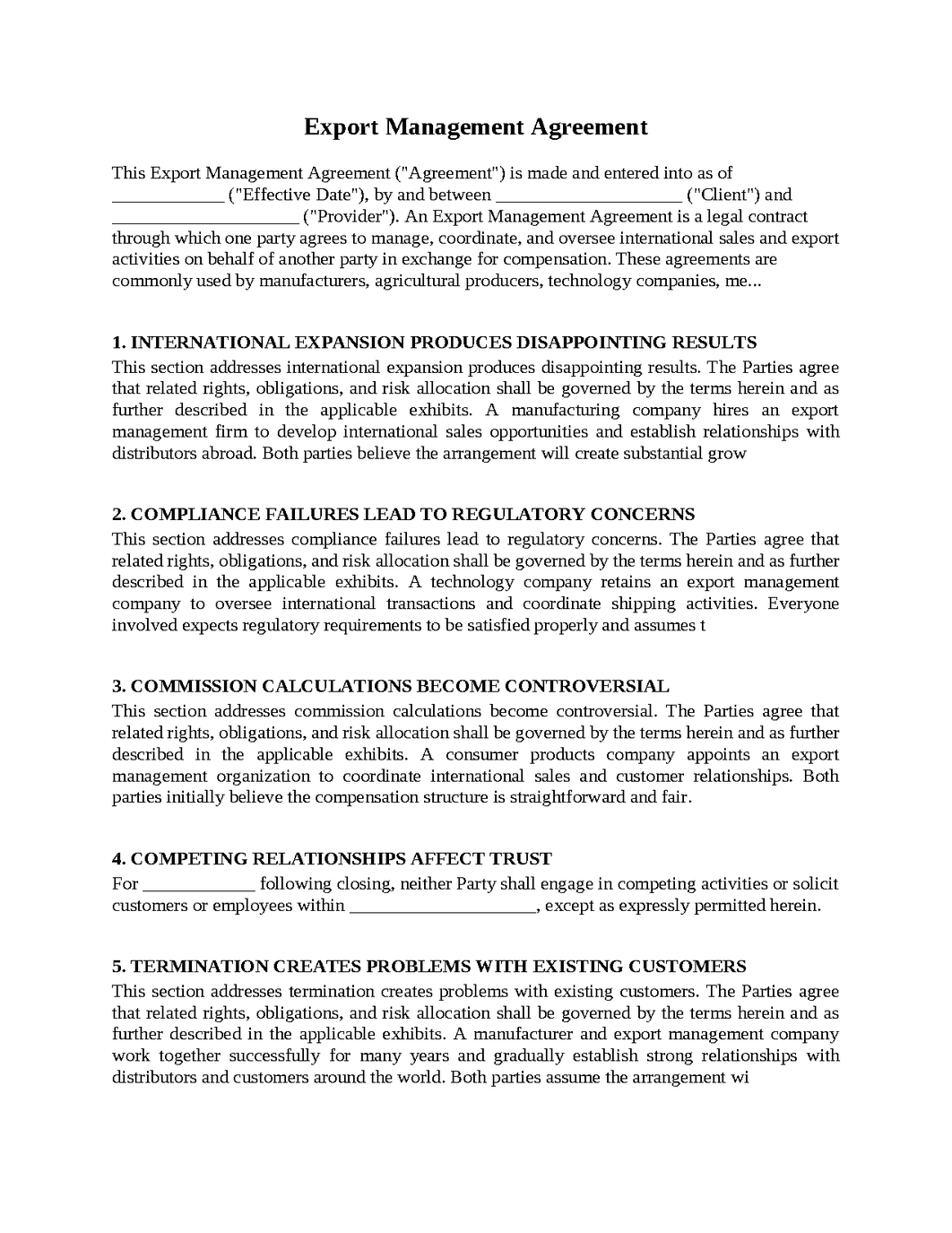
An Export Management Agreement is a legal contract through which one party agrees to manage, coordinate, and oversee international sales and export activities on behalf of another party in exchange for compensation. These agreements are commonly used by manufacturers, agricultural producers, technology companies, medical device companies, and businesses seeking to expand into foreign markets without building their own international sales infrastructure. An Export Management Agreement typically addresses territories, regulatory compliance, marketing responsibilities, commissions, reporting requirements, and procedures governing termination and renewal. Because international trade involves complex legal requirements and multiple participants, disputes can arise when expectations regarding responsibilities and authority are not documented clearly. A carefully drafted Export Management Agreement helps establish certainty and protect the interests of both parties.
International Expansion Produces Disappointing Results
A manufacturing company hires an export management firm to develop international sales opportunities and establish relationships with distributors abroad. Both parties believe the arrangement will create substantial growth and expand the company's global presence.
During the first several years, promising leads and customer inquiries begin emerging. Over time, however, economic conditions and competition reduce demand in several target markets. Sales fall below expectations and revenues fail to justify the resources invested.
The manufacturer believes the export manager should devote additional effort and develop more effective strategies because international growth was the primary purpose of the arrangement. The export manager believes changing market conditions affected demand and argues that no management firm can guarantee sales success. As frustrations increase, both sides begin questioning whether the relationship continues to provide value.
To help avoid this problem, an Export Management Agreement should clearly establish performance expectations and define the circumstances under which the relationship may be modified or terminated.
Compliance Failures Lead to Regulatory Concerns
A technology company retains an export management company to oversee international transactions and coordinate shipping activities. Everyone involved expects regulatory requirements to be satisfied properly and assumes the process will proceed smoothly.
As international operations expand, authorities raise questions concerning licensing requirements and export classifications. Delays and investigations disrupt shipments and create uncertainty regarding future transactions.
The manufacturer believes the export manager should have identified the regulatory issues because compliance was one of the reasons the relationship was established. The export manager believes certain technical information and product classifications were the responsibility of the manufacturer. As costs and legal concerns increase, tensions emerge regarding who should bear responsibility.
To help prevent these issues, an Export Management Agreement should clearly establish compliance responsibilities and define the duties associated with regulatory approvals and licensing requirements.
Commission Calculations Become Controversial
A consumer products company appoints an export management organization to coordinate international sales and customer relationships. Both parties initially believe the compensation structure is straightforward and fair.
As international revenues increase, questions arise regarding currency conversions, shipping costs, rebates, and discounts. Different interpretations of the agreement produce conflicting calculations regarding the commissions earned.
The export manager believes years of effort and relationship-building justify compensation on all sales generated through international channels. The manufacturer believes certain adjustments should reduce commissions and argues that not every transaction should qualify. As revenues grow, disagreements emerge regarding the proper calculation of compensation.
To help avoid these problems, an Export Management Agreement should clearly establish commission formulas and define accounting procedures and reporting requirements.
Competing Relationships Affect Trust
A company appoints an export management firm to oversee sales activities throughout several countries. Both parties expect the relationship to promote loyalty and encourage long-term cooperation.
Several years later, the manufacturer discovers that the export manager also represents competing products in many of the same markets. Concerns arise regarding whether customer opportunities are being diverted and whether confidential information is adequately protected.
The manufacturer believes exclusive attention is necessary because valuable relationships and proprietary information are involved. The export manager believes representing multiple clients is standard practice and argues that diversification benefits everyone. As concerns about conflicts of interest increase, tensions develop regarding the duties owed under the agreement.
To help prevent these issues, an Export Management Agreement should clearly establish conflict-of-interest standards and define any restrictions on competing activities.
Termination Creates Problems With Existing Customers
A manufacturer and export management company work together successfully for many years and gradually establish strong relationships with distributors and customers around the world. Both parties assume the arrangement will continue indefinitely and invest heavily in future growth.
Eventually, changing business priorities lead one side to terminate the relationship. Questions arise regarding pending orders, unpaid commissions, customer information, and responsibilities involving warranties and support.
The export manager believes years of effort justify continued compensation and protection for relationships developed during the engagement. The manufacturer believes customer relationships belong to the company and expects operations to transition smoothly. As existing customers continue seeking assistance, disagreements emerge regarding the obligations that survive termination.
To help avoid this problem, an Export Management Agreement should clearly establish termination procedures and identify the rights and responsibilities that continue after the relationship ends.
Export Management Agreements are valuable tools that allow businesses to expand internationally while relying upon specialized expertise and established relationships. However, issues involving sales performance, regulatory compliance, commission disputes, conflicts of interest, and post-termination obligations can become significant sources of conflict when expectations are not documented clearly. A carefully drafted Export Management Agreement provides a structured framework for allocating responsibilities and protecting the interests of both parties. When prepared thoughtfully, it can reduce uncertainty, strengthen commercial relationships, encourage global growth, and provide the foundation necessary for successful international operations.

Get started with Upsign today!
Easily send, sign and track your documents