

Financing Agreement
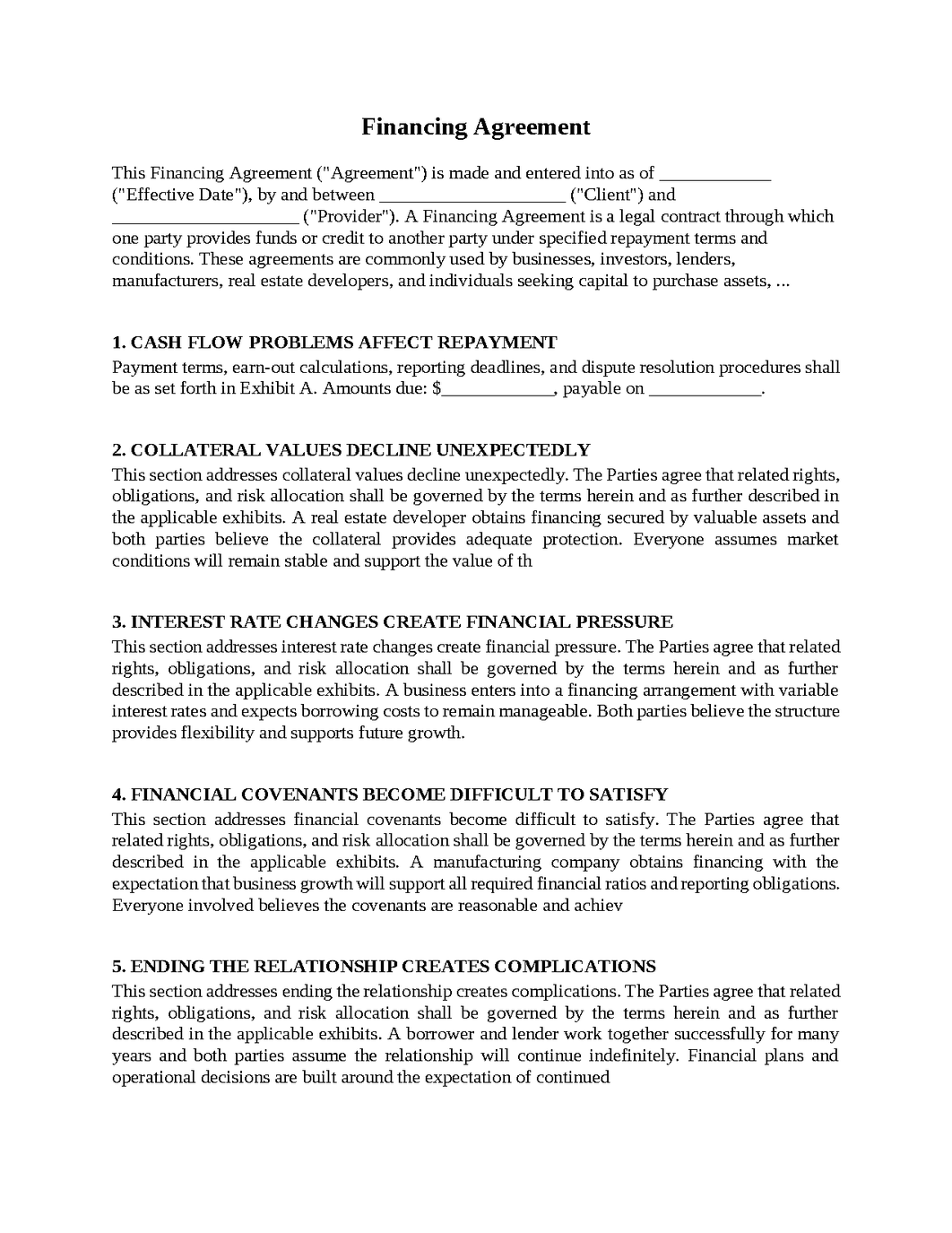
A Financing Agreement is a legal contract through which one party provides funds or credit to another party under specified repayment terms and conditions. These agreements are commonly used by businesses, investors, lenders, manufacturers, real estate developers, and individuals seeking capital to purchase assets, support operations, or fund expansion. A Financing Agreement typically addresses loan amounts, interest rates, repayment schedules, collateral rights, default provisions, and procedures governing amendments and termination. Because financing relationships involve significant financial commitments and long-term obligations, disputes can arise when expectations regarding responsibilities and repayment are not documented clearly. A carefully drafted Financing Agreement helps establish certainty and protect the interests of both borrowers and lenders.
Cash Flow Problems Affect Repayment
A growing company enters into a Financing Agreement to support expansion and increase production capacity. Both parties believe future revenues will provide sufficient cash flow to satisfy repayment obligations and ensure long-term success.
For several years, the business performs well and payments are made according to schedule. Eventually, changing market conditions and rising costs begin affecting profitability and create pressure on cash flow.
The borrower believes temporary financial difficulties justify additional flexibility because the business remains viable and expects conditions to improve. The lender believes repayment obligations should remain enforceable and argues that financial risks were understood when the agreement was signed. As missed payments begin accumulating, tensions emerge regarding how the financial challenges should be addressed.
To help avoid this problem, a Financing Agreement should clearly establish repayment obligations and define the procedures available when financial difficulties arise.
Collateral Values Decline Unexpectedly
A real estate developer obtains financing secured by valuable assets and both parties believe the collateral provides adequate protection. Everyone assumes market conditions will remain stable and support the value of the pledged property.
Over time, economic conditions weaken and asset values decline significantly. Questions arise regarding whether additional collateral should be provided and whether the financing arrangement remains adequately secured.
The lender believes preserving collateral protection is essential and expects additional measures to reduce risk. The borrower believes temporary market fluctuations should not trigger new requirements and argues that long-term values remain strong. As uncertainty increases, disagreements develop regarding the adequacy of the collateral.
To help prevent these issues, a Financing Agreement should clearly establish collateral requirements and define the circumstances under which additional security may be required.
Interest Rate Changes Create Financial Pressure
A business enters into a financing arrangement with variable interest rates and expects borrowing costs to remain manageable. Both parties believe the structure provides flexibility and supports future growth.
Unexpected changes in interest rates significantly increase monthly obligations and affect profitability. The borrower struggles to adapt to higher costs while maintaining normal operations.
The borrower believes market conditions have changed dramatically and seeks modifications to preserve financial stability. The lender believes interest rate risks were understood from the beginning and expects the original terms to govern the relationship. As payment burdens increase, tensions emerge regarding possible accommodations.
To help avoid these problems, a Financing Agreement should clearly establish interest rate provisions and define how adjustments and modifications may occur.
Financial Covenants Become Difficult to Satisfy
A manufacturing company obtains financing with the expectation that business growth will support all required financial ratios and reporting obligations. Everyone involved believes the covenants are reasonable and achievable.
As revenues fluctuate and expenses increase, the company struggles to maintain certain performance requirements. Technical covenant violations occur even though operations continue and payments remain current.
The borrower believes temporary challenges should not trigger severe consequences because the business remains fundamentally healthy. The lender believes financial covenants provide early warning signs and are essential to managing risk. As additional reporting requirements arise, disagreements emerge regarding the consequences of noncompliance.
To help prevent these issues, a Financing Agreement should clearly establish financial covenants and define the remedies available when violations occur.
Ending the Relationship Creates Complications
A borrower and lender work together successfully for many years and both parties assume the relationship will continue indefinitely. Financial plans and operational decisions are built around the expectation of continued access to capital.
Eventually, changing priorities lead the borrower to refinance with another institution. Questions arise regarding payoff calculations, release of collateral, outstanding fees, and continuing obligations relating to prior transactions.
The borrower believes the transition should occur smoothly and expects prompt releases of liens and security interests. The lender believes all obligations must be fully satisfied before relinquishing its rights. As the refinancing process moves forward, disagreements emerge regarding the obligations that survive repayment.
To help avoid this problem, a Financing Agreement should clearly establish payoff procedures and identify the rights and responsibilities that continue after the financing relationship ends.
Financing Agreements are valuable tools that provide access to capital and support growth opportunities for businesses and individuals alike. However, issues involving repayment difficulties, declining collateral values, interest rate changes, covenant compliance, and post-payoff obligations can become significant sources of conflict when expectations are not documented clearly. A carefully drafted Financing Agreement provides a structured framework for allocating responsibilities and protecting the interests of both borrowers and lenders. When prepared thoughtfully, it can reduce uncertainty, strengthen financial relationships, support long-term planning, and provide the foundation necessary for successful financing arrangements.

Get started with Upsign today!
Easily send, sign and track your documents