

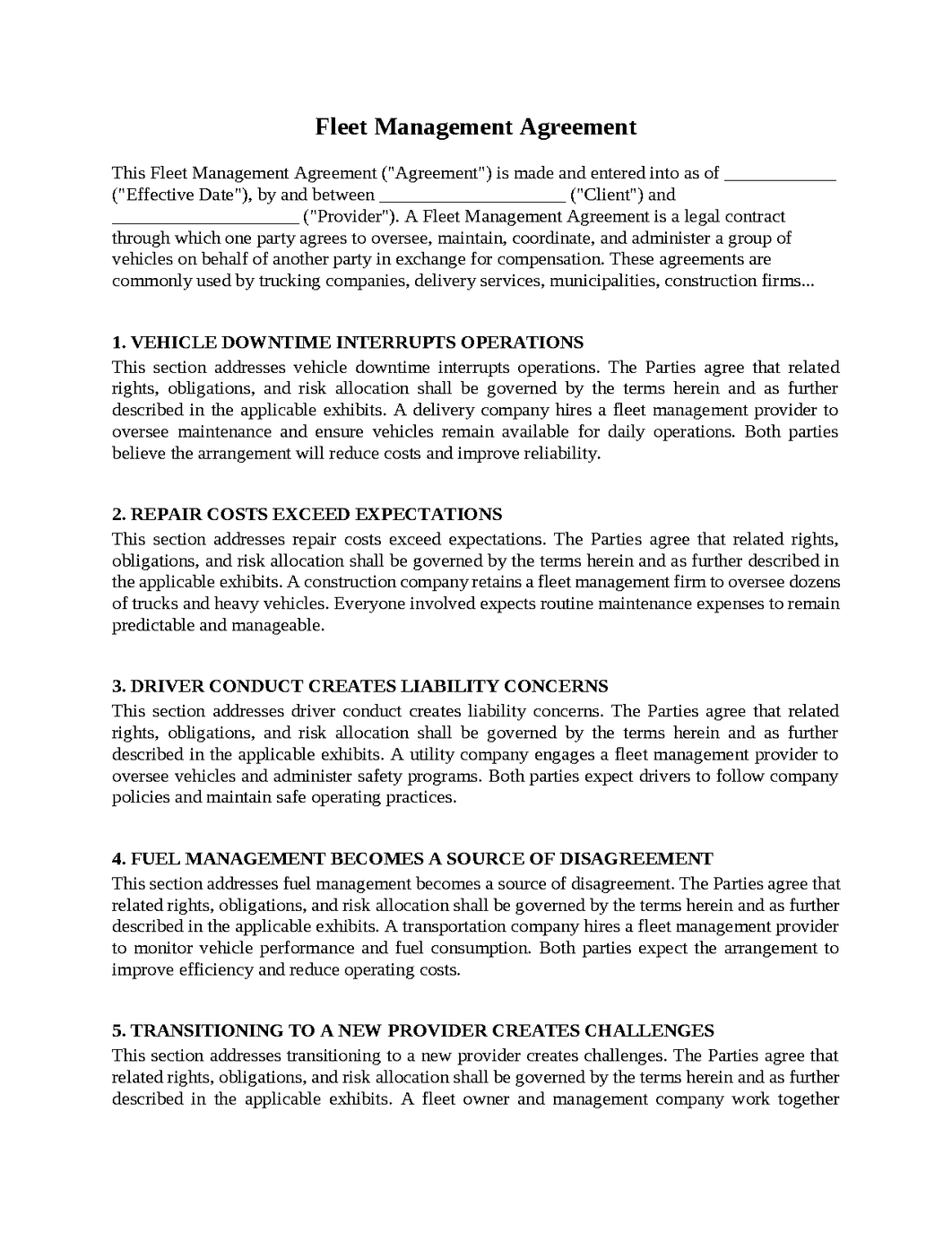
Fleet Management Agreement
A Fleet Management Agreement is a legal contract through which one party agrees to oversee, maintain, coordinate, and administer a group of vehicles on behalf of another party in exchange for compensation. These agreements are commonly used by trucking companies, delivery services, municipalities, construction firms, utility providers, and businesses that operate large vehicle fleets. A Fleet Management Agreement typically addresses maintenance schedules, fuel management, driver policies, reporting requirements, insurance obligations, and procedures governing repairs and replacement of vehicles. Because fleet operations involve significant expenses and depend heavily on reliability, disputes can arise when expectations regarding responsibilities and performance are not documented clearly. A carefully drafted Fleet Management Agreement helps establish certainty and protect the interests of both fleet owners and service providers.
Vehicle Downtime Interrupts Operations
A delivery company hires a fleet management provider to oversee maintenance and ensure vehicles remain available for daily operations. Both parties believe the arrangement will reduce costs and improve reliability.
For several years, maintenance schedules are followed successfully and deliveries are completed without major disruptions. Eventually, however, multiple vehicles experience mechanical failures that leave drivers unable to complete their routes.
The delivery company believes the fleet manager should have anticipated the problems and performed preventive maintenance more effectively. The fleet manager believes aging equipment and increased vehicle usage contributed to the breakdowns and argues that unexpected failures are unavoidable. As customer complaints and lost revenue increase, tensions emerge regarding responsibility for the downtime.
To help avoid this problem, a Fleet Management Agreement should clearly establish maintenance responsibilities and define service standards relating to vehicle availability and repairs.
Repair Costs Exceed Expectations
A construction company retains a fleet management firm to oversee dozens of trucks and heavy vehicles. Everyone involved expects routine maintenance expenses to remain predictable and manageable.
As the fleet ages, repair costs increase substantially and several major components require replacement. Questions arise regarding whether certain repairs should have been anticipated earlier.
The fleet owner believes the management company should have identified problems sooner and controlled maintenance expenses more effectively. The fleet manager believes the increased costs reflect normal wear and market conditions and argues that major repairs were unavoidable. As invoices become larger, disagreements emerge regarding budgeting and responsibility for the additional expenses.
To help prevent these issues, a Fleet Management Agreement should clearly establish cost controls and define how major repairs and unexpected expenses will be approved.
Driver Conduct Creates Liability Concerns
A utility company engages a fleet management provider to oversee vehicles and administer safety programs. Both parties expect drivers to follow company policies and maintain safe operating practices.
Over time, several accidents and traffic violations occur, leading to increased insurance costs and regulatory concerns. Questions arise regarding whether drivers received adequate training and supervision.
The fleet owner believes the management provider should be accountable because driver oversight was an important part of the relationship. The fleet manager believes employees ultimately remain under the owner's control and argues that individual conduct cannot always be prevented. As liability exposure increases, tensions develop regarding responsibility for safety and compliance.
To help avoid these problems, a Fleet Management Agreement should clearly establish driver management responsibilities and define the procedures governing safety programs and training.
Fuel Management Becomes a Source of Disagreement
A transportation company hires a fleet management provider to monitor vehicle performance and fuel consumption. Both parties expect the arrangement to improve efficiency and reduce operating costs.
After several years, fuel expenses rise unexpectedly and internal reviews reveal inconsistencies in reporting and purchasing practices. Concerns emerge regarding whether resources are being used efficiently.
The transportation company believes the fleet manager should have implemented stronger controls and identified waste earlier. The fleet manager believes changing fuel prices and operational demands contributed to the increased expenses and argues that reasonable measures were taken. As profitability declines, disagreements arise regarding accountability and reporting.
To help prevent these issues, a Fleet Management Agreement should clearly establish fuel management procedures and define reporting requirements and performance standards.
Transitioning to a New Provider Creates Challenges
A fleet owner and management company work together successfully for many years and gradually integrate maintenance records, software systems, and vendor relationships. Both parties assume the arrangement will continue indefinitely and structure operations around that expectation.
Eventually, changing priorities lead the fleet owner to select a different management provider. Questions arise regarding access to records, unfinished repairs, vendor contracts, and ongoing warranty claims.
The fleet owner believes a smooth transition is essential to maintaining uninterrupted operations and preserving valuable information. The management company believes its obligations should conclude promptly and expects all outstanding balances to be satisfied before providing additional assistance. As the transition becomes more complicated, disagreements emerge regarding the obligations that survive termination.
To help avoid this problem, a Fleet Management Agreement should clearly establish termination procedures and identify the rights and responsibilities that continue after the relationship ends.
Fleet Management Agreements are valuable tools that allow organizations to maintain reliable transportation operations while relying upon specialized expertise. However, issues involving vehicle downtime, repair expenses, driver conduct, fuel management, and post-termination obligations can become significant sources of conflict when expectations are not documented clearly. A carefully drafted Fleet Management Agreement provides a structured framework for allocating responsibilities and protecting the interests of both parties. When prepared thoughtfully, it can reduce uncertainty, improve operational efficiency, preserve valuable assets, and provide the foundation necessary for successful fleet operations.

Get started with Upsign today!
Easily send, sign and track your documents