

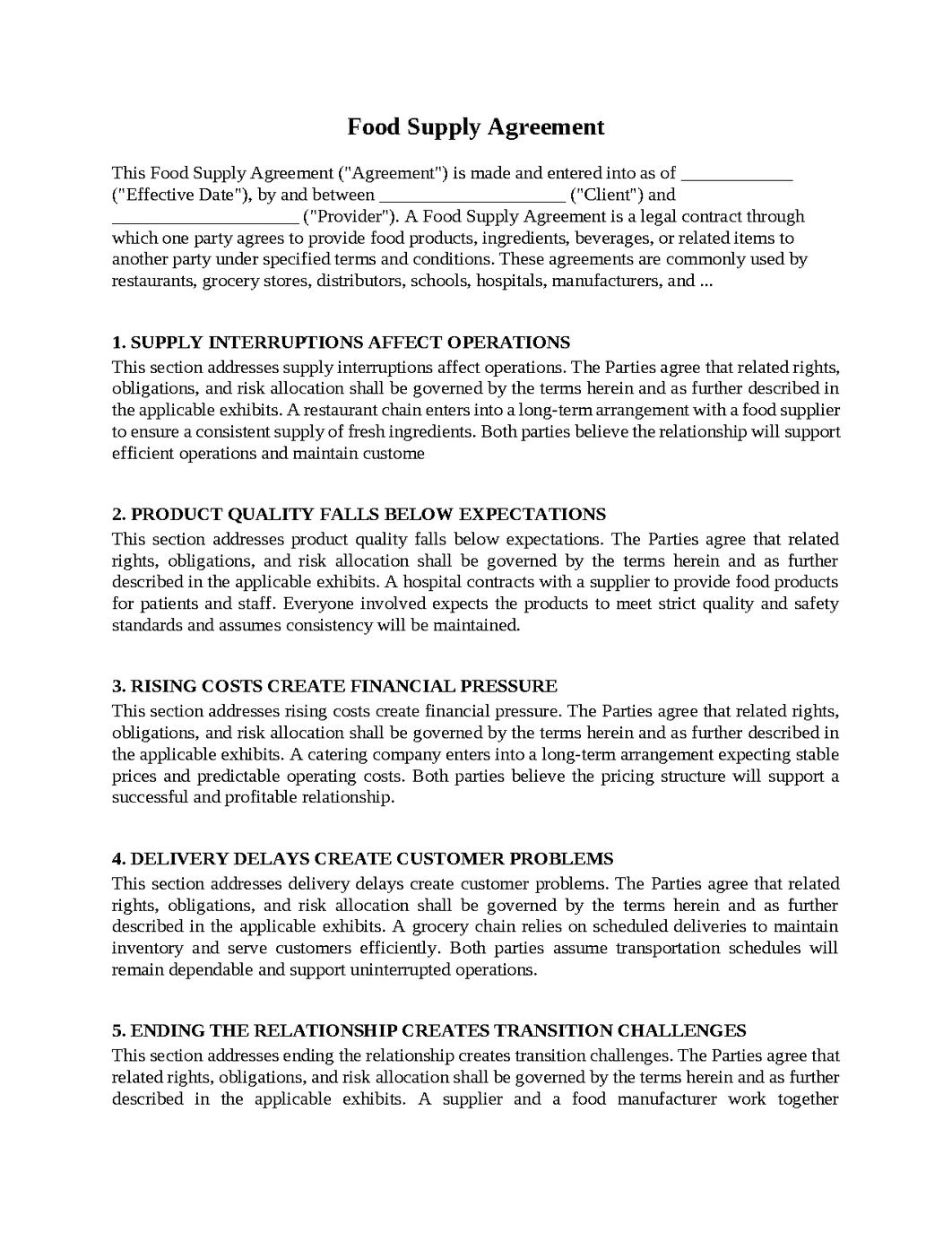
Food Supply Agreement
A Food Supply Agreement is a legal contract through which one party agrees to provide food products, ingredients, beverages, or related items to another party under specified terms and conditions. These agreements are commonly used by restaurants, grocery stores, distributors, schools, hospitals, manufacturers, and catering businesses that depend on reliable access to food supplies. A Food Supply Agreement typically addresses product specifications, pricing, delivery schedules, quality standards, payment obligations, and procedures governing shortages and termination. Because food products are perishable and supply chains can be unpredictable, disputes can arise when expectations regarding performance and responsibilities are not documented clearly. A carefully drafted Food Supply Agreement helps establish certainty and protect the interests of both suppliers and purchasers.
Supply Interruptions Affect Operations
A restaurant chain enters into a long-term arrangement with a food supplier to ensure a consistent supply of fresh ingredients. Both parties believe the relationship will support efficient operations and maintain customer satisfaction.
For several years, deliveries arrive on time and menu offerings remain stable. Eventually, weather conditions, transportation problems, and market shortages disrupt the supplier's ability to provide certain products.
The restaurant believes the supplier should have maintained alternative sources because uninterrupted deliveries are essential to serving customers. The supplier believes the shortages affected the entire industry and argues that reasonable efforts were made to minimize disruptions. As menu changes become necessary and revenues decline, tensions emerge regarding responsibility for the interruptions.
To help avoid this problem, a Food Supply Agreement should clearly establish delivery obligations and define how shortages and supply disruptions will be handled.
Product Quality Falls Below Expectations
A hospital contracts with a supplier to provide food products for patients and staff. Everyone involved expects the products to meet strict quality and safety standards and assumes consistency will be maintained.
Over time, complaints arise regarding freshness, packaging, and product quality. Several deliveries fail to satisfy internal standards and concerns develop about the reliability of the supplier.
The hospital believes the supplier should be responsible because quality was a fundamental requirement of the relationship. The supplier believes isolated incidents do not reflect the overall quality of its products and argues that storage conditions after delivery may have contributed to the issues. As dissatisfaction increases, disagreements emerge regarding responsibility for maintaining quality standards.
To help prevent these issues, a Food Supply Agreement should clearly establish product specifications and define procedures for inspecting and rejecting nonconforming goods.
Rising Costs Create Financial Pressure
A catering company enters into a long-term arrangement expecting stable prices and predictable operating costs. Both parties believe the pricing structure will support a successful and profitable relationship.
Unexpected increases in transportation costs, labor expenses, and commodity prices significantly affect the supplier's costs. The supplier seeks higher prices, while the catering company struggles to maintain profitability.
The supplier believes changing economic conditions justify price adjustments because continuing losses threaten the ability to provide service. The customer believes stable pricing was one of the primary reasons for entering into the arrangement and expects the original terms to remain enforceable. As margins decline, tensions develop regarding how increased costs should be allocated.
To help avoid these problems, a Food Supply Agreement should clearly establish pricing mechanisms and define procedures governing adjustments and cost increases.
Delivery Delays Create Customer Problems
A grocery chain relies on scheduled deliveries to maintain inventory and serve customers efficiently. Both parties assume transportation schedules will remain dependable and support uninterrupted operations.
Unexpected weather conditions, equipment failures, and labor shortages delay multiple shipments. Inventory levels become depleted and customer dissatisfaction increases.
The grocery chain believes timely deliveries are essential and expects the supplier to maintain backup plans to avoid interruptions. The supplier believes extraordinary conditions affected the entire transportation network and argues that reasonable efforts were made to minimize delays. As losses and customer complaints increase, disagreements emerge regarding responsibility for the disruptions.
To help prevent these issues, a Food Supply Agreement should clearly establish delivery requirements and define the remedies available when schedules cannot be maintained.
Ending the Relationship Creates Transition Challenges
A supplier and a food manufacturer work together successfully for many years and gradually integrate ordering systems and inventory planning. Both parties assume the relationship will continue indefinitely and structure operations around that expectation.
Changing business priorities eventually lead one side to terminate the arrangement. Questions arise regarding open purchase orders, outstanding invoices, and the transition to alternative suppliers.
The manufacturer believes adequate notice is necessary because changing suppliers affects production schedules and customer commitments. The supplier believes the relationship should conclude according to the agreement and expects all outstanding obligations to be satisfied promptly. As the transition becomes more complicated, disagreements emerge regarding the obligations that survive termination.
To help avoid this problem, a Food Supply Agreement should clearly establish termination procedures and identify the rights and responsibilities that continue after the relationship ends.
Food Supply Agreements are valuable tools that provide businesses with dependable access to essential products while promoting long-term commercial relationships. However, issues involving supply shortages, product quality, price increases, delivery delays, and termination can become significant sources of conflict when expectations are not documented clearly. A carefully drafted Food Supply Agreement provides a structured framework for allocating responsibilities and protecting the interests of both suppliers and purchasers. When prepared thoughtfully, it can reduce uncertainty, preserve valuable relationships, support operational stability, and provide the foundation necessary for successful food distribution and production.

Get started with Upsign today!
Easily send, sign and track your documents