

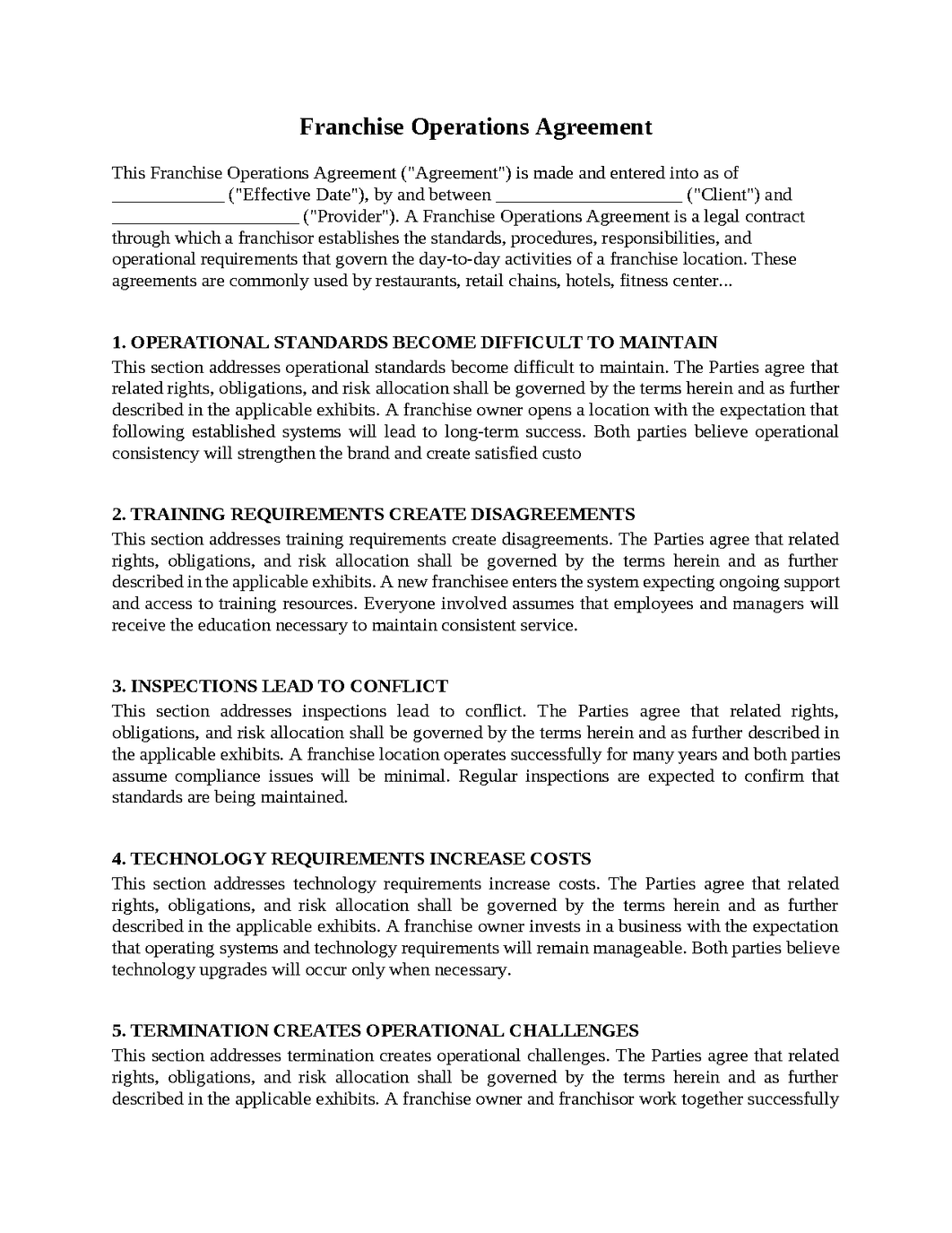
Franchise Operations Agreement
A Franchise Operations Agreement is a legal contract through which a franchisor establishes the standards, procedures, responsibilities, and operational requirements that govern the day-to-day activities of a franchise location. These agreements are commonly used by restaurants, retail chains, hotels, fitness centers, home service businesses, and other organizations that rely on consistent branding and customer experiences. A Franchise Operations Agreement typically addresses operating procedures, quality standards, training requirements, inventory controls, reporting obligations, and procedures governing inspections and corrective actions. Because franchise systems depend heavily on consistency and compliance, disputes can arise when expectations regarding operations and responsibilities are not documented clearly. A carefully drafted Franchise Operations Agreement helps establish certainty and protect the interests of both franchisors and franchisees.
Operational Standards Become Difficult to Maintain
A franchise owner opens a location with the expectation that following established systems will lead to long-term success. Both parties believe operational consistency will strengthen the brand and create satisfied customers.
For several years, the location performs well and receives favorable feedback. Over time, however, staffing shortages and increasing costs begin affecting service quality and operational standards.
The franchisor believes strict compliance with established procedures is necessary to protect the reputation of the entire system. The franchisee believes local conditions require flexibility and argues that certain adjustments are necessary to remain profitable. As customer complaints increase, tensions emerge regarding the standards that should govern operations.
To help avoid this problem, a Franchise Operations Agreement should clearly establish performance standards and define the procedures used to address operational deficiencies.
Training Requirements Create Disagreements
A new franchisee enters the system expecting ongoing support and access to training resources. Everyone involved assumes that employees and managers will receive the education necessary to maintain consistent service.
As turnover increases, questions arise regarding who is responsible for providing additional training and how the associated costs should be handled. New employees struggle to follow procedures and customer experiences become inconsistent.
The franchisee believes the franchisor should provide greater support because training is essential to maintaining brand standards. The franchisor believes local management is responsible for ensuring employees remain properly trained and argues that resources have already been provided. As service quality declines, disagreements emerge regarding responsibility for ongoing education.
To help prevent these issues, a Franchise Operations Agreement should clearly establish training obligations and define how additional support and related expenses will be handled.
Inspections Lead to Conflict
A franchise location operates successfully for many years and both parties assume compliance issues will be minimal. Regular inspections are expected to confirm that standards are being maintained.
During a routine inspection, the franchisor identifies several operational concerns involving cleanliness, recordkeeping, and inventory controls. Corrective actions are requested and deadlines are imposed.
The franchisor believes immediate improvements are necessary to preserve consistency throughout the franchise system. The franchisee believes certain findings are subjective and argues that the required changes are unreasonable. As inspection reports become more frequent, tensions develop regarding enforcement and compliance.
To help avoid these problems, a Franchise Operations Agreement should clearly establish inspection procedures and define the process for correcting deficiencies.
Technology Requirements Increase Costs
A franchise owner invests in a business with the expectation that operating systems and technology requirements will remain manageable. Both parties believe technology upgrades will occur only when necessary.
Several years later, the franchisor introduces new software, point-of-sale systems, and reporting requirements. The changes require substantial investments and disrupt existing operations.
The franchisee believes the costs exceed what was originally anticipated and questions whether the upgrades are truly necessary. The franchisor believes modernization is essential to maintaining competitiveness and argues that all locations must adopt the new systems. As expenses increase, disagreements emerge regarding responsibility for implementation costs.
To help prevent these issues, a Franchise Operations Agreement should clearly establish technology requirements and define how future upgrades will be introduced and funded.
Termination Creates Operational Challenges
A franchise owner and franchisor work together successfully for many years and structure operations around the expectation of a continuing relationship. Employees, suppliers, and customers all rely on the stability of the franchise system.
Eventually, changing business priorities or unresolved disputes lead to termination. Questions arise regarding signage, equipment, customer records, proprietary manuals, and ongoing obligations.
The franchisee believes years of effort justify flexibility and adequate time to transition operations. The franchisor believes immediate compliance with post-termination requirements is essential to protecting the brand and preventing confusion in the marketplace. As the relationship ends, disagreements emerge regarding the responsibilities that continue after operations cease.
To help avoid this problem, a Franchise Operations Agreement should clearly establish termination procedures and identify the obligations that survive the end of the franchise relationship.
Franchise Operations Agreements are valuable tools that help maintain consistency and preserve the reputation of franchise systems. However, issues involving operational standards, training requirements, inspections, technology upgrades, and post-termination obligations can become significant sources of conflict when expectations are not documented clearly. A carefully drafted Franchise Operations Agreement provides a structured framework for allocating responsibilities and protecting the interests of both franchisors and franchisees. When prepared thoughtfully, it can reduce uncertainty, strengthen business relationships, encourage operational excellence, and provide the foundation necessary for long-term franchise success.

Get started with Upsign today!
Easily send, sign and track your documents