

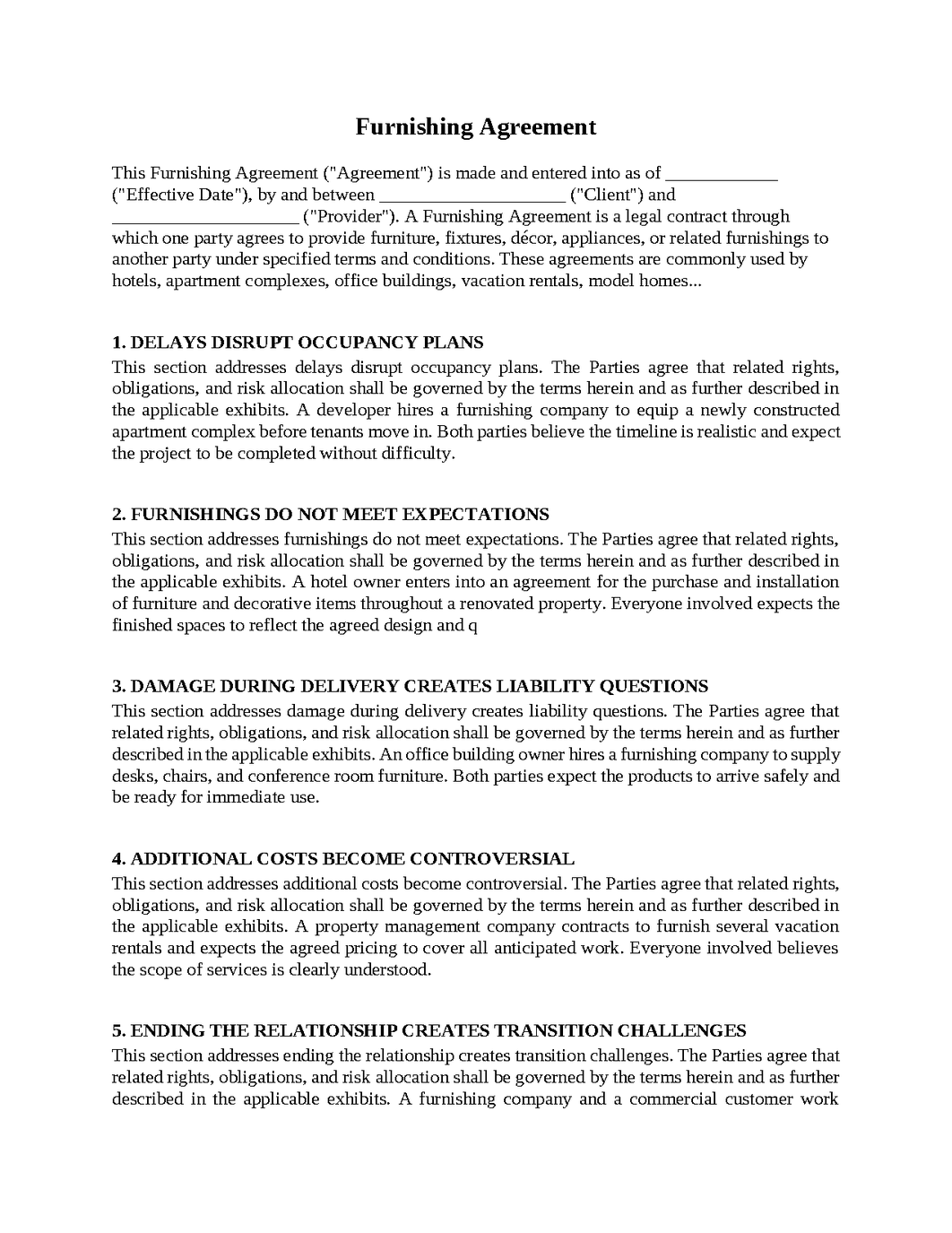
Furnishing Agreement
A Furnishing Agreement is a legal contract through which one party agrees to provide furniture, fixtures, décor, appliances, or related furnishings to another party under specified terms and conditions. These agreements are commonly used by hotels, apartment complexes, office buildings, vacation rentals, model homes, healthcare facilities, and commercial developers seeking to equip spaces efficiently and consistently. A Furnishing Agreement typically addresses product specifications, delivery schedules, installation requirements, pricing, warranties, and procedures governing defects and termination. Because furnishing projects often involve substantial investments and coordination among multiple vendors, disputes can arise when expectations regarding quality and responsibilities are not documented clearly. A carefully drafted Furnishing Agreement helps establish certainty and protect the interests of both suppliers and customers.
Delays Disrupt Occupancy Plans
A developer hires a furnishing company to equip a newly constructed apartment complex before tenants move in. Both parties believe the timeline is realistic and expect the project to be completed without difficulty.
During the project, manufacturing delays and transportation problems affect the availability of key items. Several units remain unfinished, forcing occupancy dates to be postponed and creating financial pressure.
The developer believes the furnishing company should have anticipated potential delays and secured alternative sources because timely completion was essential. The furnishing company believes global supply chain disruptions affected the entire industry and argues that reasonable efforts were made to maintain progress. As revenues are delayed and frustrations increase, tensions emerge regarding responsibility for the disruptions.
To help avoid this problem, a Furnishing Agreement should clearly establish delivery schedules and define how delays and unforeseen circumstances will be handled.
Furnishings Do Not Meet Expectations
A hotel owner enters into an agreement for the purchase and installation of furniture and decorative items throughout a renovated property. Everyone involved expects the finished spaces to reflect the agreed design and quality standards.
After installation is completed, management discovers that certain materials, finishes, and colors differ from what was originally expected. Concerns arise regarding durability and whether the furnishings match the intended appearance.
The hotel owner believes the supplier should provide products that conform to the approved specifications because aesthetics and quality are essential to guest satisfaction. The furnishing company believes the products satisfy industry standards and argues that substitutions became necessary because of availability issues. As concerns about replacements increase, disagreements emerge regarding whether the products comply with the agreement.
To help prevent these issues, a Furnishing Agreement should clearly establish product specifications and define procedures governing substitutions and approvals.
Damage During Delivery Creates Liability Questions
An office building owner hires a furnishing company to supply desks, chairs, and conference room furniture. Both parties expect the products to arrive safely and be ready for immediate use.
During delivery and installation, several items are damaged. Questions arise regarding whether the damage occurred during transportation, storage, or assembly.
The customer believes the supplier should bear responsibility because the products remained under its control during delivery. The furnishing company believes some defects originated with manufacturers or shipping companies and argues that liability should be shared accordingly. As replacement costs increase, tensions develop regarding accountability.
To help avoid these problems, a Furnishing Agreement should clearly establish inspection procedures and define how damaged products and related claims will be handled.
Additional Costs Become Controversial
A property management company contracts to furnish several vacation rentals and expects the agreed pricing to cover all anticipated work. Everyone involved believes the scope of services is clearly understood.
As the project progresses, additional requests involving upgraded furniture, expedited shipping, and custom décor increase costs beyond the original estimate. Questions arise regarding who should absorb the additional expenses.
The customer believes many of the costs should have been anticipated and included in the original pricing. The furnishing company believes the expanded scope and customization justify higher charges because additional resources and labor are required. As invoices become larger, disagreements emerge regarding compensation.
To help prevent these issues, a Furnishing Agreement should clearly establish pricing arrangements and define how changes and additional services will be approved.
Ending the Relationship Creates Transition Challenges
A furnishing company and a commercial customer work together successfully for many years and gradually coordinate design standards and purchasing procedures. Both parties assume the relationship will continue indefinitely and structure future projects accordingly.
Eventually, changing priorities lead the customer to select another supplier. Questions arise regarding unfinished orders, warranties, outstanding invoices, and responsibilities involving previously delivered products.
The customer believes a smooth transition is necessary to avoid disruptions and preserve project schedules. The furnishing company believes its obligations should conclude promptly and expects all outstanding amounts to be paid before providing additional assistance. As projects remain incomplete, disagreements emerge regarding the obligations that survive termination.
To help avoid this problem, a Furnishing Agreement should clearly establish termination procedures and identify the rights and responsibilities that continue after the relationship ends.
Furnishing Agreements are valuable tools that allow businesses and property owners to create attractive, functional spaces while relying upon experienced suppliers. However, issues involving delivery delays, product quality, damaged goods, unexpected costs, and post-termination obligations can become significant sources of conflict when expectations are not documented clearly. A carefully drafted Furnishing Agreement provides a structured framework for allocating responsibilities and protecting the interests of both parties. When prepared thoughtfully, it can reduce uncertainty, strengthen commercial relationships, support successful projects, and provide the foundation necessary for effective furnishing services.

Get started with Upsign today!
Easily send, sign and track your documents